

Dress code law belongs in any serious conversation about professional image because clothing standards do more than create a polished look. They can affect religious expression, gender presentation, race-related grooming practices, disability access, and day-to-day employee confidence. As a branding strategist, I see dress policies as brand tools, but they must be written and applied with care rather than treated as simple style preferences.
This is branding preparation, not legal advice. Employers and employees should speak with qualified counsel for specific legal questions. Still, a practical brand review can help teams spot risk before an appearance standard becomes a credibility problem.
Why Dress Code Law Belongs In Brand Planning
A workplace image policy sends a public message. Uniforms, grooming expectations, visible accessories, and footwear rules can all suggest order, safety, hospitality, authority, or creativity. The problem starts when the policy treats one group’s appearance as professional and another group’s appearance as less acceptable without a clear job-related reason.
Dress Code Law Questions For Image Policies
Dress code law should be part of the first policy draft, not a late review after complaints surface. A brand team may want consistency, but consistency is not the same as fairness. A rule can look neutral on paper while affecting workers differently in practice.
- Does the rule connect to safety, identification, hygiene, or a defined client-facing need?
- Could the rule restrict religious clothing, grooming, or symbols?
- Does the rule place higher cost, time, or appearance pressure on one gender?
- Could the rule affect natural hair texture, protective hairstyles, disability-related needs, or cultural dress?
- Are managers trained to apply the rule in the same way across teams?
These questions protect more than compliance. They protect trust. Employees are more likely to support a professional image standard when they can see the reason behind it and when accommodations are handled with respect.
Branding Signals Are Not A Shield
Brand image matters, but it is not a blank check. Dress codes that target or disproportionately affect workers based on religion, gender identity, race, disability, national origin, or other protected traits can raise discrimination concerns, even if the rule is presented as a neutral image standard, according to LegalClarity’s workplace dress code analysis.
For brand leaders, the practical lesson is direct: do not rely on vague phrases such as “professional look” or “brand fit” unless the policy explains what those terms mean in role-specific behavior. A receptionist, lab technician, field installer, and creative director may all represent the same organization, yet each role can require different appearance standards.
Protected Identity And Appearance Standards
Professional presence should not require employees to erase protected identity. The strongest appearance policies usually focus on work function: clean clothing where hygiene matters, safe footwear where physical hazards exist, visible identification where security matters, or consistent colors where customer recognition matters.
Religious Dress And Grooming
Under Title VII, employers must reasonably accommodate religious dress and grooming practices unless doing so would create undue hardship for the employer, considering factors such as cost, size, and business operations, according to the U.S. Equal Employment Opportunity Commission. This can include practices connected with garments, head coverings, facial hair, or grooming.
From a branding perspective, this means the brand standard should be flexible enough to include lawful accommodations. A company color palette, name badge, or safety garment can often coexist with religious expression. If an accommodation request conflicts with a specific safety or operational requirement, the response should be handled through a careful process rather than a quick image-based refusal.
Gendered Appearance Rules
Gendered grooming expectations can create brand risk because they often hide unequal burdens. Rules that require women to wear makeup, heels, or specific hairstyles, or rules that restrict men from appearance choices permitted for women, may invite scrutiny if they create greater cost, time, discomfort, or restriction for one gender. A better branding approach is to describe the desired standard without assigning it to one gender.
For example, a policy can ask for neat, safe, and role-appropriate footwear without requiring heels. It can ask that hair be secured around machinery without dictating a gendered style. It can require clothing to be clean and suitable for public interaction without treating femininity or masculinity as the measure of credibility.
Practical Policy Review For Professional Image
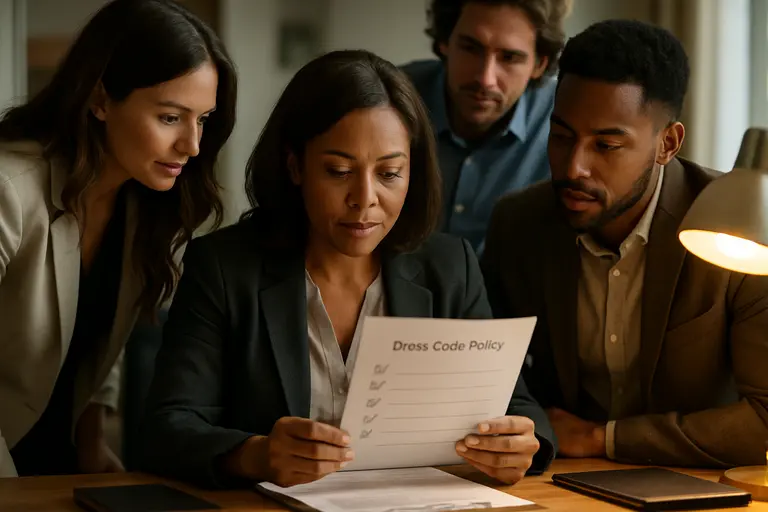
Dress code law becomes easier to respect when the brand team separates image goals from image habits. An image goal might be “customers can identify staff quickly.” An image habit might be “everyone must wear the exact same shirt style.” The first goal may be valid in many workplaces. The second choice may still need review if it creates fit, disability, religious, cost, or gender concerns.
Use Role Function Before Preference
Start with the work being performed. If the job involves equipment, food handling, clinical care, public safety, or outdoor labor, some clothing and grooming limits may be connected to the function of the role. If the job involves client contact, the employer may want a coherent visual standard. In either case, the policy should explain the practical reason rather than leaning on taste.
For individual professionals, the same principle is useful. Before choosing an interview outfit or daily work look, ask what your clothing must help you communicate: reliability, warmth, technical skill, authority, discretion, creativity, or readiness for physical tasks. If you are preparing for an interview, this related Finest Image article on dress code expectations and corporate culture offers a useful way to read visual standards without overcorrecting.
Prepare Managers To Apply Standards Consistently
A policy is only as fair as its enforcement. If one manager ignores visible tattoos on favored employees but disciplines another worker for similar appearance choices, the policy loses credibility. If natural hairstyles are described as distracting while comparable styling choices are accepted from others, the brand message becomes exclusionary rather than polished.
Manager training should include examples. Show what is acceptable, what requires discussion, and what should be referred to human resources. Give managers a script for accommodation requests. Teach them not to make comments about bodies, cultural identity, religious meaning, or gender expression. A calm process protects the employee and the organization’s public image.
Appearance standards also carry a values message beyond the workplace. A related site in the same network, Bethel NC UMC, highlights how community-facing organizations often think carefully about welcome, identity, and presentation. Workplaces can learn from that same discipline: the way people are received is part of the image.
Dress Code Law And Professional Image
Dress code law is not the enemy of brand consistency. It is a boundary that helps organizations create appearance standards with clearer purpose and less bias. The best policies do not ask employees to guess what “professional” means. They define the business reason, allow lawful accommodations, reduce unequal burdens, and keep enforcement consistent.
For employees, this perspective can support better self-presentation. You can dress with intention while still recognizing that professionalism is not one narrow look. A strong personal image can include religious dress, natural hair, adaptive clothing, cultural expression, or practical footwear when those choices are presented with care and fit the work context.
For employers, the useful question is not, “Can we make everyone look the same?” The better question is, “Can our people represent the brand clearly while being treated lawfully and respectfully?” That shift creates policies that are easier to explain, easier to enforce, and more credible to the people expected to follow them.