
Choosing what to wear to a job interview in 2026 is no longer as straightforward as putting on a suit and assuming it will work everywhere.
A candidate interviewing at a New York law firm may encounter traditional business attire expectations, while someone applying to a technology company in San Francisco could find employees wearing jeans, sneakers, and casual shirts.
The challenge is understanding how to dress professionally without appearing overdressed, underprepared, or disconnected from the company’s culture.
On November 5, 2026, GQ published an updated interview attire guide by journalist Jeremy Freed, featuring perspectives from hiring professionals and industry experts working in law, finance, technology, marketing, nonprofit organizations, media, and academia.
The November 2026 GQ interview attire guide highlights an important distinction: professional clothing expectations depend on the industry, employer, and specific responsibilities of the position.
For job seekers, this means a successful interview outfit should be selected through research rather than assumptions.
A tailored suit may be appropriate for a corporate finance interview. A blazer and chinos may work for a technology position. A creative professional might choose contemporary clothing that communicates individuality while remaining suitable for a business meeting.
The most practical rule is to dress for the professional environment you are entering, not simply for the industry label on the job advertisement.
Clothing can support a professional first impression, but it cannot establish competence, replace relevant experience, or guarantee a favorable hiring decision.
Why Interview Clothing Expectations Are Changing In 2026
Professional dress codes have become more varied as American workplaces adopt different approaches to remote work, business casual clothing, and personal expression.
Some organizations maintain traditional expectations because employees regularly interact with clients, courts, financial institutions, or senior executives.
Others prioritize comfort and flexibility, particularly when employees work remotely or operate in creative and technology-focused environments.
This creates uncertainty for candidates who want to appear prepared without wearing clothing that feels unnecessarily formal.
The issue is especially relevant in a changing employment market.
On November 3, 2026, the U.S. Bureau of Labor Statistics released its September 2026 Job Openings and Labor Turnover Survey.
According to the official September 2026 JOLTS report, the United States recorded approximately 7.5 million job openings, 5.4 million hires, and 5.3 million total separations.
The agency described openings, hiring, and total separations as little changed during the month.
These statistics provide context for national hiring activity. They do not show that clothing influences recruitment outcomes.
Nevertheless, applicants preparing for interviews must consider several elements of professional presentation, including communication, relevant experience, preparation, and the practical expectations of the workplace.
Clothing belongs within that broader preparation process.
An appropriate outfit can help candidates feel comfortable and ready for the meeting, but the substance of their qualifications remains central.
What Hiring Experts Say About Dressing For Different Industries
The November 5 GQ article brought together perspectives from professionals working across several sectors.
Contributors included Joshua Davis, an Atlanta-based personal stylist; Jessica Chin Somers, a legal recruiter in New York City; J. Daniel Chi, finance department chair at the University of Nevada, Las Vegas; and technology recruiters associated with Philo and Toast.
The reporting also included perspectives from creative agency leadership, nonprofit recruitment, media executives, and university career development professionals.
Their observations illustrate why one universal interview dress code is difficult to apply.
For example, a client-facing financial professional may encounter different expectations from a software developer working primarily with internal teams.
A creative director may be encouraged to express personal style, while an attorney interviewing at a traditional law firm may find conventional tailoring more appropriate.
These distinctions should not be interpreted as rigid rules.
Even within the same industry, employers may have different expectations based on geography, organizational culture, client relationships, and the position being filled.
The U.S. Department of Labor’s February 2026 Interview Skills Participant Guide recommends researching company dress codes, considering industry norms, and selecting clothing that fits comfortably.
Its official interview attire guidance also recommends dressing one level above the usual expectations of the position.
That advice provides a starting point, but applicants should prioritize specific instructions from the employer.
Interview Outfits Across Industries: A Practical Comparison
The following table offers starting points for selecting interview clothing across common U.S. employment sectors.
These are editorial recommendations informed by the November 2026 reporting and Department of Labor guidance, not universal employer policies.
| Industry | Suggested Interview Outfit | Main Consideration |
|---|---|---|
| Law and Legal Services | Tailored suit or coordinated business-professional separates | Traditional presentation, especially for attorney roles |
| Banking and Finance | Conservative suit, dress shirt or blouse, polished shoes | Employer expectations and client-facing responsibilities |
| Technology and Software | Blazer, chinos, refined knitwear, or business-casual separates | Company culture and department |
| Marketing and Creative Agencies | Contemporary tailoring or polished creative casual clothing | Individuality, portfolio, and professional context |
| Media and Entertainment | Well-fitting smart-casual or business-casual outfit | Role, organization, and client interaction |
| Nonprofit Organizations | Approachable business-casual clothing | Organizational culture and practical responsibilities |
| Education and Academia | Business casual to business professional | Institution, academic discipline, and interview format |
| Healthcare and Skilled Trades | Clean, practical clothing appropriate to the role | Safety, mobility, and possible skills demonstrations |
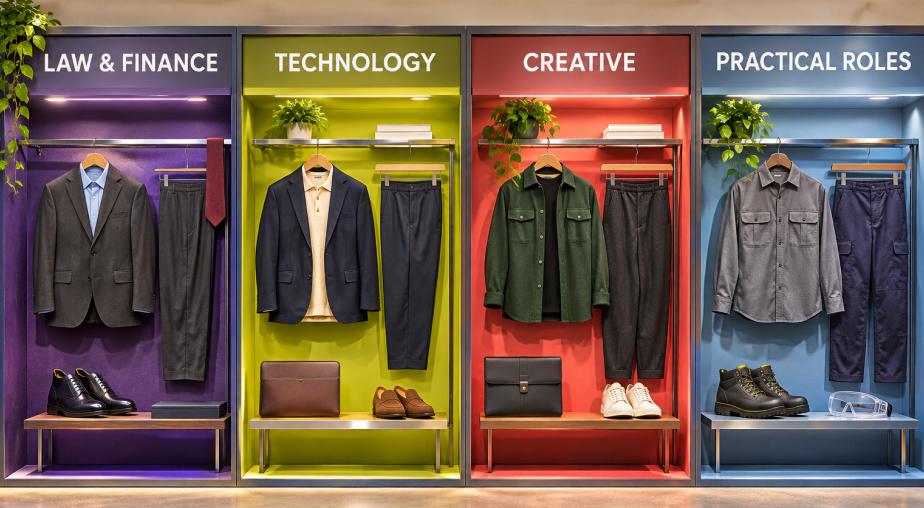
The purpose of this comparison is to help candidates identify a reasonable starting point before researching the specific employer.
Law Firm Interviews: Why Traditional Business Attire Still Matters
Legal services remain among the industries where traditional professional clothing can be especially relevant.
In the GQ report, Jessica Chin Somers, managing director at New York-based Kinney Recruiting, discussed the conservative expectations associated with law firm interviews.
For applicants pursuing attorney positions at traditional firms, a coordinated suit and appropriate formal shoes may be a sensible choice.
A navy, charcoal, or gray suit can provide a versatile foundation.
For men, a dress shirt and conventional leather footwear may complete the outfit. For women, a tailored pantsuit, coordinated skirt suit, or another suitable business-professional combination can serve the same purpose.
The most important considerations are fit, comfort, and the employer’s expectations.
A suit that pulls across the shoulders or restricts movement may become distracting during a long interview.
Likewise, shoes should be comfortable enough for walking between offices, meeting rooms, and reception areas.
Not every legal workplace has identical expectations.
A legal technology company, public-interest organization, or small independent practice may have a different culture from a large corporate law firm.
Candidates should therefore research the organization rather than assume every legal position requires the same clothing.
Finance And Banking Interviews: How Formal Should Candidates Dress?
Financial services can involve conservative professional expectations, particularly in client-facing roles.
The GQ guide featured J. Daniel Chi, finance department chair at the University of Nevada, Las Vegas, discussing the continued relevance of formal interview clothing in finance.
For applicants interviewing at traditional banks, investment firms, accounting practices, or financial advisory businesses, a well-fitting suit may be appropriate unless the employer provides different instructions.
However, the financial sector includes organizations with different working environments.
A financial technology startup may operate more casually than an established investment bank.
A back-office data analyst may encounter different everyday clothing expectations from a financial adviser who regularly meets clients.
Candidates should consider the responsibilities of the position as well as the organization.
A traditional business outfit may be useful when uncertainty remains, but it should not be treated as a substitute for employer research.
Neutral colors can provide versatility, although no particular color guarantees that a candidate will be perceived as competent.
The purpose of the outfit is to support a professional interaction, not to communicate financial status through expensive brands.
Technology Interviews: Business Casual Often Makes More Sense
Technology companies are frequently associated with relaxed clothing, but their interview expectations are not uniform.
The November 2026 GQ coverage included Sam Fricker and Alexis Fagin, recruiters at streaming technology company Philo, along with Mike Gutner, chief people officer at restaurant technology company Toast.
Their perspectives illustrate how workplace expectations can differ by organization, location, and department.
For a software engineering interview at a casual technology company, a clean button-down shirt, refined knit polo, tailored chinos, or simple blazer may provide an appropriate starting point.
For a technical leadership role involving client presentations or executive meetings, more structured clothing may be useful.
A technology company’s finance, legal, or business development department may also have different expectations from its engineering team.
The interview format matters.
If the interview includes a practical technical assessment, candidates should choose clothing that allows them to work comfortably.
For virtual interviews, the outfit should look appropriate on camera without restricting movement.
A candidate does not need to imitate the clothing worn by a company’s founders or senior executives.
Instead, the objective is to select an outfit that reflects the position and the employer’s actual expectations.
Marketing And Creative Agencies: Professionalism Without Losing Individuality
Creative industries often provide more flexibility in personal presentation.
Marketing, advertising, photography, design, and branding professionals may use clothing as one expression of their individual style.
The GQ report included Matt Johnson, founder and chief strategy officer of Los Angeles creative agency Haymaker, whose perspective emphasized the importance of the applicant’s abilities and authentic presentation.
For a creative interview, a contemporary jacket, textured knitwear, tailored trousers, or carefully selected casual clothing may be appropriate.
Color and accessories can contribute to personal style without making the outfit distracting.
However, creative freedom should not be confused with a lack of preparation.
A candidate interviewing at an established advertising agency may encounter different expectations from someone applying to a small independent design studio.
The portfolio, work samples, relevant experience, and ability to discuss creative decisions remain more important than whether the candidate follows a particular fashion trend.
A useful approach is to select clothing that feels authentic while remaining comfortable enough for a professional conversation.
Someone who rarely wears formal tailoring does not necessarily need to adopt a traditional corporate suit for every creative role.
Likewise, an applicant who prefers structured business clothing should not feel compelled to dress casually simply because the employer operates in a creative field.
Media And Entertainment Interviews: Balancing Comfort With Presentation
Media and entertainment organizations include a wide range of professional environments.
A television newsroom, digital publishing company, music business, sports media platform, and advertising production studio may all have different expectations.
In GQ‘s industry guide, Rich Kleiman, CEO and co-founder of Boardroom, discussed the value of clothing that feels comfortable while remaining intentional.
For candidates, the relevant distinction is often between casual clothing and clothing that appears appropriate for the professional setting.
A media analyst attending a video interview may choose a knit shirt or tailored jacket.
Someone applying for a client-facing advertising position may prefer business casual clothing.
An applicant pursuing a production role may need practical garments suited to a studio environment.
On-camera positions introduce additional considerations.
Clothing patterns, fabric reflectivity, and color contrast can affect how an outfit appears under studio lighting.
Candidates attending an on-camera test should follow any instructions provided by the production team.
The same outfit may not work equally well for a newsroom interview, a corporate media sales meeting, and a production demonstration.
Understanding the role is more useful than assuming every media job has a relaxed dress code.
Nonprofit Interviews: Dressing Appropriately For The Organization’s Mission
Nonprofit organizations vary considerably in size, resources, professional responsibilities, and workplace culture.
A national nonprofit headquartered in Washington, D.C., may have formal expectations for executive or government-facing positions.
A small community organization may use a more relaxed dress code.
The GQ article included Sam DeMase, a career expert at ZipRecruiter, discussing the importance of aligning professional presentation with nonprofit organizational culture.
For many nonprofit interviews, business casual can provide a practical starting point.
A blazer, collared shirt, coordinated trousers, comfortable dress, or refined knitwear may work depending on the position.
Candidates should also consider whether the role includes fieldwork, community events, public presentations, or office-based responsibilities.
An applicant interviewing for a nonprofit leadership position may need a more formal outfit than someone attending an operational assessment.
Clothing does not demonstrate commitment to a cause.
A candidate’s understanding of the organization’s mission, relevant experience, and ability to explain their contribution provide more meaningful evidence.
Professional appearance should support that discussion rather than become a display of expensive accessories or status.
Academia And Education: Why Interview Format Matters
Academic interviews can involve several activities across an extended period.
Candidates may meet faculty members, administrators, students, or hiring committees.
Some interviews include presentations, campus tours, teaching demonstrations, or multiple meetings in different buildings.
The GQ guide featured Jocelyn Coalter, senior director of career and leadership development at St. John’s University in New York City, discussing the importance of researching institutional expectations.
For a faculty or administrative position, a blazer, coordinated professional separates, or a business suit may be appropriate.
However, expectations can vary by academic discipline, institution, and position.
An applicant interviewing for a senior university leadership role may choose a more formal outfit than someone applying for a position involving laboratory work.
Footwear is especially important when the schedule includes walking across campus.
A candidate may need to move between buildings, stand during a presentation, and remain comfortable throughout several hours of interviews.
Professional clothing should accommodate those activities.
Applicants should review the interview schedule in advance and ask whether any practical demonstration or specific clothing requirement is expected.
Healthcare, Retail, And Skilled Trades: Practical Clothing Comes First
Not every interview takes place in a traditional office.
Healthcare, retail, hospitality, manufacturing, construction, and skilled-trade positions may involve physical environments where mobility, hygiene, or safety requirements influence clothing choices.
For a healthcare administrative role, business casual clothing may be appropriate.
For a clinical position, candidates should follow the employer’s instructions about whether professional attire, scrubs, or other clothing is expected.
A retail management interview may call for clothing that reflects the store’s professional environment without requiring the applicant to purchase its merchandise.
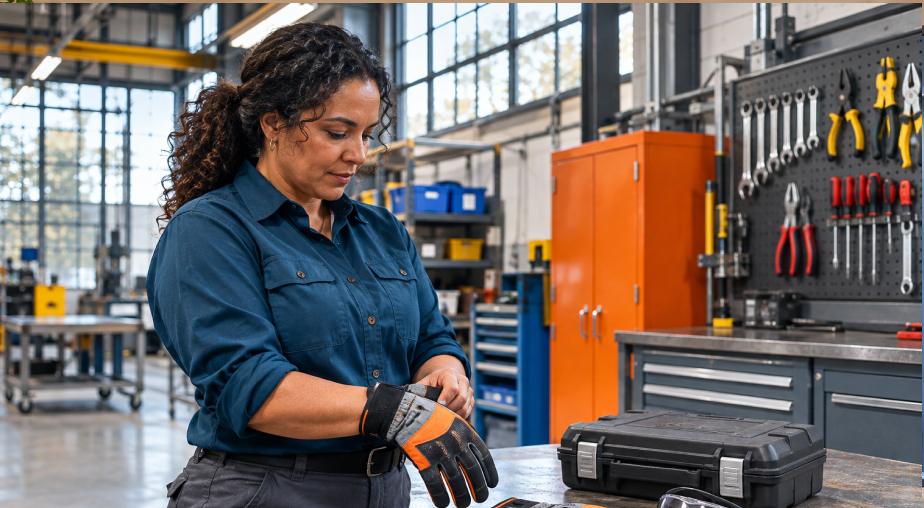
For skilled trades, clean practical clothing and appropriate footwear may be more relevant than formal tailoring.
The Department of Labor’s 2026 interview guide specifically addresses trade-industry interviews and recommends bringing suitable work equipment when an employer has indicated that a skills demonstration may take place.
For example, an applicant attending a welding assessment may need workwear and protective equipment appropriate to the task.
Those requirements should be confirmed with the employer rather than assumed.
An outfit that is appropriate for a financial services interview may be unsuitable for a workshop demonstration.
The purpose of professional dressing is to prepare for the actual work environment.
How To Research A Company’s Dress Code Before An Interview
Industry guidance becomes more useful when combined with information about the specific employer.
Candidates can begin by reviewing the company’s official website.
Photographs from workplace events, employee profiles, leadership biographies, and recruiting materials may provide clues about professional presentation.
LinkedIn can also help applicants understand how employees present themselves publicly.
However, corporate headshots may not reflect everyday office clothing.
A company whose executives wear suits in formal portraits may still maintain a business-casual dress code.
Similarly, photographs from a casual team celebration may not represent expectations for client meetings.
The most reliable option is often to ask the recruiter or interview organizer.
A straightforward question about recommended interview attire can prevent unnecessary uncertainty.
Former Massachusetts Governor Jane Swift addressed this issue in her November 2, 2026 career advice, emphasizing the value of researching dress expectations before attending an interview.
For additional context, Finest Image’s Jane Swift interview attire guide examines how candidates can prepare their clothing and presentation for different professional settings.
The key is to gather enough information to make an informed decision rather than attempting to predict what every hiring manager prefers.
Should You Dress One Level Above The Workplace Standard?
The recommendation to dress slightly more formally than the everyday workplace standard remains common in career guidance.
The Department of Labor’s February 2026 guide explicitly recommends this approach.
For an organization where employees wear casual clothing, business casual may be appropriate for the interview.
For a business-casual workplace, a more structured outfit may be suitable.
For an executive role or a conservative industry, traditional business attire may be expected.
However, dressing one level above should not be interpreted as an inflexible formula.
A candidate interviewing at a creative agency may not benefit from wearing a formal suit if the employer values a more relaxed professional environment.
Similarly, a practical skills assessment may require functional clothing rather than conventional business attire.
The best approach is to combine the general recommendation with the employer’s specific instructions.
If an organization provides an interview dress code, candidates should use that information as their primary guide.
Professionalism is demonstrated through preparation and appropriate judgment, not by automatically choosing the most formal outfit available.
Clothing Fit, Grooming, And Footwear Matter More Than Designer Labels
Professional appearance does not require expensive clothing.
A well-fitting shirt, clean trousers, comfortable shoes, and a coordinated outfit can provide an appropriate presentation without a luxury wardrobe.
Clothing fit deserves particular attention because interviews often involve sitting, standing, walking, and speaking for extended periods.
A jacket that restricts movement may become uncomfortable.
Shoes that have never been worn may cause problems during a campus tour or office visit.
A shirt that requires constant adjustment can distract the candidate during the conversation.
The Department of Labor recommends checking garments for stains, damage, wrinkles, and other practical issues before attending an interview.
Routine grooming can also support comfort and preparation.
Candidates should maintain their preferred hairstyle, facial hair, or other grooming choices in a way that works for them and meets legitimate workplace requirements.
There is no universal haircut, facial structure, or grooming style that establishes professional competence.
Accessories should also be selected for practicality.
A portfolio or bag should accommodate necessary documents. Glasses should be comfortable and clean. Footwear should be appropriate for the location and expected activities.
The objective is to arrive prepared rather than to communicate wealth through clothing.
How Interview Outfits Should Change For Video Interviews
Virtual interviews create a different presentation environment.
A candidate may appear professional in person but discover that the same clothing looks distracting under artificial lighting or against a particular background.
Small patterns can sometimes create visual interference on camera.
Very dark clothing may blend into a dark background, while bright reflective fabrics can become distracting under strong lighting.
A simple outfit with appropriate contrast can help keep the face clearly visible.
Camera positioning also matters.
Placing the camera near eye level and using balanced lighting can create a more natural visual presentation.
Candidates should test their clothing while seated rather than relying entirely on how the outfit looks while standing.
The interview space should be reasonably quiet and organized.
A virtual interview does not require an expensive home office or professional photography equipment.
A stable camera, clear audio, suitable lighting, and appropriate clothing can provide a practical foundation.
The most important consideration remains communication.
Applicants should prepare examples of relevant experience, review the job description, and practice answering questions clearly.
Clothing and camera presentation should support those activities rather than distract from them.
Professional Headshots And Interview Clothing Should Reflect The Same Identity
Professional presentation frequently begins before an interview.
Recruiters, professional contacts, and potential clients may encounter an applicant’s LinkedIn profile, personal website, or online portfolio.
For this reason, professional headshots are relevant to personal branding.
LinkedIn’s official professional photo guidance recommends choosing clothing representative of how the individual would appear during a real professional meeting.
Its guidance is designed for sales professionals, but the underlying emphasis on authenticity and recognizability is relevant to other professional contexts.
A candidate applying to a traditional financial services company may choose a more formal outfit for a professional portrait.
Someone working in design, technology, or media may prefer a more relaxed presentation.
The photograph should still accurately represent the individual.
Professional lighting, framing, and camera perspective can improve image clarity without requiring excessive facial retouching.
An authentic headshot should not suggest that conventional attractiveness determines professional ability.
A useful professional photograph helps viewers recognize the person and understand the general context in which they work.
It does not replace a strong resume, relevant experience, or effective interview preparation.
Why Employers Must Be Careful About Appearance-Based Judgments
Advice about professional clothing should acknowledge that appearance expectations can be subjective.
Applicants have different financial circumstances, cultural backgrounds, religious practices, disabilities, and personal styles.
A candidate’s clothing may also reflect access to professional resources rather than their ability to perform a job.
The U.S. Equal Employment Opportunity Commission explains that covered employers cannot make hiring decisions based on protected characteristics such as race, religion, sex, national origin, age, disability, or genetic information.
Its employment discrimination guidance also addresses situations where apparently neutral policies may unlawfully disadvantage protected groups.
This is particularly relevant when employers establish rigid grooming or appearance expectations.
Religious clothing, natural hairstyles, disability-related accommodations, and other individual circumstances may require careful consideration.
Job seekers should not interpret generalized interview clothing advice as a requirement to erase personal identity.
Likewise, employers should distinguish legitimate job-related requirements from subjective preferences about attractiveness or personal style.
A candidate’s qualifications, experience, communication, and ability to perform the position remain central to a fair hiring process.
Professional appearance can support an introduction, but it should not determine someone’s value as an employee.
How To Prepare Your Interview Outfit Without Spending Too Much
Preparing an appropriate interview outfit can begin with clothing already in the wardrobe.
The first step is identifying the expected level of formality.
Once that is clear, candidates can select a complete outfit and evaluate its condition.
A jacket may only need pressing or minor alterations.
A pair of shoes may require cleaning.
A shirt may work better with different trousers or a more suitable layer.
Secondhand stores, clothing exchanges, and career closets can provide affordable alternatives when additional garments are needed.
Candidates should avoid purchasing unfamiliar clothing immediately before an important interview whenever possible.
Trying on the complete outfit in advance allows time to identify fit or comfort problems.
It is also useful to consider the weather and interview location.
A winter interview in Boston may require a suitable coat and footwear for wet or icy conditions.
A summer interview in Phoenix may call for breathable fabrics and careful planning around heat.
These practical decisions can be more important than following a particular fashion trend.
The best outfit is one that fits the situation, supports comfort, and allows the candidate to concentrate on the meeting.
What Job Seekers Should Remember About Interview Outfits In 2026
The November 5, 2026 GQ guide illustrates why interview clothing advice must account for differences between industries.
Traditional law firms and financial institutions may maintain more formal expectations.
Technology companies may prefer business casual clothing.
Creative agencies and media organizations may allow greater personal expression.
Nonprofit organizations, universities, healthcare employers, and skilled-trade businesses each introduce additional considerations based on their responsibilities and working environments.
Yet these differences do not eliminate the need for preparation.
Candidates should research the organization, understand the position, choose comfortable clothing, and follow any instructions provided by the employer.
They should also remember that professional appearance is only one part of an interview.
A polished outfit cannot replace relevant skills, thoughtful questions, clear communication, or evidence of past accomplishments.
For employers, clothing should never become a shortcut for judging competence or reinforcing unfair appearance standards.
For job seekers, the most useful approach is to treat professional attire as a practical tool rather than a test of personal worth.
In 2026, the strongest interview outfit is not necessarily the most formal or expensive. It is the one that fits the professional environment, respects the individual’s identity, and allows their qualifications to remain the focus of the conversation.