

Photography has spent much of the generative-AI era asking what sounds like a simple question:
Is this photograph real?
Adobe Research argues that the question is becoming inadequate.
For World Photography Day on August 19, 2026, Adobe Research published a detailed look at how trust can travel with a digital photograph. Instead of attempting to stamp images as simply “real” or “fake,” researchers are focusing on provenance: information about where an image came from, how it was created, what happened to it afterward, and whether that history can be independently verified.
That distinction matters because modern photographs rarely exist in only two states.
A photograph can come directly from a camera.
It can be cropped.
Its exposure can be adjusted.
Dust spots can be removed.
A distracting person can disappear.
A sky can be replaced.
The frame can be expanded using generative AI.
A completely artificial element can be added.
Or an image can be generated without a camera at all.
Calling all of those possibilities either “real” or “fake” compresses very different creative processes into two categories.
Adobe’s argument points toward a more useful future for photography: instead of asking viewers to guess what happened to an image, give them access to its history.
An Unedited Photograph Is Not Automatically the Truth
One of the most important points in Adobe Research’s August 19 announcement is that authenticity and truth are not identical.
An untouched photograph can still be misleading.
Imagine a photograph showing a nearly empty beach.
The image could be completely unedited.
But what if the photographer deliberately framed the photograph two meters to the left of a huge crowd?
Nothing in the pixels was manipulated.
The visual story can still be incomplete.
The opposite situation is possible too. An image containing substantial editing or synthetic elements can be clearly presented as an illustration and used honestly to explain a factual subject.
Adobe Research therefore argues that viewers need more information than what appears on the surface. Its researchers are developing systems intended to communicate where content originated, what changed and whether that information can be verified.
That is a more sophisticated question than:
“Was Photoshop used?”
For photography, the better questions become:
Who made this? What was captured? What was changed? What tools were involved?
Provenance Is Essentially a Photograph’s Biography
The easiest way to understand provenance is to think of it as a photograph’s biography.
The final JPEG is the photograph as it exists now.
Provenance describes how it got there.
Adobe’s World Photography Day research explains that Content Credentials can use cryptographically signed metadata to record information about an image’s creation and modification. That information can include the device or application involved, edits that were performed and whether generative-AI tools participated in the workflow.
Imagine two visually identical portraits.
Both show the same person against the same background.
The first was photographed in that location and received ordinary color and exposure corrections.
The second began as a studio portrait, had its background replaced, clothing altered and environmental lighting generated afterward.
A viewer might not be able to distinguish them visually.
Their histories are nevertheless completely different.
Provenance gives viewers another source of information beyond their eyes.
Humans Are Not Reliable AI Detectors
The need for that additional information becomes clearer when people try to identify synthetic imagery visually.
Adobe Research cites an ACM study finding that people’s ability to detect generated imagery was roughly comparable to a coin toss.
That creates a serious weakness in the familiar advice to “look closely.”
AI-image detection tips often tell people to examine fingers, reflections, typography, earrings, teeth, shadows or background geometry.
Those clues can sometimes reveal poorly generated imagery.
They are not a durable verification system.
Image generators improve.
Human editors can correct obvious errors.
Photographs can also contain naturally strange details that people incorrectly interpret as evidence of AI.
A reflection might genuinely look unusual.
Motion blur can distort a hand.
Computational photography can create artifacts.
Aggressive smartphone processing can produce textures people associate with generation.
A real photograph can therefore be falsely suspected, while a convincing synthetic image passes visual inspection.
The underlying problem is that appearance alone does not provide a dependable record of origin.
Content Credentials Try to Move Verification Away From Guessing
Adobe helped establish the Content Authenticity Initiative in 2019, and the organization has since grown to more than 6,000 members worldwide, according to Adobe Research. The initiative contributed to the development of Content Credentials using the open technical standard developed by the Coalition for Content Provenance and Authenticity, or C2PA.
The approach changes the problem.
Instead of developing another detector that tries to infer whether pixels look suspicious, Content Credentials can provide records associated with how content was created and modified.
The C2PA technical specification describes a framework for cryptographically verifiable provenance information. When content changes, additional provenance information can be associated with the new version while earlier history is preserved.
This is conceptually similar to documentation accompanying a physical object.
If you buy a valuable artwork, knowing its history can matter.
Who created it?
Where has it been?
Who handled it?
Has it been altered?
A digital photograph increasingly benefits from comparable context.
Content Credentials Are Not a Truth Machine
There is an essential limitation.
Content Credentials do not automatically tell viewers whether what a photograph depicts is factually true.
C2PA explicitly makes this distinction.
Its documentation explains that provenance can provide evidence concerning origin, history and authenticity, but provenance alone cannot determine whether the content itself is truthful or factually accurate.
Consider a photographer who stages a scene.
The camera genuinely captures that scene.
The Content Credentials accurately document its origin.
Nothing is digitally manipulated.
The photograph can still create a false impression if presented as spontaneous documentary evidence.
The credentials tell you something important:
This is where the file came from.
They cannot automatically answer:
Is the story being told about this photograph true?
That remains a matter of context, journalism, evidence and judgment.
Editing Is Not the Same Thing as Deception
A provenance-based approach also avoids another problem: treating all editing as suspicious.
Photography has never been simply pressing a shutter and doing nothing afterward.
Exposure decisions existed in the darkroom.
Cropping existed.
Dodging and burning existed.
Color interpretation existed.
Retouching existed.
Digital photography added increasingly sophisticated versions of those processes.
A professional RAW file is ordinarily developed before delivery. White balance, contrast, highlights, shadows, noise, sharpening and lens corrections may all be adjusted.
Those interventions do not automatically invalidate the photograph.
The more useful issue is what the edit changes about what viewers believe happened.
Correcting white balance and generating a person who never existed are both digital operations.
They are not equivalent operations. MAI-Image-2.5 launches at No. 2 for
image editing on Arena.
A Useful Editing Spectrum Is Emerging
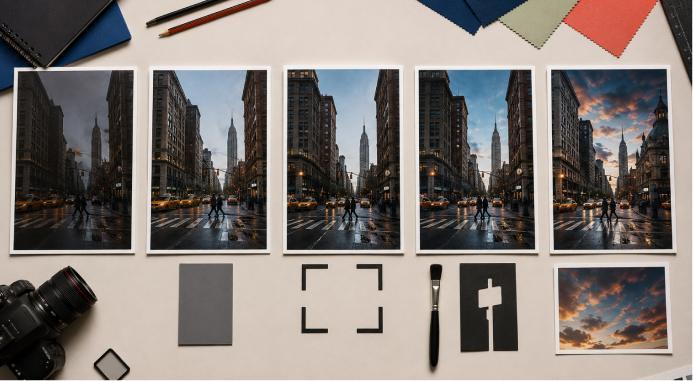
Instead of dividing images into edited and unedited, photography increasingly needs a spectrum.
At one end are technical adjustments:
exposure correction,
white balance,
noise reduction,
lens correction,
dust removal,
and sharpening.
Move farther along and editing becomes more interpretive:
cropping,
skin retouching,
background cleanup,
object removal,
and localized color manipulation.
Farther still are structural changes:
background replacement,
adding objects,
removing people,
altering clothing,
changing facial features,
or extending environments.
Finally, an image may be generated almost or entirely synthetically.
The important question is not whether all those techniques should be prohibited.
It is whether audiences can understand which kind of image they are seeing.
Provenance potentially provides that context without pretending every edit has the same significance.
Photoshop Can Already Record Parts of This History
This is not merely a research concept.
Adobe currently allows Photoshop users to add Content Credentials containing attribution information and editing history when exporting images. The company describes the system as a way to provide transparency while helping creators maintain recognition as their work travels online.
Photographers can choose information associated with the image, including identity information, connected accounts and edit activity.
Adobe also allows credentials to be attached directly to supported JPG and PNG exports or published through its Content Credentials cloud.
The cloud option addresses an important practical problem.
Metadata is fragile.
Social Platforms Can Strip Metadata
Photographers have been adding metadata to files for years.
Copyright.
Creator name.
Contact information.
Descriptions.
Keywords.
Camera information.
But metadata does not necessarily survive every platform through which an image travels.
Adobe Research specifically identifies metadata stripping as a problem because platforms can remove information during upload, breaking the connection between an image and its provenance.
The Content Authenticity Initiative has described the same challenge: despite increasing adoption of Content Credentials, social and content platforms can still remove embedded metadata.
That means provenance needs to be more durable than a simple text field embedded in a JPEG.
Adobe researchers are therefore exploring complementary techniques including invisible watermarking and image fingerprinting so provenance information can potentially be rediscovered even after embedded metadata disappears.
A Photograph May Need to Recognize Its Own Descendants
Image fingerprinting introduces an interesting idea.
Suppose a photographer publishes an original photograph.
Someone downloads it.
They crop it.
Resize it.
Compress it.
Screenshot it.
Post it somewhere else.
The resulting file may no longer carry the original metadata.
Yet visually it is still derived from the photographer’s image.
A sufficiently durable provenance system attempts to reconnect that descendant with its history.
This matters because online photographs rarely remain untouched files.
They are copied between websites.
Converted between formats.
Placed inside graphics.
Screenshot.
Reposted.
Compressed.
Edited.
A useful authenticity system therefore has to survive the ordinary messiness of the internet.
Photographers Have an Ownership Reason to Care Too
Authenticity is usually discussed as a defense against misinformation.
Photographers have another reason to care: attribution.
Adobe Research scientist Shruti Agarwal explained in the August 19 announcement that photographers need reliable ways to demonstrate that they created an image, particularly when their work circulates widely. For photojournalists documenting conflicts, natural disasters or breaking news, origin and alteration history can become especially important because photographs may function as evidence.
But the principle extends to commercial and creative photography.
A product photographer may want authorship preserved.
A portrait photographer may want a final image connected with their identity.
An artist may want viewers to find the original source after an image goes viral.
A creator may want to distinguish an authorized version from later modifications.
Provenance can therefore serve two overlapping purposes:
help audiences understand the image and help creators remain connected to their work.
Lightroom Is Bringing the Idea Into Ordinary Photography Workflows
The technology is also moving closer to normal photography rather than remaining confined to specialist verification tools.
On July 23, 2026, Adobe published updated guidance showing how photographers can apply Content Credentials when exporting photographs from Lightroom, Lightroom Classic, Lightroom mobile and Lightroom on the web.
Photographers can configure information about themselves, connected accounts and types of edits applied to an image.
That matters because Lightroom is much closer to the everyday photography workflow than an experimental provenance laboratory.
A photographer imports RAW files.
Selects images.
Edits them.
Exports JPEGs.
Content Credentials can potentially become another part of that export process.
In other words, provenance does not necessarily require photographers to become forensic specialists.
It can become part of ordinary image delivery.
Cameras Can Establish History at Capture
The strongest provenance chain begins before Photoshop.
Adobe’s current Content Credentials documentation identifies cameras including the Leica M11-P and Nikon Z9 as examples capable of supporting Content Credentials workflows that can record image history from capture through subsequent edits in compatible Adobe applications.
This changes the evidentiary value of provenance.
If history begins only when a JPEG enters an editing application, there is less information about what happened before that point.
If a supported camera establishes information at capture, later stages can build on that starting point.
For documentary photography, photojournalism and other evidence-sensitive applications, that difference can matter substantially.
Commercial Photography Has a Different Authenticity Problem
Product photography demonstrates why “real or fake” becomes especially unhelpful.
Commercial photographs are routinely constructed.
A bottle may be photographed separately from its background.
Several exposures may be combined to control reflections.
Dust and scratches can be removed.
Liquid splashes can be composited.
Labels can receive separate lighting.
Backgrounds can be replaced.
That does not necessarily mean the image inaccurately represents the product.
The meaningful question is whether the final photograph preserves important product facts.
Did the bottle’s shape change?
Did its color change?
Was an accessory added that customers do not receive?
Did the packaging gain a feature it does not have?
Was the product made substantially larger than it really is?
For the photography and visual-presentation topics covered by Finest Image, this distinction is increasingly important: image improvement and visual deception are not synonymous. What matters is understanding how presentation affects what viewers believe they are seeing.
Portrait Photography Creates Even More Difficult Questions
Portraits introduce another layer.
Consider professional headshots.
Removing a temporary blemish may be considered ordinary retouching.
Softening permanent facial texture becomes more subjective.
Changing face shape goes further.
Replacing clothing goes further again.
Generating different hair, body proportions or facial characteristics can eventually produce an image that represents an appearance the camera never captured.
Yet every stage can still look like photography.
A binary label tells viewers very little.
“Edited” could mean a dust spot was removed.
It could also mean the person’s face was substantially reconstructed.
A meaningful history can distinguish between those possibilities.
News Photography Has a Higher Verification Burden
The stakes become much higher when photographs are used as evidence of public events.
A fashion campaign is expected to involve art direction.
A product photograph is expected to involve controlled presentation.
A news photograph makes a different promise to viewers.
People use it to understand what happened.
Adobe Research specifically highlights photojournalism as an important use case for provenance because photographs from conflicts, disasters and breaking news may need to demonstrate both their origin and whether they were subsequently altered.
That does not mean every journalistic photograph must be completely untouched.
News organizations have long made ordinary adjustments such as cropping and tonal correction.
The key issue is whether changes alter the factual content.
A provenance trail gives publishers and audiences more information for evaluating that distinction.
AI Makes Photography Literacy More Important, Not Less
There is a temptation to believe technology will eventually solve authenticity automatically.
A detector will identify every synthetic image.
A badge will identify every real photograph.
Everything will become obvious again.
Adobe’s research points toward a more complicated reality.
Technical systems can provide evidence.
They cannot replace media literacy.
John Collomosse, Senior Principal Scientist at Adobe Research, describes digital-media trust as a socio-technical challenge: better technology matters, but so do people’s understanding of authenticity signals and the context in which media is produced and consumed.
That distinction is important.
A credential should help someone ask better questions.
It should not encourage them to stop asking questions.
Missing Credentials Should Not Automatically Mean “Fake”
There is another trap to avoid.
If provenance systems become common, people may begin assuming:
credential = real
no credential = fake.
That would recreate the binary problem under a different name.
Content Credentials are still being adopted, and many legitimate photographs will not contain them. Adobe’s public verification service explicitly notes that the technology is still rolling out and that some inspected content may contain no available credential information.
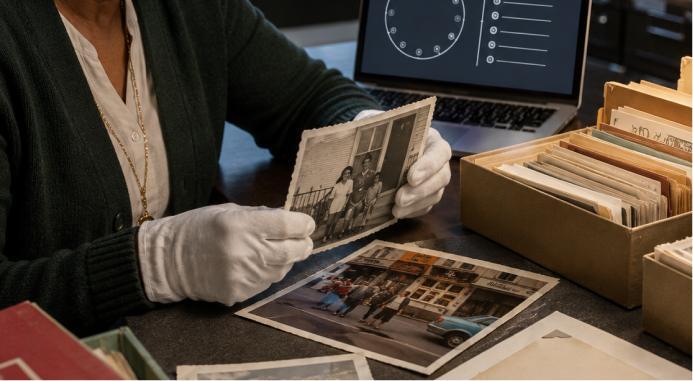
An old family photograph will not suddenly become suspicious because it lacks cryptographic provenance.
Neither will an image from a photographer using unsupported equipment.
Absence of provenance is absence of additional evidence.
It is not automatically evidence of fabrication.
Provenance Could Become Part of Professional Image Delivery
For working photographers, this may eventually change what a finished file means.
Traditional delivery might include:
high-resolution JPEGs,
web-resolution files,
RAW archives,
color profiles,
copyright metadata,
and licensing information.
Future professional workflows could increasingly include provenance information too.
That would be particularly useful for editorial photography, high-value commercial work, public figures, documentary projects and images likely to circulate far beyond their original publication.
The photographer would not merely deliver pixels.
They would deliver pixels with a verifiable history.

“Real” Is Becoming the Wrong Question
Adobe’s World Photography Day research ultimately points toward a broader change in how photographs should be understood.
The camera is no longer the only way to create something that looks photographic.
Photoshop is no longer limited to modifying existing pixels.
AI can remove, replace, extend and generate visual information convincingly.
Meanwhile, ordinary photographs continue to pass through increasingly sophisticated computational processing before viewers ever see them.
Trying to force all those images into real and fake categories loses important information.
A better model asks about origin.
Creation.
Editing.
Attribution.
Context.
And limitations.
Content Credentials will not make every photograph truthful. C2PA itself cautions that provenance cannot independently establish whether the content of an image is factually accurate.
What provenance can potentially do is give viewers something they increasingly lack: a record they can inspect instead of a visual impression they have to guess from.
That may ultimately be more valuable than another “AI-generated” warning.
Photography has always asked viewers to trust what happened inside a fraction of a second.
In the age of generative editing, the photograph may increasingly need to tell us what happened after that fraction of a second as well.