
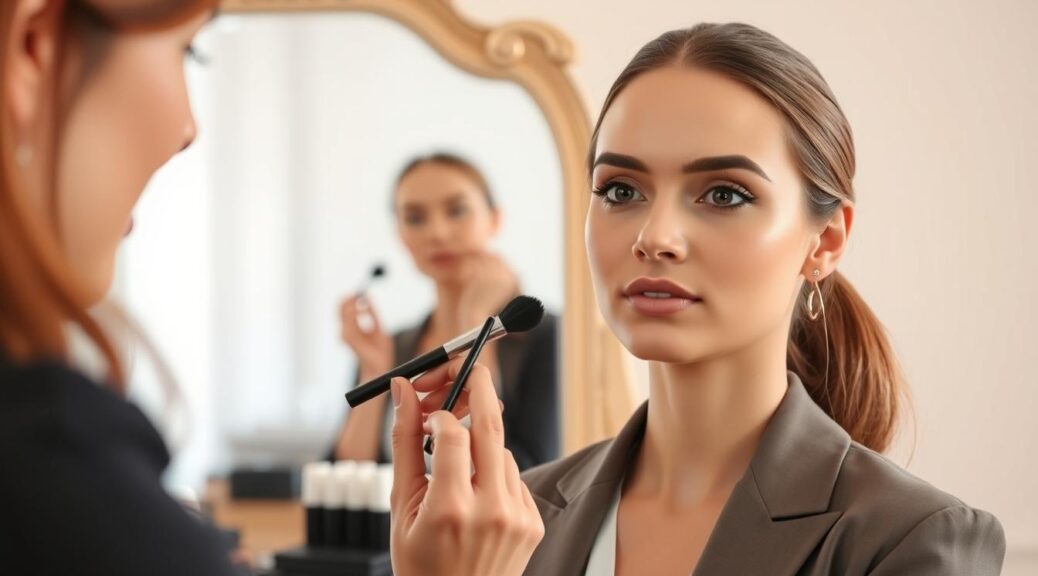
In today’s world, your headshot is like a digital handshake. I’ve seen careers made by just one photo. The camera catches everything, just like a critical relative at Thanksgiving.
Makeup for photos is key because the camera spots details we miss. Every pore looks like a canyon, and every shine is like a solar flare. It’s about showing your best self, not creating a fake version.
It’s like strategic enhancement, not deception. You want to look your best, with photo-ready makeup that looks great under bright lights.
Your headshot is your digital face. It makes first impressions and launches careers. Get it right, and you’re on your way to success.
Flawless Base Tips
Think of your foundation as political spin. Applied right, it looks seamless. But, done wrong, it’s obvious.
The camera lens is like a skeptical journalist. It shows every difference between your face and neck if they don’t match.
Match your foundation to your neck and chest, not just your face. This avoids the “floating head” look. Your skin tone should tell one story.
Sunscreen in foundations sounds good but can cause problems. The SPF can make you look ghostly under studio lights.
Your best choice? Oil-free liquid matte foundations. They offer coverage without shine, perfect for photos.
Hydration is key. Moisturized skin takes foundation well. Use primer, too, to blend freckles and lines.
Apply concealer more than usual. Cameras highlight flaws. Use a damp beauty blender for smooth application.
Color-correcting concealers help with specific issues. Green neutralizes redness, and peach tones fix dark circles.
Building a photo-ready base is about showing your best self. It’s about being prepared and polished for your close-up.
Highlighting Your Best Features
Think of your headshot as a political campaign for your face. You’re not inventing new policies, just highlighting your strongest points. The camera exaggerates, but it doesn’t lie. Your grooming choices can either boost your image or hurt it.
Your eyes should show you’re a competent leader, not a raccoon who found eyeliner. They are the windows to your professional soul.
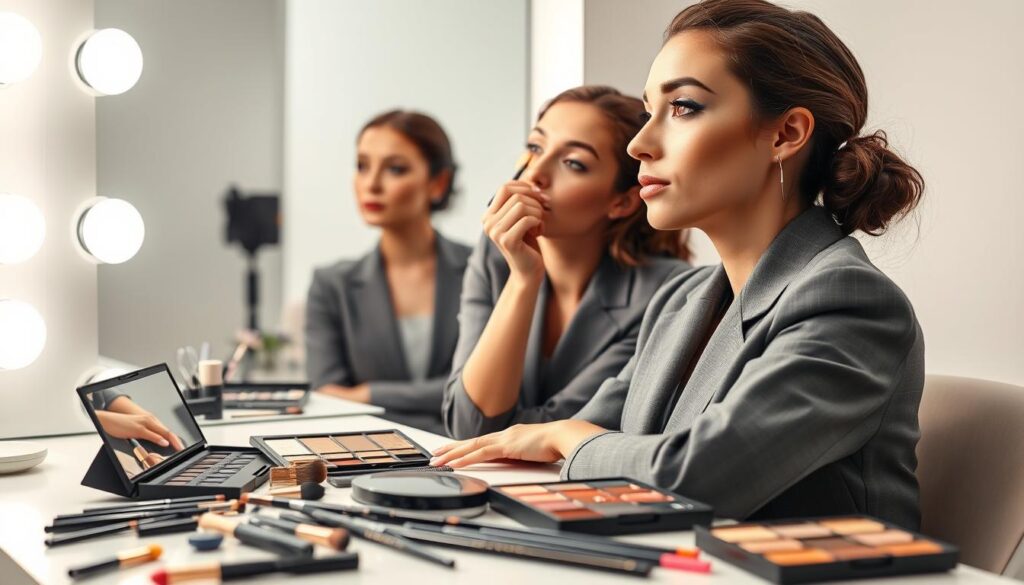
Neutral eyeshadows are like a good political moderate. They appeal to everyone without causing controversy. Eyeliner should be subtle. Poor eyeliner can damage your career more than actual incompetence.
Mascara should always be black. Brown mascara is like whispering your qualifications in a hurricane – it’s ineffective. And, avoid false eyelashes unless you’re auditioning for a daytime soap opera.
Shape your eyebrows days in advance. Walking into a photoshoot with freshly plucked brows is a bad move. Well-groomed eyebrows frame your face like a well-crafted policy statement.
Your lips need attention too. Choose a color one shade darker than your natural tone. Cameras wash out color, so this is necessary.
Blush application is like a political pollster’s work. Too little and you look washed out. Too much and you look like a campaign volunteer who found the punch bowl. Apply to the apples of your cheeks and blend upward.
Remember, professional grooming is about optimization, not transformation. Your features are already running for office. We’re just making sure they win.
Avoiding Shine & Distractions
Camera lights can make your face look like a shiny car. That glow you see in the mirror? It turns into “nervous sweat chic” under studio lights. This isn’t the look you want for professional photos.
Think of shine in headshots like that one colleague who always interrupts. It’s distracting and makes you look like you’ve been running in your office clothes.
To fight shine, you need a plan like a political campaign. Start with lots of powder, then touch it up every 10-20 minutes. This keeps your face looking smooth.
Choosing the right products is all about science, not just brands. For lighter skin, L’Oreal Bare Naturale is great. For darker skin, Laura Mercier’s products work well because they understand undertones.
Stay away from words like “sheer,” “glowy,” and “dewy.” They look good in natural light but not under camera lights. Matte finish is key to looking competent, not sweaty.
Here are some tips to control shine:
- Apply translucent powder with a fluffy brush, focusing on the T-zone
- Use blotting papers instead of piling on more powder
- Carry a compact for quick touch-ups between shots
- Blot instead of rubbing to keep your makeup in place
The camera makes everything look bigger, including shine. Your makeup should aim for a flawless, matte finish. This shows you’re ready for anything, not just a yoga class.
Men’s Grooming Included
Men’s grooming for professional headshots isn’t about looking fake. It’s about making a good impression without anyone noticing. It’s like wearing a suit that shows you’re competent without saying a word.
Think of it as making more money, not paying taxes. It’s about looking good without makeup. The goal is to look like you’re perfectly put together, like some people wake up already knowing three languages.
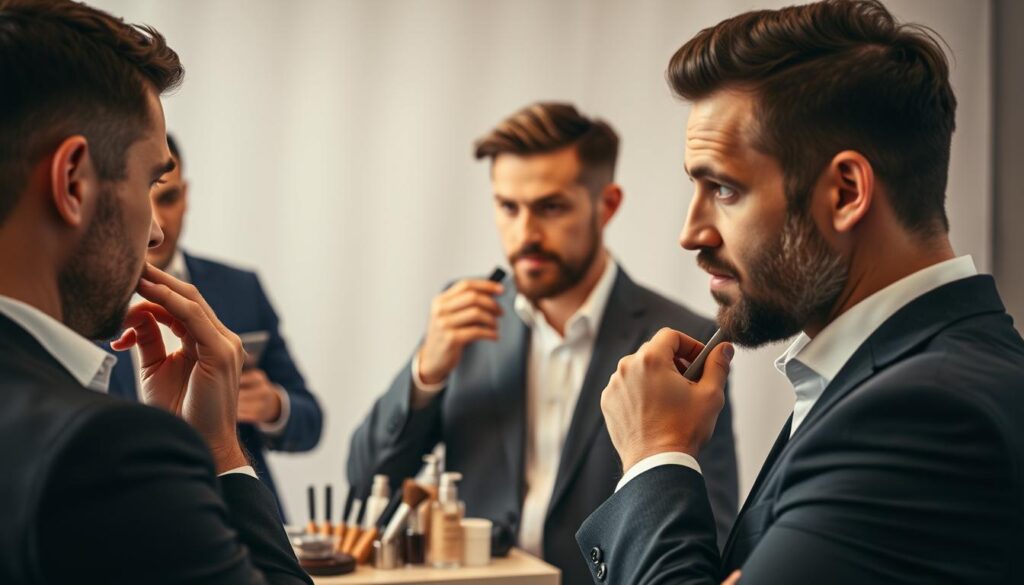
Start your grooming plan days before the photo shoot. Use lip balm early to avoid looking like you’ve been in the desert. If you have facial hair, wear it as you normally do. Or, if you’re an actor, try two looks to show your range.
When you shave matters a lot. Shave six hours before or the night before to avoid redness. Your skin will look better, and the camera will thank you.
Here’s how to look naturally great:
- Concealer for blemishes – apply it carefully, like a lawyer reading the law
- Mattifying powder – it’s like avoiding too much talk in a job interview
- Stippling technique for stubble – it’s like tenderizing meat, gentle but effective
- Groomed brows with clear gel – it shows you’re organized, not casual about deadlines
The modern professional’s grooming kit has changed. It’s not just aftershave anymore. Here’s what makes you look ready for the boardroom, not just a conference call:
| Grooming Element | Common Mistake | Professional Solution | Result |
|---|---|---|---|
| Facial Stubble | Uneven application | Stippling technique | Natural texture |
| Skin Shine | Over-powdering | Mattifying powder | Matte finish |
| Lip Condition | Last-minute balm | Days of preparation | Smooth appearance |
| Blemish Coverage | Obvious concealer | Subtle color correction | Flawless look |
| Eyebrows | Untamed | Clear gel grooming | Polished professionalism |
This isn’t about being vain. It’s about showing you pay attention to details. It shows you know how to present yourself well when it counts.
The camera sees these signals clearly. Your grooming can say “I’m ready to lead” or “I forgot it was today.” Choose wisely.
What to Bring on Session Day
Your photo-ready survival kit is key to success. Leave something important behind, and you’re in trouble. Cameras catch every little thing, so you must be ready.
Here’s what you need to pack like it’s an emergency:
- Blotting papers – because shine appears faster than bad news on Twitter
- Your exact lip color – cameras devour pigment like critics devour plot holes
- Compact mirror – for checking teeth before lipstick becomes permanent digital evidence
- Hair arsenal – spray, pins, ties (hair rebels against professionalism when cameras appear)
Ask to see shots every 5-10 minutes. It’s not about vanity; it’s about quality. I’ve seen careers saved by quick touch-ups more than by networking.
Keep looking perfect throughout your session. Check for shine and smudging like it’s a breaking news story. Your future self will appreciate it when these photos come up years later.
Conclusion
Think of getting ready for a headshot like running for office. You’re showing the best version of yourself, not a fake. The real effort starts before the camera even starts rolling.
Don’t get a spray tan that makes you look like a character from a movie. And don’t do a lot of grooming on the day of your shoot. Drink lots of water, like you’re crossing a desert. Try new makeup before the big day, unless you like risking your skin.
Studio Pod’s setup lets you try out different makeup looks without feeling judged. It’s like a focus group for your face before the big reveal.
Being real is more important than looking perfect. People will meet the real you, and you don’t want them to wonder if you peaked in photos. The goal is to look like you’re indispensable, not like you’re trying too hard.
The best makeup strategy is to make people notice your skills, not your makeup. In the professional world, the best look is one that looks effortless.