
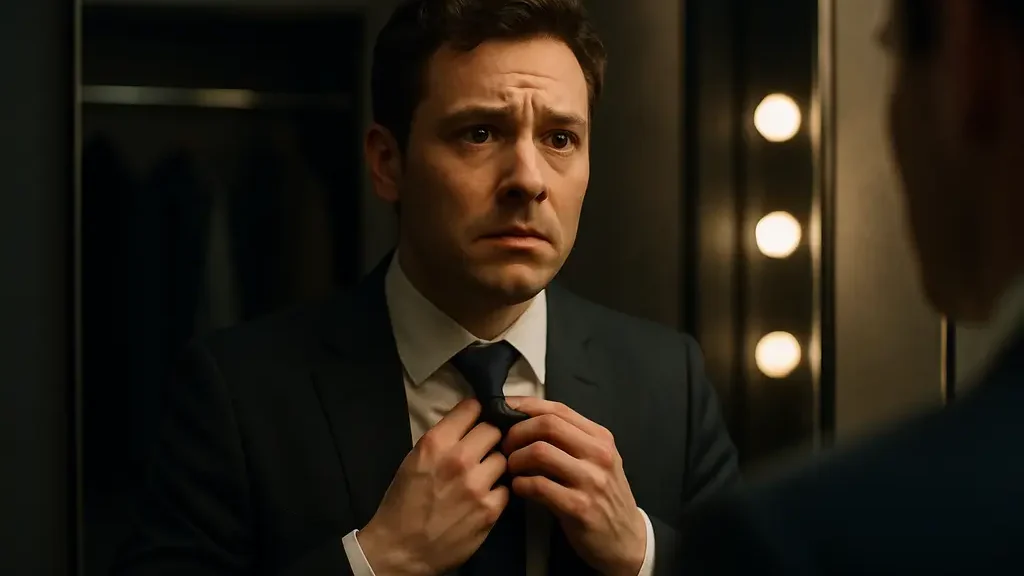
Interview First Impressions begin before a candidate has fully answered the first question. The first half-minute is not a magic timer that decides every outcome, but it does give the interviewer a visual and behavioral starting point: clothing, grooming, posture, eye contact, facial expression, and pace of response all arrive together.
That starting point matters because interviews ask people to judge limited information quickly. A candidate may have a strong record, but the interviewer first sees how that record is carried into the room or onto the screen. As a visual communication specialist, I see this as a branding issue as much as a wardrobe issue. Your appearance and body language should make your professional story easier to read, not distract from it.
The most useful goal is not to create a perfect image. It is to reduce unnecessary friction. A well-chosen outfit, prepared posture, and calm opening routine can help the interviewer focus on your experience, judgment, and fit for the role.
How Interview First Impressions Begin Before You Speak
Why Interview First Impressions Feel So Fast
Interviewers often begin forming impressions during the greeting. They notice whether the candidate appears prepared, comfortable, attentive, and respectful of the setting. That does not mean the interviewer has fairly assessed competence yet. It means the interviewer has already received signals that may frame later answers.
The research supplied for this article includes a 2023 meta-analysis of 63 studies with 4,868 participants. It found that professional appearance had a strong association with interview performance ratings, and that eye contact and head movement were also associated with those ratings. The same research notes indicate that these links appeared across interview types, including video and in-person formats.
Those findings support a practical point: the first view of a candidate is not separate from the interview. It is part of the interview experience. Clothing, grooming, and posture create a visual context for the words that follow.
What The 30-Second Frame Can And Cannot Do
The phrase 30 seconds can be useful if it keeps candidates from treating the opening moments casually. It becomes misleading if it suggests that every hiring outcome is locked before the conversation begins. A fair interview should weigh skills, evidence, experience, and job-related answers.
Use the 30-second frame as a preparation tool. Ask: if someone saw me enter the room, sit down, or appear on video before hearing my achievements, would my presentation support the role I am discussing? If the answer is uncertain, small adjustments may help.
Appearance Signals: Clothing, Grooming, And Fit
Choose Clothes That Support The Role
Professional appearance does not require one uniform. A finance interview, a nonprofit leadership interview, a retail management interview, and a creative production interview may all call for different choices. The common standard is intentionality. The clothing should look clean, cared for, appropriate to the organization, and consistent with the level of responsibility being discussed.
Fit matters because it affects both visual clarity and movement. Clothing that pulls, gaps, slips, or feels restrictive can pull attention away from the conversation. It can also change posture. A candidate who is constantly adjusting a jacket or collar may appear less settled than they actually are.
If you are unsure how formal to dress, compare the role, industry, and interview context. The safest choice is often one step more polished than the everyday office norm, without looking disconnected from the organization. For a deeper style discussion on that point, see this related piece on dressing one level above the office.
Prepare For Camera And Room Conditions
Video interviews make appearance choices more dependent on the frame. A patterned shirt that looks balanced in person may distract on camera. A low chair can make posture look collapsed. A bright window behind the candidate may hide facial expression.
Test the image before the meeting. Sit where you plan to sit. Check the lighting, background, camera height, and visible clothing. The goal is not to stage an artificial persona. It is to make sure your face, expression, and upper-body posture are readable.
- Choose clothing that fits the job context and lets you sit comfortably.
- Check grooming details that could distract at close range or on camera.
- Keep the interview background simple enough that attention stays on you.
- Practice the first greeting so your voice, face, and posture align.
- Prepare materials before the call or meeting so you do not begin by searching.
Body Language That Supports A Professional Narrative
Eye Contact And Head Movement
Eye contact helps signal attention, but it should not become staring. In person, look at the interviewer while listening and answering, then allow natural breaks when thinking. On video, alternate between the screen and camera enough that the other person feels addressed.
Head movement also affects how engaged a candidate appears. Small nods can show that you are following the question. A still face and fixed posture may read as tense, even if the candidate is simply concentrating. The research notes for this article identify eye contact and head movement as nonverbal behaviors associated with interview ratings, which makes them worth practicing before high-stakes conversations.
Hands, Posture, And Entry Cues
Posture should communicate readiness without stiffness. Sit with both feet grounded when possible. Keep shoulders open. Let your hands rest where they can gesture naturally. If your hands disappear under the table, gestures may look constrained; if they move constantly, they may compete with your answers.
The entry cue matters too. In person, that includes walking in, greeting the interviewer, and taking a seat. On video, it includes appearing on time, looking prepared, and beginning without a long technical scramble. These small behaviors tell the interviewer how you handle professional moments with mild pressure.
For candidates building a broader professional narrative, writing and visual presentation should support one another. Resources available at Leap Year Publishing provide insights into the synergy between words and visual storytelling.
Bias, Fairness, And Ethical Self-Presentation

Face-Based Assumptions Are Not Job Evidence
Appearance can affect perception in ways that are not fair or job-related. Research on facial width-to-height ratio found that people with higher ratios were perceived as more suited to blue-collar or physically demanding roles, while people with lower ratios were favored for white-collar or intellectual roles; the pattern shifted when role stereotypes were changed, according to the PubMed record.
That is a reminder for both candidates and employers. Candidates can prepare their presentation, but they should not be expected to control every bias someone may bring to a first impression. Employers should be careful not to treat facial structure, attractiveness, age appearance, or style preferences as evidence of job ability.
Ethical self-presentation means making honest choices that support clarity. It does not mean disguising who you are or trying to manipulate the interviewer. Clothing and body language should help translate professionalism, not create a false identity.
Responsiveness Also Shapes The Impression
First impressions are not only visual. Timing can also send a social signal. A Cornell SC Johnson College of Business article published on August 18, 2026, reported on a Management Science study about response delays in hiring. The article states that a five-minute delay in responding lowered an applicant’s odds of being hired by about 15 percent, while an hour delay reduced chances by 46 percent, according to Cornell’s report.
That research concerns response timing rather than clothing, but it connects to the same communication pattern. People often read speed, readiness, and attention as signs of warmth or competence. For interviews, this supports a simple habit: respond promptly to scheduling messages, arrive on time, and begin the conversation prepared.
Interview First Impressions And The 30-Second Standard
The practical value of Interview First Impressions is that they give candidates something concrete to prepare. You cannot control every interviewer reaction, and you should not try to erase your personality. You can control whether your clothing is ready, whether your posture supports your voice, whether your camera angle is workable, and whether your first greeting feels calm.
Think of the first 30 seconds as the cover image for the professional story you are about to tell. The image does not replace the story. It sets expectations for how the story will be heard.
Before your next interview, rehearse the opening as a complete visual moment. Stand or sit as you will in the real setting. Say the greeting out loud. Notice your hands, shoulders, eyes, and expression. Check whether the outfit supports the role and lets you move naturally. Then shift attention back to substance: examples, achievements, questions, and evidence.
Interview First Impressions work best when they are aligned with truth. The strongest opening is not the most polished costume. It is a clear, prepared presentation that lets your qualifications come forward quickly.