
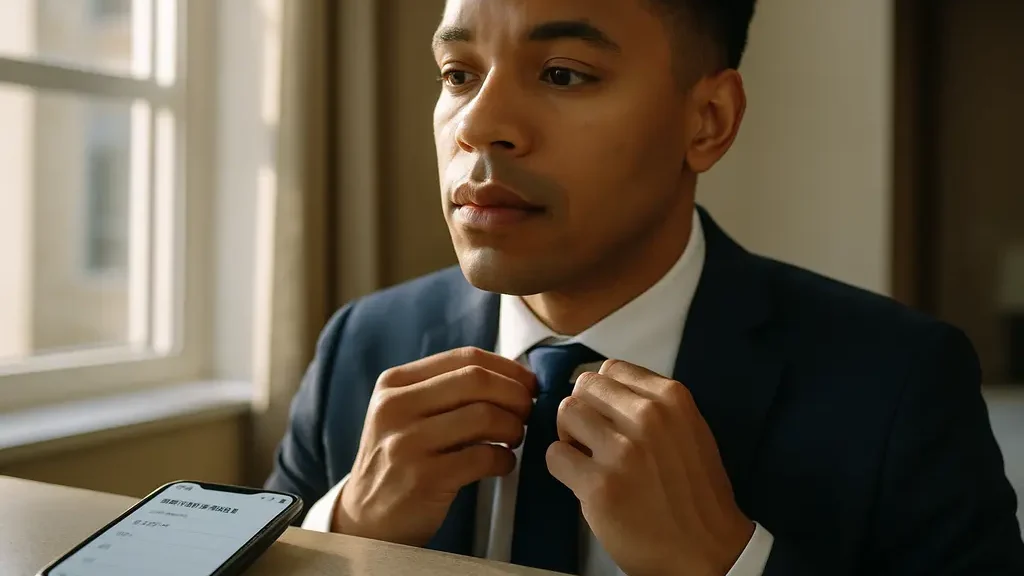
Interview attire is no longer a simple choice between a dark suit and polished shoes. Hiring settings now range from boardrooms to video calls from a spare bedroom, and candidates often have to read the situation before selecting the outfit. As a fashion educator, I treat clothing as part of professional communication: it does not replace preparation, skill, or experience, but it can help a candidate look intentional, respectful, and ready for the conversation.
The safest approach is not to chase trends. It is to prepare in a way that fits the employer, the role, the format, and the message you want to send. A good outfit should reduce distraction. It should support your words rather than compete with them.
Modern Interview Attire Starts With Context
Interview Attire Starts Before Outfit Selection
Interview attire should begin with research, not shopping. Before a session, look for practical signals: official staff photos, recruiter emails, onboarding materials, company career pages, and any direct instructions about dress. If the employer gives a dress code, follow it. If the employer does not, look for patterns in how leaders and team members present themselves in professional settings.
The Washington Post reported on August 6, 2026, that candidates have felt caught between older suit expectations and more casual workplace norms, and it described the widely used advice to dress one level above the employer’s usual standard Washington Post interview attire report. That advice works best when it is applied with judgment. One level above a hoodie-heavy office may mean a clean knit top, neat trousers, and a jacket. One level above a business-formal office may still mean a suit.
The One-Level-Above Test
The one-level-above test is useful because it avoids two common mistakes. The first mistake is assuming every interview needs the most formal outfit in the closet. The second is matching workplace casualness so closely that the candidate appears underprepared. A slightly more polished version of the company norm usually communicates effort without making the outfit feel unrelated to the setting.
This is also where ethics matter. Clothing should not be used to create a false identity. A candidate does not need to pretend to be more corporate, more creative, or more casual than they are. The goal is alignment: show that you understand the meeting and respect the people in it.
Video Calls Still Need Full Preparation
Camera Presence Is Part Of The Outfit
Virtual interviews can make clothing feel less significant because the camera often shows only the upper body. That is misleading. The camera changes what people notice. Busy patterns can flicker or distract. Very shiny fabrics may catch light. Colors that look calm in person can appear harsh depending on the screen, lighting, and background.
For video, solid colors usually read more clearly than loud patterns. Navy, charcoal, gray, black, cream, soft blue, and muted burgundy can all work when they suit the person and the company context. The exact color matters less than the effect: the viewer should see your face and hear your answers, not spend the session studying your shirt.
Dress Fully, Not Halfway
Virtual interview attire still deserves full-body preparation. Even if the lower half is not expected to appear, complete dressing can support posture and mindset. Shoes, finished grooming, and a full outfit help many candidates sit and speak with more intention. For a deeper discussion of video-specific clothing choices, this related piece on virtual interview attire advice connects camera presence with company norms and fit.
Check the full frame before the session begins. Sit where you plan to sit. Test the jacket or sweater while seated, not only while standing. Make sure collars lie cleanly, sleeves do not cover the hands excessively, and the neckline remains appropriate when you lean toward the camera. A polished outfit can lose its effect if the camera angle, lighting, or background creates visual clutter.
Fit, Grooming, And Condition Carry The Message
Small Details Read Quickly
Modern norms may be more flexible, but flexibility is not the same as carelessness. Fit, cleanliness, and garment condition remain central. A simple shirt that is clean, pressed, and proportioned well will usually communicate more effectively than an expensive piece that is wrinkled, worn, or uncomfortable.
The U.S. Department of Labor’s 2026 TEAMS Interview Skills Participant Guide advises candidates to keep jewelry minimal, avoid strong perfume or cologne, and make sure shoes are clean and suitable for the interview setting DOL interview skills guide. Those recommendations are practical because they reduce sensory distractions and keep attention on the conversation.
A Simple Pre-Session Check
Use a short inspection the day before the interview, not ten minutes before the call or commute. This gives time to steam, brush, polish, mend, or change the outfit if needed.
- Check for wrinkles, lint, stains, missing buttons, loose hems, and shoe scuffs.
- Sit, stand, and walk in the outfit to confirm comfort and movement.
- Test the outfit under the lighting you will use for a video session.
- Keep accessories quiet enough that they do not make noise or distract on camera.
- Prepare a backup layer in case the room, office, or commute is colder than expected.
This kind of preparation is not vanity. It is communication hygiene. When clothing is clean, stable, and appropriate, the interviewer has fewer reasons to notice anything except your qualifications and presence.
Building A Practical Outfit Decision
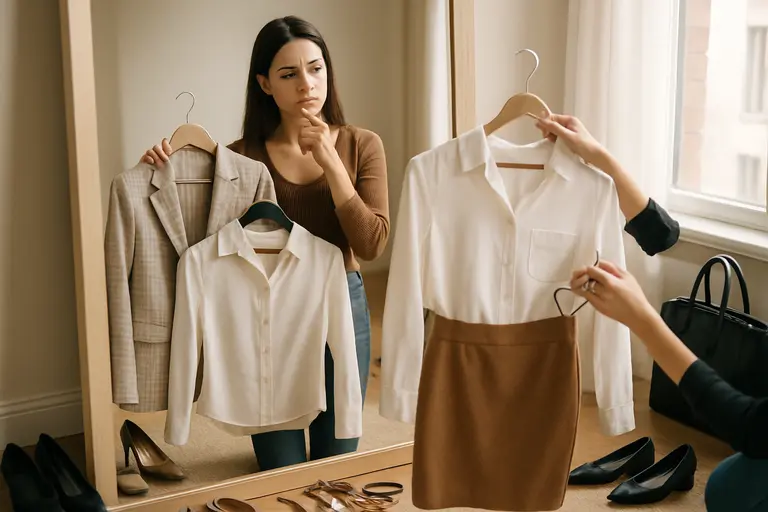
For Formal Signals
If the employer’s materials or recruiter guidance point toward business professional dress, keep the outfit restrained. A suit, dress shirt or blouse, polished shoes, and simple accessories are still useful in settings where formality is expected. Choose fabrics that sit well without constant adjustment. Avoid pieces that require tugging, smoothing, or explanation.
Formal does not have to mean severe. Texture, proportion, and neat finishing can create authority without excess. A candidate should look prepared to join the conversation, not costumed for a version of work that no one in the organization recognizes.
For More Relaxed Signals
For less formal environments, the best choice is often smart casual: a neat jacket or cardigan, a collared shirt or refined knit, clean trousers, and shoes that are in good condition. Denim may be acceptable in some places, but it should be dark, clean, and free from distressing if used for an interview. If you are unsure, choose the more polished option.
Some public style advice makes broad claims about sectors such as technology, creative work, finance, or law. Those categories can be helpful starting points, but they are not enough on their own. A small nonprofit, a large corporate office, and a client-facing service firm may all expect different visual signals. Employer-specific evidence is safer than relying on the industry label alone.
The same principle applies outside hiring. Any setting where people assess trust, clarity, and readiness benefits from intentional presentation. Community-facing organizations, including related sites in this network such as the Stuyvesant Yacht Club, remind us that first impressions are shaped by context, audience, and purpose.
Interview Attire For Modern Professional Communication
Interview attire works best when it helps the candidate appear considered rather than distracted by clothing. It should be clean enough not to raise questions, current enough not to feel disconnected from the workplace, and comfortable enough that the candidate can focus on answers.
Clothing will not secure a role by itself. It should never be treated as a substitute for preparation, skill, punctuality, or clear communication. What it can do is frame those qualities. A well-chosen outfit says, quietly, “I understood the meeting. I prepared for it. I respect the opportunity.”
For session prep, I recommend building two reliable interview outfits: one business professional option and one smart-casual option. Test both in person and on camera. Photograph them from a normal viewing distance. Confirm that each piece fits, moves, and reads clearly. Then, before each interview, adjust the choice based on the employer’s specific signals.
That is the modern standard: not rigid rules, not guesswork, and not fashion performance. It is informed presentation. The candidate who can read the room before entering it is already communicating with care.