
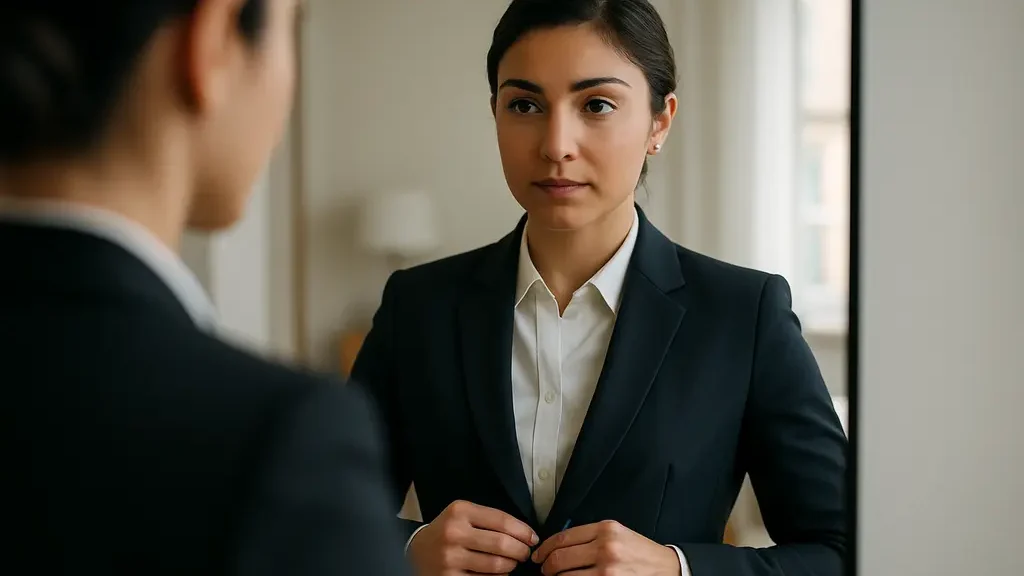
Interview Attire is not the whole interview, but it is one of the first signals a hiring panel receives. Before you describe your skills, your clothing, grooming, posture, and camera or room presence begin shaping whether you appear prepared, aware, and comfortable in the setting. The goal is not to dress as someone else. The goal is to reduce visual distractions so your answers, experience, and professional judgment are easier to hear.
Attire also affects how you carry yourself. Clothing that fits well lets you sit upright, move naturally, and gesture without constant adjustment. Clothing that feels too tight, too casual for the room, or too unfamiliar can pull your attention away from the conversation. That matters because interviews ask you to think, listen, answer, and connect at the same time.
Why Interview Attire Acts Before You Speak
Interview Attire As A Static Cue
Some parts of body language can be adjusted during the meeting. You can slow your gestures, reset your posture, soften your facial expression, or make steadier eye contact. Clothing is different. Once the interview begins, your outfit is mostly fixed, which is why the preparation stage matters.
The U.S. Department of Labor’s February 2026 TEAMS Interview Skills Participant Guide advised candidates to research the company’s dress code, dress one level above what the job requires, and choose clean, pressed, correctly fitting clothing that is not overly revealing DOL interview guide. That is a practical standard because it connects clothing to context rather than to one universal uniform.
For example, if the workplace usually uses business casual clothing, a sharper version of business casual or business professional may be appropriate. If the setting is very formal, a suit may be expected. If the workplace is casual, showing up in the exact clothes employees wear on a relaxed Friday may still look underprepared during a hiring conversation.
The One-Level-Up Rule
The safest approach to Interview Attire is to appear slightly more polished than the daily norm without looking disconnected from the role. That does not mean the most expensive garment in your closet. It means clean lines, a considered fit, and an outfit that shows you understood the setting.
AP News reported in August 2026 that job candidates in the post-pandemic period felt caught between suits and hoodies, while stylists and career advisers said polished suits were no longer always the default; their advice was often to look a little more polished than current employees AP interview attire report. That advice is useful because it respects modern workplaces without treating casual dress as permission to look careless.
Recruiters and hiring teams are evaluating fit, judgment, and preparation, not just fashion. Notably, related hiring networks like Alliance Recruitment highlight the importance of aligning presentation with role expectations and employer context in a hiring process. Your clothing should support the same message your resume and answers are sending.
Fit, Grooming, And Movement Work Together
Choose Clothes That Let You Sit Well
Body language often weakens when clothing works against the body. A jacket that pulls across the shoulders may cause you to hunch. A skirt or trouser fit that feels uncertain may make you keep checking your seat. Shoes that pinch may make your posture tense before you even enter the room.
Try the full outfit while sitting, standing, walking, and reaching for a notebook or laptop. Sit in a chair similar to the one you expect to use. If the interview is virtual, sit at your desk and test how the outfit appears from the camera’s point of view. For video settings, Interview Attire should frame your face clearly and avoid patterns or accessories that keep drawing attention away from your expression.
Look for physical ease. You should be able to breathe comfortably, place both feet on the floor, rest your shoulders, and keep your hands visible without fiddling with cuffs, collars, or hems. Good attire does not force good posture, but it makes good posture easier to maintain.
Grooming Should Support Calm Attention
Grooming is part of the same visual message. Hair, nails, facial hair, shoes, and accessories should look intentional and cared for. This is not about perfection. It is about avoiding signs that suggest you rushed, ignored the setting, or did not prepare.
Before the interview, check for lint, wrinkles, loose threads, scuffed shoes, missing buttons, and noisy jewelry. If fragrance is used, keep it minimal. If makeup is part of your routine, choose a level that helps you feel present without requiring constant checking. The practical question is simple: will any part of this look distract me or the interviewer from the conversation?
If you want a broader preparation framework, this site’s article on professional image for job interviews connects clothing choices with posture, eye contact, and culture-aware presentation.
Match Attire To Role, Format, And Culture

Read The Employer Before You Choose The Outfit
Research should happen before the closet decision. Review the employer’s website, official social channels, interview instructions, and any information sent by the recruiter. Pay attention to how employees appear in formal headshots, event photographs, office images, or public presentations. Do not copy one person’s outfit exactly. Look for the level of polish the organization seems to respect.
Use the role as a filter. A client-facing finance interview, a nonprofit program role, a design studio interview, and a technical operations position may all call for different levels of formality. If the company gives specific instructions, follow them. If the recruiter says business casual is appropriate, you can still choose the more polished end of business casual.
Use A Short Pre-Interview Checklist
A checklist reduces last-minute stress and helps keep attention on the conversation rather than the outfit. Use it the day before, not five minutes before the interview.
- Confirm the interview format: in person, video, panel, site visit, or mixed format.
- Check the employer’s visible dress norms and compare them with the role level.
- Select clothing one level more polished than the likely daily standard.
- Test fit while sitting, standing, walking, and gesturing.
- Check grooming, shoes, accessories, and wrinkles under good light.
- For video, test lighting, background, camera height, and how the outfit reads on screen.
This preparation should not make you stiff. It should make you freer. Once the outfit is settled, you can focus on listening closely, answering clearly, and showing steady presence through posture, facial expression, and controlled movement.
Interview Attire For A Credible First Meeting
Interview Attire works best when it supports credibility without pretending to guarantee the result. It cannot replace skill, experience, preparation, or respectful communication. It can, however, help you enter the room looking ready for the level of responsibility being discussed.
Think of attire as part of your nonverbal introduction. It should say: I understand the setting, I respect the conversation, and I am prepared to participate professionally. From there, your body language should continue the same message. Sit tall without rigidity. Keep your shoulders open. Let your hands rest naturally when you are listening. Use gestures to clarify, not to fill nervous silence. Maintain attentive eye contact without staring.
The strongest presentation is not the most formal in every setting. It is the most appropriate, composed, and consistent with the role. Choose clothing that helps you move with ease, speak with focus, and let your qualifications stay central.