
Looking professional is supposed to help people feel confident at work. But for many Americans, professionalism has become something more complicated: an ongoing effort to adjust their personality, expressions, communication style and behavior to match what they believe employers expect.
New U.S. survey findings suggest that this pressure is widespread.
On September 9, 2026, Oklahoma City-based staffing company Express Employment Professionals released research conducted by The Harris Poll showing that 67% of American job seekers have changed aspects of their personality to fit workplace culture. Another 63% said their personality at work is very different from who they are in everyday life.
The findings raise a question that extends beyond office etiquette: How much should someone change to appear professional before their professional image stops feeling authentic?
The Express Employment Professionals workplace culture survey also found that 98% of job seekers considered adapting to workplace culture important, even as many questioned whether personality should influence how their professional abilities are judged.
For people preparing for job interviews, taking professional headshots, building LinkedIn profiles or meeting new colleagues, the distinction matters.
Looking professional does not necessarily require becoming a different person. It requires understanding which behaviors help people work together and which expectations simply reward a particular personality type.
What the 2026 Workplace Personality Survey Actually Found
The September findings come from Express Employment Professionals’ America Employed research series.
The Harris Poll conducted two online U.S. surveys in May and June 2026. The first involved 1,000 adults aged 18 and older who were either employed and looking for another job or unemployed and seeking work. The second surveyed 1,006 U.S. hiring decision-makers.
The results show that adapting one’s personality is particularly common among younger job seekers.
| Generation | Changed Personality to Fit Workplace Culture | Workplace Personality Differs From Everyday Personality |
|---|---|---|
| Gen Z | 80% | 75% |
| Millennials | 69% | 66% |
| Gen X | 59% | 56% |
| Baby Boomers and Seniors | 50% | 42% |
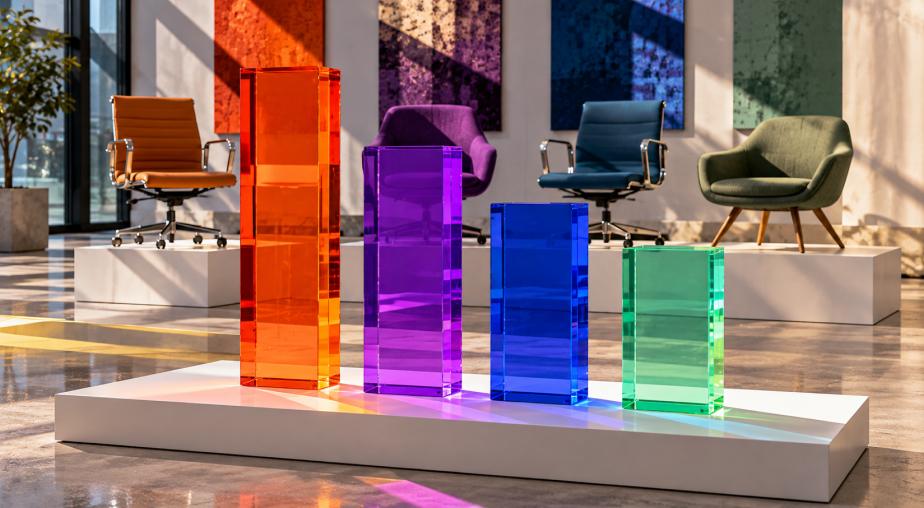
Source: Express Employment Professionals–Harris Poll, published September 9, 2026.
The generational differences are striking.
Among Gen Z respondents, four in five reported changing aspects of their personality to fit workplace expectations. Even among baby boomers and older respondents, half reported making similar adjustments.
These figures challenge the assumption that younger employees are inherently less willing to adapt to professional environments.
However, the findings need context.
This was a survey of job seekers, not a representative measurement of every American worker. Respondents described their own experiences, and the research does not establish whether changing personality improves job performance, increases income or causes career advancement.
It measures perceived pressure and reported behavior.
That is still important because it reveals how many people believe that fitting into a workplace requires something beyond learning their job responsibilities.
When Professionalism Becomes a Personality Requirement
There is a meaningful difference between behaving professionally and performing a personality that does not come naturally.
Professional behavior includes meeting commitments, treating colleagues respectfully, communicating clearly, maintaining appropriate boundaries and responding constructively to feedback.
Those expectations are generally connected to how work gets done.
Personality is different.
Someone can be naturally reserved, highly expressive, analytical, humorous, quiet, energetic or emotionally restrained while still being excellent at their job.
Problems arise when employers and employees begin treating one particular personality style as the definition of professionalism.
For example, a quiet employee might believe they must speak constantly during meetings to appear engaged. A naturally enthusiastic person may suppress their energy because they think serious professionals should always remain composed.
Someone who prefers straightforward communication may adopt unnecessarily formal language, while another person may feel obligated to smile continuously to avoid appearing unfriendly.
None of those adjustments automatically improves the quality of the person’s work.
Bob Funk Jr., CEO, president and chairman of Express Employment International, emphasized in the September announcement that workplace culture should establish expectations for how people treat one another without dictating who employees must become.
That distinction provides a more useful definition of professionalism.
People can adapt their conduct to a professional environment without erasing the individual qualities that make them effective.
Why Being Approachable Can Feel Like a Career Requirement
The Express–Harris Poll findings also explain why employees may feel pressure to manage their personalities so carefully.
According to the survey, 94% of hiring managers and 91% of job seekers believed personality influences perceptions of job performance.
Even more notably, 99% of hiring managers and 90% of job seekers believed a positive or approachable personality can accelerate career advancement.
Those numbers reflect perceptions, not demonstrated causal effects. They do not prove that outgoing employees perform better or that smiling more leads to promotions.
Nevertheless, they help explain why professional presentation can become stressful.
When workers believe their career progress depends partly on appearing likable, they may begin monitoring ordinary behaviors that previously felt automatic.
A neutral expression becomes something to correct. A quiet moment becomes a potential sign of disengagement. A preference for listening rather than speaking becomes something to overcome.
The problem is not that approachability is unimportant.
Being considerate, responsive and willing to collaborate can help professional relationships develop.
The problem begins when approachability is defined so narrowly that people feel required to adopt the same expressions, conversational habits and social energy regardless of their natural communication style.
A thoughtful, reserved employee can be approachable. So can someone who communicates directly or needs time to formulate an answer.
Professional warmth does not have one appearance.
First Impressions Matter, but Communication Matters More
Research on workplace first impressions offers another perspective.
On August 3, 2026, researchers Junhui Yang, Brian W. Swider, Bingjie Lu, Kaidi Wang and T. Brad Harris published a major meta-analysis in Personnel Psychology examining how first impressions form and influence workplace outcomes.
The researchers analyzed 204 independent samples from 145 studies.
Their findings showed that first impressions were associated with later workplace outcomes, but the cues used to form those impressions were not equally influential.
Communication cues had a corrected mean association of 0.52 with general first impressions, compared with 0.31 for appearance cues.
The 2026 workplace first-impression meta-analysis identified communication as the strongest and most consistent category among the informational cues examined.
These are correlations, not proof that a particular behavior will cause professional success.
Still, the findings challenge the idea that looking polished should dominate professional preparation.
Clothing, grooming and facial expressions can influence how someone is initially perceived. But how a person speaks, listens and interacts also contributes substantially to that impression.
That suggests a better use of preparation time.
Instead of attempting to engineer the perfect professional personality, employees may benefit more from practicing clear introductions, thoughtful responses, attentive listening and comfortable communication.
The objective should be making it easier for others to understand them, not becoming someone else.
Are You Dressing Professionally or Wearing a Costume?
Professional appearance is one of the most visible areas where personality adaptation can become excessive.
People often choose clothing according to what they think a successful professional should look like rather than what is appropriate for their actual work.
Someone employed in a creative agency may purchase formal clothing they would never ordinarily wear because they believe it will communicate authority.
Another professional might abandon distinctive colors, accessories or hairstyles despite having no workplace requirement to do so.
Sometimes those choices are practical. A client meeting, formal presentation or industry-specific dress code may require a different level of formality.
But there is a difference between adapting to an occasion and building a professional wardrobe around an imagined personality.
Clothing works best when it supports the person’s responsibilities and the environment in which they work.
A well-fitted jacket can communicate preparation without requiring an elaborate corporate uniform. A simple blouse, button-down shirt or professional knit can look appropriate when the setting permits it.
Fit, cleanliness, condition and contextual appropriateness often deserve more attention than whether an outfit matches a stereotypical image of success.
The most useful question is not whether the clothing makes someone look like an executive, entrepreneur or industry leader.
It is whether the clothing helps them feel prepared to perform their actual role.
Professional Body Language Should Not Feel Like Acting
The same problem appears in advice about posture, facial expressions and eye contact.
Many professionals are taught that confidence requires an upright posture, firm gestures, steady eye contact and a warm smile.
Those cues can sometimes help communicate attentiveness.
But applying them mechanically can make interactions feel unnatural.
A person who concentrates on maintaining constant eye contact may stop listening carefully. Someone who holds a smile throughout a serious conversation may appear disconnected from the subject. A deliberately rigid posture can communicate tension rather than confidence.
Comfortable professional body language is usually more flexible.

It allows someone to change expression as the conversation changes, shift position naturally, look away while thinking and respond to what another person is saying.
There is also no single universal standard for eye contact, gesture frequency or facial expression. Cultural expectations, disability, neurodivergence and individual communication preferences can affect how people express attention and engagement.
A lack of sustained eye contact, for example, should not automatically be interpreted as dishonesty or incompetence.
The goal is not to reproduce a standardized set of movements.
It is to communicate respectfully and effectively while remaining comfortable enough to participate in the conversation.
Your Professional Headshot Should Reflect Your Actual Personality
Professional photography offers a particularly clear example of the difference between intentional presentation and artificial performance.
A headshot is supposed to introduce a real person.
Yet people sometimes approach a photo session believing they must look unusually serious, powerful, cheerful or sophisticated to appear credible.
That can produce photographs that are technically polished but disconnected from the subject.
On October 1, 2026, Associated Press business writer Dee-Ann Durbin examined professional headshots with photographer Chris Gillett of Houston, Texas, and Emily Lauro of Goodwin Recruiting.
Gillett explained how small changes in expressions can affect the impression created by a portrait. Lauro emphasized that professional photographs should still resemble the people who use them.
The Associated Press professional headshot report reinforces an important principle: a flattering image should not create a false version of someone’s professional identity.
That applies to posing as much as retouching.
A naturally thoughtful person does not necessarily need a broad smile. A creative professional does not need to adopt a conventional corporate pose. A quiet person can communicate confidence through a relaxed, engaged expression.
A skilled photographer can guide posture, lighting and facial expression while allowing the subject’s personality to remain recognizable.
The strongest professional headshot is not always the one that looks most impressive in isolation.
It is the one that still feels consistent with the person who appears in meetings, speaks with clients and works alongside colleagues.
AI Video Interviews Can Make People Perform Even More
The pressure to present an idealized professional personality becomes more complicated when technology is involved.
On September 10, 2026, the University of Georgia’s Terry College of Business reported new research led by assistant professor Akshat Lakhiwal examining how candidates behave during AI-evaluated interviews.
The research, published in Information Systems Research, was conducted with Che-Wei Liu of Arizona State University, Hillol Bala of Indiana University and Hung-Yue Suen of National Taiwan Normal University.
Researchers found that candidates who knew an AI system would evaluate their recorded interview responses were more likely to exaggerate or embellish their answers.

Human evaluators generally rated more authentic behavior more favorably, while the AI evaluator used in the study did not reliably penalize embellishment.
Importantly, explaining the evaluation process reduced candidates’ tendency to alter their behavior.
The University of Georgia AI interview research suggests that uncertainty about evaluation can encourage applicants to perform for what they imagine a system wants.
That has practical implications for anyone preparing for a video interview.
Good lighting, an appropriate camera angle, clear audio and a distraction-free background can help someone communicate effectively.
But those technical improvements should not be confused with the need to manufacture enthusiasm, exaggerate facial expressions or imitate a personality that feels unnatural.
Preparing thoughtful examples of actual work experience is more defensible than attempting to guess which expressions or gestures an automated evaluator might reward.
The technology should not become another reason for candidates to abandon their ordinary communication style.
Younger Workers Are Adapting More Than Many People Assume
The generational findings from the Express–Harris Poll deserve particular attention.
The survey found that 80% of Gen Z job seekers reported changing aspects of their personality for workplace culture, compared with 50% of baby boomers and older respondents.
Similarly, 75% of Gen Z respondents said their workplace personality differed from their everyday personality, compared with 42% of the oldest group.
Those results complicate the familiar narrative that younger employees are unwilling to accommodate workplace expectations.
They may actually be reporting more adaptation.
However, the survey does not explain why the differences exist.
Younger respondents may be at different career stages, work in different environments or interpret personality adaptation differently from older workers.
The findings should not be used to declare that one generation is inherently more authentic, more adaptable or less confident than another.
What they do show is that younger job seekers report a particularly large gap between their everyday identities and their workplace presentation.
That gap deserves attention from employers as well as employees.
Employers Have a Responsibility to Define Professionalism Clearly
The survey also found that only 50% of job seekers said their company provided guidance on managing or developing their personality for a professional setting.
That creates an obvious problem.
Employees may feel strong pressure to adapt without understanding what employers actually expect.
An organization that asks employees to be professional should explain what that means in observable, job-relevant terms.
For example, clear communication, respectful treatment, reliable follow-through and constructive feedback are expectations that can be discussed and evaluated.
Requirements such as being constantly enthusiastic, unusually sociable or consistently cheerful are harder to define fairly.
Employers should also recognize the difference between a communication problem and a personality difference.
An employee who interrupts colleagues repeatedly may need feedback about meeting behavior. An employee who listens quietly before contributing does not necessarily need personality correction.
Likewise, someone who prefers concise communication is not automatically less committed than someone who enjoys extended workplace conversation.
When expectations are specific, employees can adapt their behavior without guessing which parts of their identity are considered acceptable.
A Better Way to Look Professional Without Losing Yourself
The central lesson from the September 2026 research is not that adapting to workplace culture is inherently harmful.
Adaptation is part of working with other people.
Different situations require different levels of formality, different communication habits and different ways of presenting information.
A job interview is not identical to a conversation with a close friend. A client presentation is not identical to a casual team meeting.
The problem begins when every adjustment becomes an attempt to replace personality rather than communicate effectively.
For professional appearance, that means choosing clothing that fits the occasion without treating personal style as an obstacle.
For body language, it means using posture and expression to support communication without forcing a permanent smile or unnatural gestures.
For headshots and LinkedIn profiles, it means presenting a polished, recognizable image instead of creating a fictional professional identity.
For interviews, it means preparing accurate examples and communicating them clearly rather than performing whatever personality seems most likely to impress an evaluator.
And for employers, it means recognizing that professionalism can take different forms.
The September Express–Harris Poll survey found that 56% of job seekers believed personality had nothing to do with their work or ability to do the job. That opinion does not mean interpersonal behavior is irrelevant. It does reveal significant discomfort with the weight personality receives in professional evaluation.
The challenge is finding a reasonable boundary.
Employees should be expected to contribute, collaborate and treat others respectfully. They should not have to erase their individuality to satisfy an unnecessarily narrow image of what a professional looks or sounds like.
A strong professional presence is not the most carefully rehearsed version of yourself.
It is a version you can maintain comfortably, communicate through consistently and recognize as your own.