
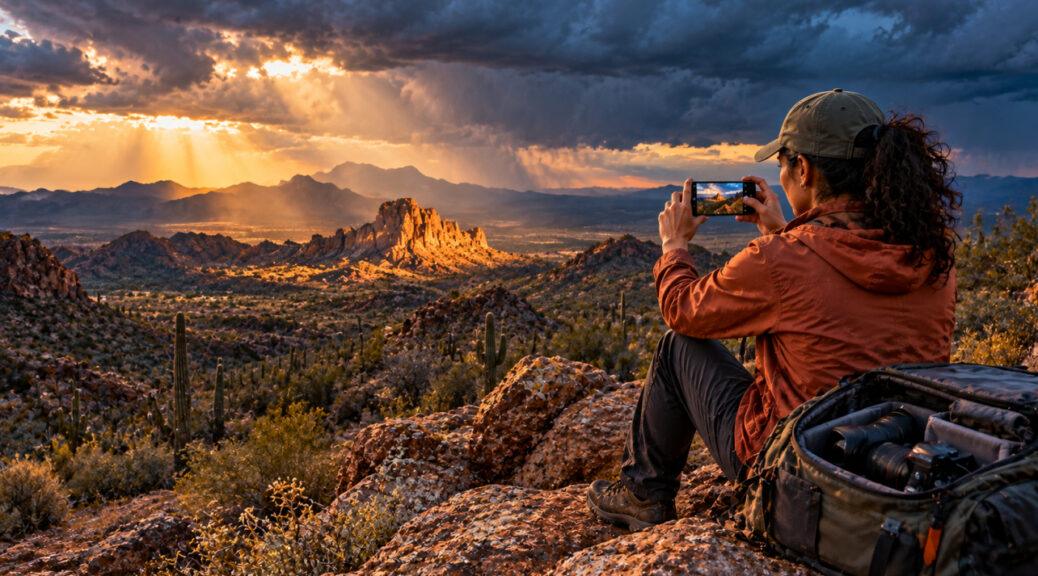
A smartphone photograph has won the $10,000 Grand Prize in the 2026 America’s State Parks Photo Contest, raising a familiar question about modern photography: does expensive camera equipment still determine who produces the strongest images?
On October 2, 2026, Aspira and the National Association of State Park Directors announced that photographer Dianne Slotten had won the competition’s top award for Misty Hike to Dripping Springs, a photograph captured at Catalina State Park in Arizona.
The winning image depicts hikers moving through a dramatic desert landscape beneath heavy clouds, with sunlight breaking through toward the mountains.
What makes the result particularly interesting is the equipment behind the photograph.
According to an October 12 report by Digital Camera World, Slotten captured the image using an Apple iPhone 16 Pro.
Other award-winning photographers in the same competition used sophisticated professional cameras, including the Nikon Z8, a full-frame mirrorless model with a 45.7-megapixel sensor.
The result does not prove that an iPhone produces technically superior photographs to a professional camera. It demonstrates something more useful for photographers and everyday image creators: a compelling photograph depends on recognizing the right moment, organizing the composition, and understanding the available light—not simply owning the most advanced equipment.
For people interested in portrait photography, personal branding, and professional images, Slotten’s achievement also raises a practical question about when smartphone photography is sufficient and when dedicated photographic equipment still provides meaningful advantages.
What Happened at the 2026 America’s State Parks Photo Contest?
The 2026 competition marked the tenth anniversary of the America’s State Parks Photo Contest.
Organized by Aspira in partnership with the National Association of State Park Directors, the contest invited photographers to submit images representing outdoor recreation, wildlife, landscapes, and experiences across American state parks.
According to the official October 2 contest announcement, the competition attracted close to 10,000 entries during a submission period lasting approximately two and a half months.
Photographs were submitted across six categories:
- The Park Experience
- Wild Portraits
- Shores & Waterways
- Peaks & Plains
- Action & Adventure
- Fan Favorite
Organizers selected seven winning photographs: one Grand Prize recipient and six category winners.
Slotten received the $10,000 Grand Prize, while each category winner received a $500 REI gift card provided by Aspira.
The official contest website identifies Slotten as the Grand Prize winner and confirms Catalina State Park as the location of her photograph.
The competition recognizes images rather than ranking camera models. Entrants photograph different subjects, in different conditions, with different creative intentions.
That distinction is essential when interpreting what the winning iPhone photograph means.
A smartphone image can receive the highest award without demonstrating that its camera system would outperform a dedicated camera under controlled conditions.
Why Dianne Slotten’s Winning Photograph Stands Out
Misty Hike to Dripping Springs succeeds as more than a scenic photograph.
In published reproductions, the hikers provide a recognizable human element within a much larger landscape.
Their presence helps establish scale and gives the viewer a reason to follow the trail into the distance.
The mountains create successive layers, while the changing weather introduces contrast between darker clouds and illuminated terrain.
The result is a photograph that communicates both a location and an experience.
Rather than presenting the Arizona landscape as an empty scenic backdrop, the composition shows people moving through it.
That distinction makes the image relevant to anyone interested in visual storytelling.
A landscape photograph can communicate atmosphere through geography and light. Including people can introduce a sense of journey, proportion, and personal experience.
In its October 12 report on the winning iPhone photograph, Digital Camera World describes the scene as a drizzly November morning in the Sonoran Desert.
The weather is important to the visual result.
Cloud cover can reduce harsh midday contrast, while breaks in the clouds can illuminate selected parts of a landscape.
The photographer must recognize when those elements align.
The published accounts do not establish Slotten’s precise camera settings, editing workflow, or the individual criteria used by the judges.
It would therefore be misleading to claim that a particular exposure mode, software feature, or compositional technique was responsible for the award.
What can be observed is the relationship between the hikers, the landscape, and the changing light.
Those relationships give the photograph its visual structure.
Why the iPhone 16 Pro Was Capable of Capturing the Scene
The iPhone 16 Pro is a sophisticated photographic device rather than a basic point-and-shoot camera.
According to Apple’s official iPhone 16 Pro technical specifications, the device includes a 48-megapixel Fusion main camera, a 48-megapixel Ultra Wide camera, and a 12-megapixel 5x Telephoto camera.
It also supports Apple’s computational photography features, including Smart HDR 5, Photonic Engine, and Deep Fusion.
These systems help the phone process photographs captured under different lighting conditions.
Apple also supports ProRAW capture, providing an alternative to standard processed image formats for photographers who want additional editing flexibility.
However, the available reporting does not identify which camera module or image format Slotten used.
Her photograph should not be treated as proof of a specific iPhone feature’s performance.
The broader advantage of smartphone photography is accessibility.
A phone can be carried during a hike without requiring a separate camera bag, interchangeable lenses, or additional equipment.
It can also be brought into use quickly when an unexpected scene develops.
For outdoor photography, that availability matters.
Changing clouds, moving hikers, wildlife, and shifting sunlight do not necessarily wait for a photographer to prepare an elaborate setup.
The strongest equipment choice may sometimes be the camera already available when the scene occurs.
Two Nikon Z8 Photographers Also Won Awards
The most interesting comparison from the 2026 competition involves two other photographers who received category awards using Nikon Z8 cameras.
According to Digital Camera World’s October 12 report, Chris Dahl won the Shores & Waterways category with an image from Hunting Island State Park in South Carolina.
Dahl reportedly used a Nikon Z8 with a Nikkor Z 24–120mm f/4 lens.
Angie Precure won the Peaks & Plains category with a photograph taken at Steptoe Butte State Park Heritage Site in Washington.
Her reported equipment included a Nikon Z8 and a Nikon Z 24–70mm f/2.8 lens.
| Photographer | Award | Location | Reported Equipment |
|---|---|---|---|
| Dianne Slotten | Grand Prize — $10,000 | Catalina State Park, Arizona | Apple iPhone 16 Pro |
| Chris Dahl | Shores & Waterways | Hunting Island State Park, South Carolina | Nikon Z8, Nikkor Z 24–120mm f/4 |
| Angie Precure | Peaks & Plains | Steptoe Butte State Park Heritage Site, Washington | Nikon Z8, Nikon Z 24–70mm f/2.8 |
These results should not be interpreted as a controlled competition between the three camera systems.
The photographs feature different locations, subjects, weather conditions, and compositions.
Dahl and Precure were category winners, not designated second- and third-place finishers in a technical camera comparison.
Their recognition demonstrates that professional equipment remained part of the contest’s award-winning photography.
Slotten’s Grand Prize demonstrates that a smartphone photograph could also achieve the competition’s highest distinction.
Both findings can be true without establishing a universal winner between smartphones and dedicated cameras.
What the Nikon Z8 Can Do That a Smartphone Cannot Easily Match
The Nikon Z8 is designed for photographers who need substantial control over image capture.
According to Nikon’s official Z8 specifications, the camera includes a 45.7-megapixel full-frame sensor, interchangeable-lens compatibility, advanced autofocus capabilities, and professional image-recording options.
Its interchangeable lenses allow photographers to choose focal lengths and optical characteristics suited to different subjects.
A wildlife photographer may need a long telephoto lens to photograph an animal without approaching it.
A portrait photographer may choose a lens that allows a comfortable camera-to-subject distance while controlling the visible background.
A landscape photographer may use a wide-angle lens, filters, a tripod, and carefully selected exposure settings.
A professional camera system also provides substantial control over shutter speed, aperture, focus, and file processing.
Those capabilities become particularly valuable when photographers must deliver consistent results across many assignments.
For example, photographing a moving athlete in difficult light presents different requirements from recording a relatively static landscape.
Likewise, a commercial portrait session may require repeatable lighting, accurate color, and files suitable for demanding editing or print production.
A smartphone can be useful in these situations, but it does not provide the same range of interchangeable optics or physical controls.
The practical distinction is not whether one camera is universally better.
It is whether the available equipment supports the requirements of the photograph.
Why Megapixels Alone Do Not Determine Photography Quality
The iPhone 16 Pro’s main camera has a 48-megapixel specification, while the Nikon Z8 has 45.7 effective megapixels.
Looking only at those numbers might suggest that the devices offer nearly identical photographic capabilities.
That interpretation overlooks several important differences.
Megapixel count describes image resolution, not the complete quality of the captured photograph.
Sensor dimensions, lens performance, exposure, noise, processing, and the photographer’s decisions all influence the final image.
The Nikon Z8 uses a full-frame sensor measuring approximately 35.9 by 23.9 millimeters.
The iPhone uses a substantially smaller camera system designed to fit inside a smartphone.
Larger sensors can offer advantages in light collection and image-quality flexibility, although the results depend on the specific technology and shooting conditions.
Smartphones compensate for some physical limitations through computational processing.
Multiple exposures may be combined to manage contrast or noise, while software can help produce a visually appealing image without extensive manual editing.
These methods can work particularly well for everyday photography.
They can also introduce limitations, especially when processing moving subjects, complex textures, or difficult lighting.
Neither megapixel count nor computational processing should be treated as a complete substitute for examining actual photographic results.
The appropriate comparison depends on the image’s intended use.
A photograph displayed on a phone screen presents different demands from a large commercial print.
Why Timing and Composition Can Matter More Than Equipment Price
The strongest lesson from Slotten’s award concerns decisions that happen before the photograph is recorded.
A camera cannot independently decide which moment best communicates the experience of hiking through a dramatic landscape.
It cannot determine the photographer’s emotional or narrative intention.
It also cannot guarantee that the most interesting elements will appear in a balanced arrangement.
Composition begins with deciding what belongs in the frame.
The photographer considers the subject, foreground, background, lines, shapes, and areas of visual emphasis.
Timing adds another dimension.
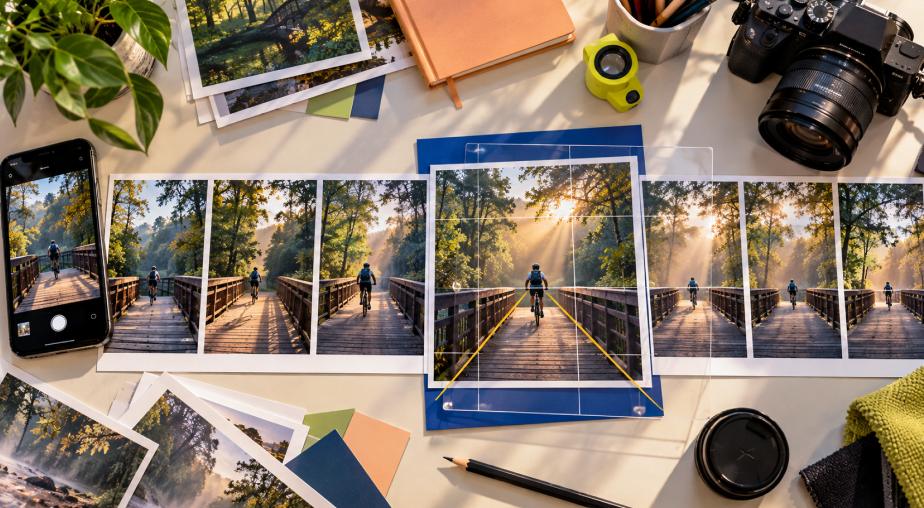
A scene may become more effective when a person enters the right part of the frame, sunlight briefly illuminates the landscape, or changing weather creates a stronger separation between visual elements.
These opportunities are not exclusive to professional camera users.
Someone carrying a smartphone can recognize and respond to them.
The difference is often preparation and observation.
A photographer who understands framing, exposure, and visual relationships can make effective use of modest equipment.
Someone using an expensive camera without considering those decisions may produce technically detailed but visually unremarkable photographs.
This does not make technical knowledge irrelevant.
It means technical knowledge should support the photograph’s purpose rather than become the purpose itself.
A Smartphone Also Won the Contest’s Grand Prize in 2025
Slotten’s achievement is not the first example of a smartphone photograph receiving the top award in this competition.
In 2025, photographer Dianalee Hirt won the ninth annual America’s State Parks Photo Contest Grand Prize with Sunset Fire, an image taken at Pawtuckaway State Park in New Hampshire.
According to the National Association of State Park Directors’ 2025 winners report, Hirt used an iPhone 12 Pro Max.
Her photograph captured a campfire scene during a visit with friends.
The 2025 Grand Prize was $5,000, compared with the $10,000 awarded to Slotten in 2026.
The two winning images represent different photographic situations.
Hirt’s photograph emphasized a personal camping experience, while Slotten’s image focused on hikers moving through a dramatic desert landscape.
Both demonstrate how accessible cameras can be used to document meaningful outdoor experiences.
However, two smartphone Grand Prize winners do not establish that smartphones are more likely to win photography competitions.
The available information does not provide a complete breakdown of the camera equipment used across all submissions.
The results are better understood as evidence that smartphone photography can meet the creative expectations of a major public photography competition.
What Smartphone Photographers Can Learn From Slotten’s Win
For people interested in improving their photography without buying additional equipment, Slotten’s achievement offers several practical lessons.
The first is to pay attention to light.
Outdoor scenes can change dramatically depending on the time of day, cloud cover, and direction of illumination.
A familiar location may become visually distinctive when sunlight breaks through clouds or when soft light reveals details that would disappear under harsher conditions.
The second is to include a clear subject.
A landscape can be beautiful without having an obvious point of attention, but a carefully positioned person, tree, path, or architectural element can help organize the composition.
The third is to consider scale.
Including a person within a large environment can communicate the size of mountains, buildings, or natural formations.
The fourth is to examine the edges of the frame.
Distracting objects, awkward crops, or unnecessary empty space can weaken an otherwise promising photograph.
Finally, photographers should avoid assuming that the first image is automatically the strongest.
Small changes in position or timing may produce a more effective composition.
These principles apply to smartphones and dedicated cameras alike.
The difference lies in how deliberately the photographer uses the available tools.
When Should You Use a Smartphone Instead of a Professional Camera?
A smartphone can be an effective choice when convenience, mobility, and immediate access are priorities.
Travel photography, everyday documentary images, informal portraits, and social-media content are examples where a modern smartphone may meet the intended requirements.
Its compact size can also make it easier to photograph situations without interrupting them.
However, dedicated camera equipment may become more valuable when the assignment requires specialized lenses, controlled depth of field, demanding low-light performance, or extensive post-production flexibility.
For professional photographers, reliability is another consideration.
A commercial assignment may involve multiple subjects, strict delivery specifications, complex lighting, and the need to reproduce a consistent visual style.
In those situations, equipment is part of a broader professional workflow.
The photographer must understand not only how to capture an image but also how to produce the required result repeatedly.
The question should therefore change from whether a smartphone can compete with a professional camera to whether it can satisfy the specific photographic assignment.
Slotten’s winning photograph shows that an iPhone 16 Pro was sufficient for one exceptional outdoor image.
It does not establish that the same device is the best option for every photographic task.
What Does the Contest Mean for Professional Headshots and Portrait Photography?
Although Slotten’s winning image is an outdoor photograph rather than a conventional portrait, the result has implications for people choosing how to create professional images.
A smartphone can capture a sharp, attractive headshot under favorable conditions.
With suitable lighting, an uncluttered background, comfortable camera distance, and a natural expression, it may produce an image appropriate for certain online profiles.
However, professional portrait photography involves more than the camera.
A photographer may provide direction on posture and expression, control lighting, select appropriate focal lengths, coordinate backgrounds, and prepare files for different uses.
Those decisions can be particularly important for business portraits, team photography, and personal-branding sessions.
A professional photographer also helps create consistency.
A company may need dozens of employee headshots with similar lighting, framing, and color treatment.
A smartphone photograph taken casually by each employee may not produce that uniformity.
Likewise, a personal-branding session may require several distinct compositions for websites, publications, and social-media platforms.
The value of professional photography often comes from planning, direction, and delivery rather than the price of the camera body.
For clients, the most useful question is whether the final images communicate the intended identity and meet the required technical specifications.
How to Judge a Photograph Without Knowing Which Camera Took It
One useful exercise is to evaluate photographs before learning which equipment produced them.
Start with the subject.
Is it immediately clear what the photograph is about?
Then examine the composition.
Does the arrangement of people, objects, and background elements direct attention toward the intended subject?
Consider the light.
Does it reveal important details and contribute to the atmosphere?
Look at the timing.
Does the photograph capture a meaningful action, expression, or relationship between visual elements?
Finally, evaluate technical quality in relation to the intended use.
Sharpness, color accuracy, exposure, and resolution matter, but their importance varies according to the photograph’s purpose.
A documentary image may succeed because it captures an unrepeatable moment, even when its technical qualities are imperfect.
A commercial product photograph may require much stricter control over detail and color.
A professional headshot should represent the subject recognizably and provide an appropriate appearance for its intended setting.
The camera model becomes useful information only after these questions have been considered.
This approach can also help photography clients evaluate portfolios without becoming distracted by equipment specifications.
A photographer’s strongest work should demonstrate consistent creative judgment, not merely access to expensive tools.
What the $10,000 iPhone Photograph Reveals About Modern Photography
Dianne Slotten’s Misty Hike to Dripping Springs demonstrates that a smartphone photograph can achieve national recognition alongside images created with professional camera systems.
The 2026 America’s State Parks Photo Contest received close to 10,000 entries and selected Slotten’s Arizona landscape as its Grand Prize winner.
Other recognized photographers, including Chris Dahl and Angie Precure, used Nikon Z8 cameras for their category-winning photographs.
The results highlight the diversity of tools available to photographers rather than establishing a permanent hierarchy between them.
Modern smartphones make capable photographic technology accessible to more people.
Professional cameras continue to provide important advantages in optical flexibility, physical controls, and demanding photographic workflows.
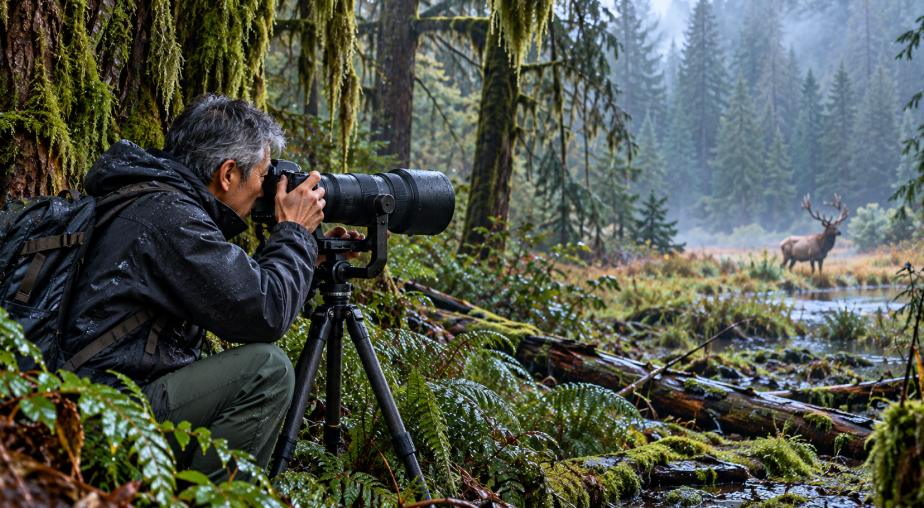
Neither category of equipment automatically produces a compelling image.
The strongest photographs still depend on the person recognizing the subject, understanding the light, selecting the composition, and deciding when to capture the moment.
Slotten’s $10,000 photograph is a reminder that the most important photographic decision often happens before the shutter is pressed.
For photographers, that makes observation and creative judgment worth developing regardless of the camera they own.
For clients choosing professional portraits or headshots, it reinforces the importance of evaluating the photographer’s work, experience, and ability to communicate a clear visual purpose—not simply the equipment listed in their camera bag.