
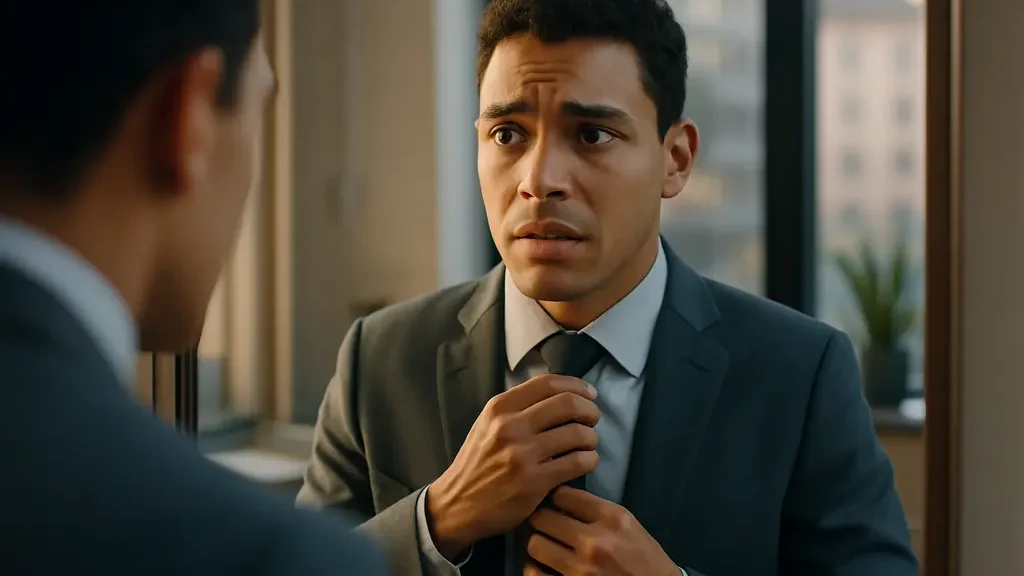
Interview dress norms have become harder to read since remote and hybrid work changed what professional clothing looks like on an ordinary workday. Candidates may now meet interviewers who appear in hoodies, polos, plain T-shirts, or relaxed separates, even when the role itself carries serious responsibility. That does not mean clothing no longer matters. It means the better question is not, “Should I wear a suit?” but, “What level of polish communicates respect, judgment, and fit for this company?”
For session prep, clothing should support the conversation rather than compete with it. A good interview outfit helps you look prepared, feel physically comfortable, and send a visual message that aligns with the organization’s expectations. It will not compensate for weak answers or missing qualifications, but it can reduce avoidable friction.
Why Interview Dress Norms Feel Less Clear
Interview Dress Norms As A Culture Signal
On August 6, 2026, an Associated Press report published by The Washington Post reported that hybrid and remote work had led many companies to relax dress codes, leaving job candidates uncertain about what to wear when interviewers themselves may appear casually dressed. That uncertainty is real. A candidate can easily overdress for a casual startup or underdress for a client-facing professional role if they rely only on old rules.
Dress is not a perfect measure of culture. Some teams dress casually while holding very formal communication standards. Some organizations keep conservative expectations for interviews even if employees dress more comfortably on normal workdays. Still, clothing is one visible cue among many. Treat interview dress norms as a way to show that you understand context, not as a costume for pretending to be someone else.
Why “Just Be Yourself” Is Not Enough
Authenticity matters, but professional communication always includes audience awareness. You can preserve your personal style while adjusting formality, color, grooming, and fit. A candidate who loves creative clothing might choose a distinctive accessory rather than a loud full outfit for a conservative interview. A candidate interviewing with a relaxed team might keep the silhouette simple but use cleaner shoes, sharper layers, and better grooming than they would for an ordinary day at home.
The goal is not to erase personality. The goal is to remove distractions so the interviewer can focus on your judgment, preparation, and ability to read the room.
Read The Culture Before You Choose Clothes
Start With Public Visual Evidence
Before selecting an outfit, study what the company shows publicly. Look at its website, recruiting pages, leadership photos, employee event images, and recent social posts. Notice patterns rather than one-off images. If every employee photo shows dark suits, that points toward a more formal standard. If team photos show denim, knit tops, sneakers, and open collars, business casual or polished casual may be closer to the everyday norm.
Be careful with promotional photos. They may be staged, outdated, or created for marketing rather than hiring. Use them as clues, not proof. If you know someone at the organization, a brief and professional question can help: “For interviews, do candidates usually dress business formal, business casual, or polished casual?” That question shows preparation rather than insecurity.
Compare Industry, Role, And Visibility
Role level matters as much as industry. A back-end technical role at a casual company may call for a different outfit than a senior sales, finance, legal, or executive-facing role at the same company. Client visibility raises the standard. Leadership interviews often call for more structure because the clothing needs to support authority and trust.
If the culture is unclear, dress slightly more polished than the expected daily standard. That might mean adding a blazer to a knit top, choosing pressed trousers over jeans, wearing refined flats or loafers instead of casual sneakers, or selecting a collared shirt rather than a T-shirt. Slightly polished usually reads as respectful. Overly formal can create distance, so keep the outfit aligned with the company’s visual cues.
For more help reading workplace signals, this related guide on company culture wardrobe cues offers practical ways to compare polish, comfort, and credibility across different workplaces.
Match Clothing To Format And Role Level
Video Interviews Need Camera Awareness
For video calls, interview dress norms still apply, but the camera changes what matters. The top half of the outfit carries more visual weight. Choose colors that separate you from the background, avoid busy patterns that flicker on screen, and check the neckline while seated. A shirt that looks balanced while standing may appear too casual or too bare when framed by a webcam.
Test the outfit in the same location and lighting you plan to use. Sit down, open your laptop, and record a short clip. Look for wrinkling, glare, distracting jewelry movement, or a collar that shifts every time you speak. Comfort matters here. If you keep adjusting sleeves, tugging at fabric, or fixing a neckline, the viewer may read that movement as nervousness.
In-Person Interviews Require Full-Outfit Discipline
In person, interviewers see the whole outfit, including shoes, hem length, bag, coat, and grooming details. This is where preparation prevents small issues from becoming distractions. Walk, sit, and stand in the outfit before the interview date. Check whether trousers drag, shoes make noise, a jacket pulls across the shoulders, or fabric wrinkles heavily after ten minutes.
The U.S. Department of Labor’s February 2026 TEAMS Interview Skills Participant Guide advises candidates to dress comfortably and correctly, dress above their everyday standard, inspect clothing for flaws, and avoid ill-fitting or uncomfortable garments, according to the DOL interview guide. That guidance is practical because clothing affects both presentation and concentration. If your outfit hurts, pinches, slips, or feels unfamiliar, part of your attention goes to managing clothing rather than answering well.
Build A Practical Session Prep Outfit
Use A Three-Part Check
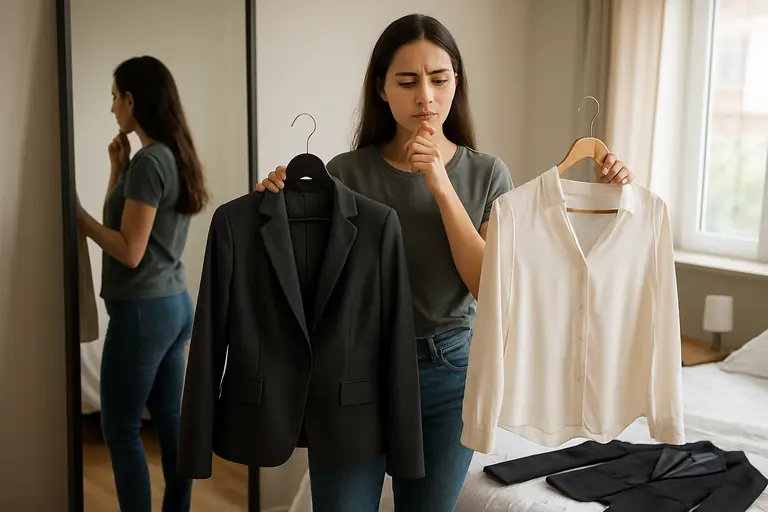
A strong interview outfit can be evaluated in three ways: context, condition, and comfort. Context means the clothing fits the company, role, and interview format. Condition means the pieces are clean, pressed or steamed, free of obvious damage, and complete with the right shoes or accessories. Comfort means you can sit, walk, gesture, and breathe without fussing.
- Context: Match the company’s likely dress level, then move one small step more polished for the interview.
- Condition: Check wrinkles, lint, stains, missing buttons, scuffed shoes, and fit issues at least one day before.
- Comfort: Practice sitting and speaking in the outfit so it feels familiar before the session begins.
This check works for suits, dresses, separates, business casual clothing, and polished casual looks. It also keeps the focus on judgment rather than price. Expensive clothing is not required. Clean, appropriate, well-fitting clothing usually communicates more effectively than a costly item that looks uncomfortable or out of place.
Plan For Personal Branding Without Overdoing It
Your interview clothing should connect with the professional image you want to project. If you want to communicate precision, choose sharper lines, restrained colors, and neat grooming. If you want to communicate approachability, soften the look through texture, color, or a less severe jacket. If you work in a creative field, one expressive element can help, provided the rest of the outfit stays intentional.
Personal branding is not about dressing louder than the room. It is about consistency. The outfit, résumé, portfolio, tone of voice, and answers should feel like they belong to the same professional person. If the clothing sends one message and your interview answers send another, the interviewer may feel a disconnect even if they cannot name it.
Candidates looking for comprehensive preparation resources, especially for maintaining calm and clear communication during interviews, might find the related content at Polygraphianz quite useful.
Aligning Dress With Company Culture
Choose Polish Over Guesswork
Better interview dress norms start with research, but they end with a clear decision. Do not keep changing outfits on the morning of the interview. Select the best option, prepare it, and move your attention back to the substance of the meeting: examples, questions, role knowledge, and follow-up.
If you are deciding between two outfits, choose the one that is more comfortable and slightly more polished, assuming both fit the company’s culture. A blazer, clean knit, pressed trousers, simple dress, polished shoes, or structured overshirt can all work depending on the setting. The strongest choice is the one that helps you appear attentive without looking disconnected from the workplace.
Let Clothing Support The Conversation
Clothing cannot guarantee an offer. It should not be used to misrepresent your personality, background, or experience. Its real value is more practical: it helps you enter the room with fewer doubts, communicates respect for the opportunity, and shows that you can interpret professional signals.
Post-pandemic hiring has made visual expectations less uniform, but not meaningless. Candidates who research the company, consider the interview format, and select clothing with care give themselves a steadier starting point. The right outfit does not need to impress everyone. It needs to help the right conversation begin.