
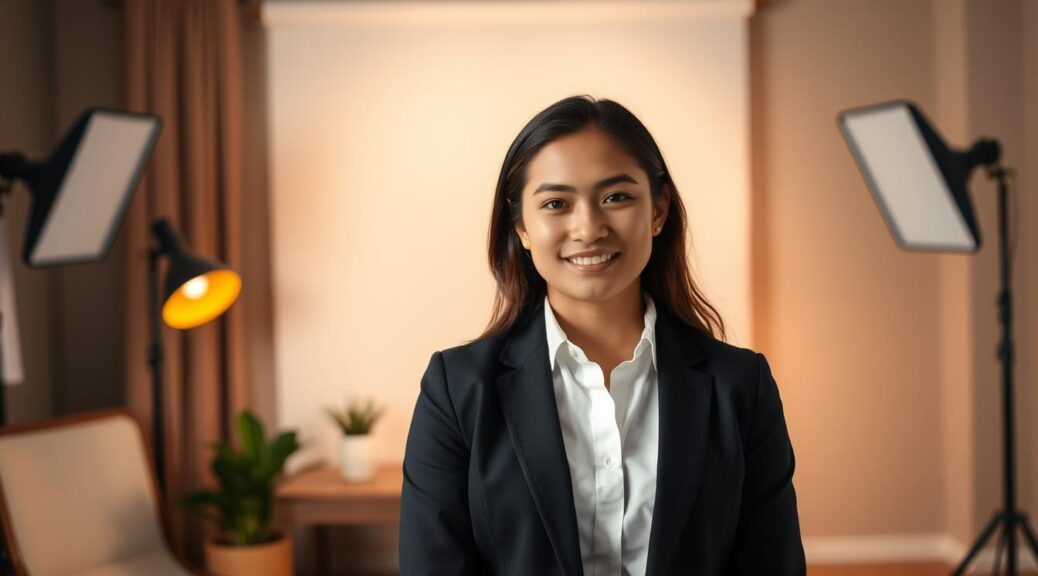
Does your smile freeze when a camera points at you? You’re not alone. That nervous feeling is called camera anxiety.
It’s not a personal flaw. It’s biology! Your body’s fight-or-flight system sees the camera as a threat. We also worry about looking perfect or getting it right.
Let’s change how we see the camera. What if it was a friendly conversation partner? This simple change is very powerful.
The key is your mindset. We’re moving from trying to act natural to being present. This means being aware in the moment, not stuck in your head.
That natural confidence in great headshots is yours to achieve. We’ll explore techniques to turn those nerves into genuine expression.
Pre-Session Rituals: breathwork, power poses, visualization scripts
Feeling centered and confident at a photoshoot isn’t luck. It’s the result of intentional pre-session rituals. These practices are like a pre-game warm-up, preparing your mind and body.
We’ll guide you through simple, science-backed steps. These techniques help you feel prepared, in control, and ready to shine.
Your breath is your foundation. When nerves kick in, your breathing gets shallow. This tells your nervous system to stay on high alert. The fix is deliberate breathwork.
One powerful method is box breathing. It’s simple:
- Inhale slowly through your nose for a count of four.
- Hold your breath for a count of four.
- Exhale slowly through your mouth for a count of four.
- Hold again for a count of four.
Repeat this cycle for just two minutes. This technique calms your heart rate and lowers stress hormones almost instantly. It’s your secret reset button.
Next, let’s tackle confidence directly with your posture. Research shows that holding “power poses” for two minutes can boost hormones like testosterone (linked to confidence) and lower cortisol (the stress hormone).
Try this before you leave for the shoot: stand tall, hands on your hips, feet shoulder-width apart. Or, stand with your arms raised in a “V” for victory. Hold it. *Feel* the shift. You’re signaling to your brain that you’re powerful and ready.
Now, let’s prepare your mind. A quick visualization script helps you mentally rehearse success. Close your eyes and picture the session going perfectly. Hear the photographer giving positive feedback. See yourself smiling naturally. Feel the enjoyment of the process.
Here’s a sample line you can customize: “I am relaxed and enjoying myself. My expressions look genuine and warm. This is fun and easy.” This mental run-through builds positive expectation.
Your voice and body are your instruments. Tight vocal cords can make your voice sound strained. A simple vocal warmup fixes this. Try humming scales gently (“hmm-mm-mm”) for 30 seconds. Roll your lips (a horse-like “brrr” sound). These exercises relax your facial and throat muscles, ensuring your voice sounds rich and relaxed if you speak during the shoot.
Lastly, shake off the physical tension. Do a full-body body loosening sequence: roll your shoulders, gently turn your head side to side, shake out your arms and legs. It’s like shaking off static energy. This releases stiffness so your movements look fluid, not stiff.
| Ritual | What It Does | Simple How-To | Time Needed |
|---|---|---|---|
| Box Breathing | Calms the nervous system, reduces instant anxiety. | Inhale (4), Hold (4), Exhale (4), Hold (4). Repeat. | 2 minutes |
| Power Pose | Boosts confidence hormones, lowers stress. | Stand tall, hands on hips or arms in a “V”. Hold. | 2 minutes |
| Visualization Script | Mentally rehearses success, builds positive expectation. | Close eyes. Picture the shoot going perfectly. Use affirmations. | 1-2 minutes |
| Vocal Warmup | Relaxes face/throat muscles, enriches voice tone. | Hum scales, roll lips (“brrr”). | 30 seconds |
| Body Loosening | Releases physical tension, promotes fluid movement. | Roll shoulders, turn head, shake out arms & legs. | 1 minute |
Combine these rituals into a 5-10 minute routine before you head out. You’re not just showing up—you’re arriving centered, powerful, and camera-ready. This proactive approach puts you in the driver’s seat of your entire headshot experience.
Expression Library: “friendly competent,” “thoughtful,” “approachable expert”
Forget the stiff, posed smile. Your most powerful headshot expressions come from real feelings, not fake ones. We call this your expression library. It’s a small collection of genuine looks that feel like you.
Think of it like using the right tool for the job. Different situations need different expressions. Let’s build your library with three authentic expressions for almost any headshot.
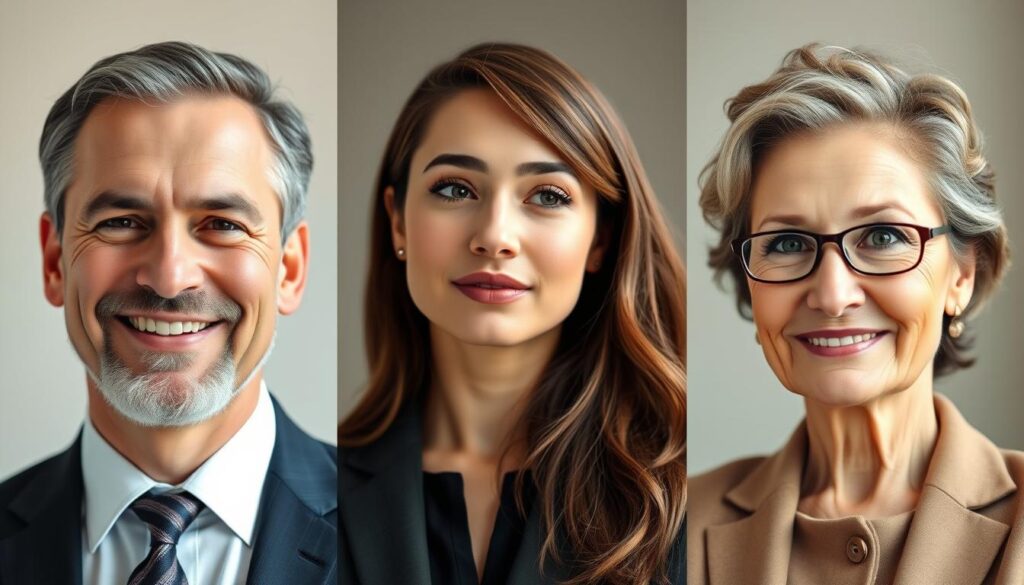
The first is “Friendly Competent.” This is a warm, trustworthy smile with engaged eyes. It says, “I know my stuff, and you can relax with me.” It’s not a big grin but a subtle smile with a gentle crinkle around the eyes.
To find it, think of a specific moment. Maybe a time a colleague thanked you for your help, or when you explained something complex simply. Let that memory of being capable and appreciated show on your face. That’s authentic warmth.
Next, we have the “Thoughtful” expression. This is a softer, listening look that shows depth and intelligence. Your mouth is neutral or has a slight smile. Your eyes are focused but relaxed, as if you’re pondering a great idea.
To access this, imagine you’re listening intently to a friend sharing an exciting plan. Or, picture yourself right before you solve a tricky problem. The key is to look like you’re thinking, not posing. This expression builds trust and shows you’re a considered professional.
Lastly, we have the “Approachable Expert.” This blends confidence with openness. You look knowledgeable and ready to lead, but also welcoming. Your posture is strong, your chin is level, and there’s a hint of a confident, closed-mouth smile.
Find this expression by remembering a time you felt in your element. Maybe teaching a skill you love or leading a project you believed in. Feel that calm, capable energy. Let it show in a relaxed jaw and direct, but not intense, eye contact. This is authentic confidence.
| Expression | Core Vibe & Authentic Message | Quick Mental Trigger | Ideal Use Case |
|---|---|---|---|
| Friendly Competent | Warm, trustworthy, and capable. “I’m good at this, and I’m nice to work with.” | Remembering the feeling when you helped someone succeed. | Networking profiles, team pages, client-facing roles. |
| Thoughtful | Intelligent, deep, and a good listener. “I consider things carefully.” | Imagine the moment right before you answer a thoughtful question. | Author bios, speaker headshots, research or creative fields. |
| Approachable Expert | Confident, open, and knowledgeable. “I can guide us there.” | Recall the calm confidence of teaching something you know well. | Leadership profiles, consultancy, entrepreneurship. |
Your homework? Stand in front of a mirror and try each trigger. Which expression feels most natural? Which one feels like a stretch? Your goal isn’t to master all three perfectly, but to discover which ones resonate with your personal brand.
True authenticity in photos happens when technique meets genuine emotion. By building this library, you’re not just learning to make a face. You’re learning to show your best self on camera, effortlessly.
On-Set Coaching: mirroring, countdowns, micro-adjustments, safe words
When you’re in front of the camera, small tricks like mirroring and countdowns can bring out your true feelings. Real-time coaching turns the shoot into a team effort. A skilled coach or you using these methods can make the session dynamic and collaborative.
Your photographer’s vibe sets the mood. Mirroring means subtly matching their energy. If they’re calm, relax your breathing and shoulders. It’s not about copying gestures but syncing with them.
Ever wondered how long to smile? Use a countdown. Say, “Beautiful. Now let that smile fade on three… two… one…”. It lets your face express naturally, not freeze.
Countdowns also help with smooth transitions. They guide you from serious to a gentle laugh. This is a key part of our confidence tips, giving you control.
Micro-adjustments are small, precise cues that make a big difference. Say “chin down a hair,” “eyes toward the window light,” or “soften your gaze right at me.”
They’re easy to do and instantly improve the shot. Instead of worrying about looking good, you just follow a simple step. This builds trust and momentum, shot by shot.
Every session needs a safe word or signal. It’s your way to stay comfortable. It could be a hand raised or saying “pause.”. Normalizing this lets you control the pace. Need a break? Use your signal. This is the ultimate confidence tip for a supportive environment.
These on-set tools help you succeed. Mirroring builds rapport. Countdowns make motion natural. Micro-adjustments refine details. A safe word keeps your energy safe. You’re not just a subject; you’re a co-creator of your best headshots.
Music, Movement, and Microbreaks for Genuine Energy
The secret to looking vibrant in every frame isn’t about forcing a smile. It’s about managing your energy reserves strategically. Think of your on-set vitality like a campfire. It needs occasional stoking to stay bright and warm throughout the entire session.
This is where your mindset shifts from just posing to actively curating your energy. We have three powerful tools for this: music, movement, and microbreaks. These are more than just confidence tips; they’re your system for sustained sparkle.
- Your Personal Power Playlist: Sound directly influences mood. Curate a short playlist of songs that make you feel empowered, calm, or joyful. Play it during hair and makeup, and between setups. It transforms the vibe from a clinical shoot to your personal space.
- Intentional Movement Resets: Don’t freeze between shots! A simple shoulder roll, a neck stretch, or even a silly 10-second dance break releases physical stiffness. This resets your posture and prevents that “locked-in” feeling from reaching your face.
- Strategic Microbreaks: This is your secret weapon. Schedule a full 60-second pause every 20-30 minutes. Close your eyes, take three deep breaths, and literally shake out your hands. This isn’t wasting time. It’s what prevents the stiff, “deer-in-headlights” look.

Let’s dive deeper into how each tool works. Your power playlist acts as an auditory anchor. It pulls you out of “performance mode” and back into a state that feels authentically you. The right song can trigger a genuine smile or a thoughtful gaze faster than any director’s cue.
Movement is the physical counterpart. When you hold a pose, tension builds in your jaw, shoulders, and eyes. A quick, intentional shake-out dissipates that tension before the camera sees it. It’s like hitting a refresh button for your body, which allows your natural expressions to flow freely again.
Microbreaks are the master key. They are a dedicated mindset reset. For one minute, you are not a subject being photographed. You are just you, recharging. The science behind taking strategic breaks shows they dramatically improve focus and performance. In a photoshoot, that performance is your authentic presence.
Build these elements into your session plan. Tell your photographer, “I’d like to take a quick movement break here,” or “Let’s pause for 60 seconds before the next outfit change.” A good coach or photographer will welcome this. It signals you’re a pro who knows how to manage your energy for the best results.
By weaving together music, movement, and microbreaks, you create a rhythm for the day. This rhythm sustains genuine energy from the first click to the last. It turns a marathon session into a series of fresh, vibrant sprints. Embrace this approach as one of your most valuable confidence tips and watch how it transforms not just your photos, but your entire experience.
Post-Session Review: selects, affirming feedback, learning loop
Don’t put away your confidence with the camera gear. The post-session review is where you truly shine. It’s a step that connects a great photoshoot to lasting personal growth. Here, you solidify a positive mindset and learn to see yourself with kindness.
Begin by looking at your “selects”—the photographer’s best shots. Your first look will be emotional. That’s okay! Take a deep breath and look again, this time objectively. Your goal is to find realness, not flaws.
Look for moments when you forgot the camera was there. Maybe it’s a slight crinkle by your eyes from a genuine smile. Or a relaxed tilt of your head when listening. These are the signs of your authenticity.
Next, give affirming feedback. Whether alone or with your photographer, go beyond simple likes or dislikes. Specific, positive comments are powerful for learning and building confidence.
| Common Reaction (Unhelpful) | Coaching Perspective (Affirming & Actionable) |
|---|---|
| “My hair looks messy here.” | “The energy in shot #15 feels dynamic and full of movement, which is perfect for my creative brand.” |
| “I don’t like my smile.” | “The thoughtful, closed-mouth expression in shot #7 captures a calm, competent vibe that aligns with my goals.” |
| “This angle is bad.” | “The three-quarter angle in shot #22 highlights my profile really well and feels strong.” |
| “I look tired.” | “The ‘friendly competent’ look we practiced in shot #12 came through perfectly—my eyes are engaged and warm.” |
This feedback loop is for you, not just the photographer. By sharing what works, you train your brain. This is how you close the “learning loop.”
Identify one or two positive takeaways. For example: “I look most relaxed and genuine when I recall a specific, happy memory.” or “My posture is strongest when I take a deep breath before the countdown.” Keep these in mind for next time.
This review process turns a one-time event into a lasting skill. It builds a mindset based on self-awareness and kindness. When you celebrate your genuine moments, you carry that confidence far beyond the studio. And remember, once you’ve picked your favorite shots, you can explore professional retouching to enhance, not alter, that true essence.
Home Practice Plan: 7-day selfie/FaceTime drills
What if you could get better at being photogenic with just your phone and five minutes a day? We think confidence in front of the camera is a muscle. Like any muscle, it gets stronger and more responsive with regular, low-pressure exercise.
This 7-day plan is your personal gym. The equipment? Your phone’s selfie camera or a FaceTime call with a supportive friend. The goal isn’t to capture a flawless portfolio shot every time. Instead, we’re building familiarity and muscle memory. You’ll get used to the lens, making “camera on” feel like a normal, even enjoyable, part of your day.
Each daily drill is designed to be short and specific. Commit to just 5 minutes. This consistency is one of the most powerful confidence tips we can give you. Ready to transform your camera anxiety into camera readiness? Let’s dive into your week.
| Day | Drill & Instructions | Primary Focus | Duration |
|---|---|---|---|
| Day 1 | Hold three expressions from your library (e.g., “friendly competent,” “thoughtful,” “approachable expert”) for 30 seconds each in the selfie camera. Just observe your face. | Expression Awareness | 3 min |
| Day 2 | Do a FaceTime audio call with a friend. Ask them to give you random cues like “look intrigued” or “smile with your eyes.” Respond naturally without overthinking. | Responding to Cues | 5 min |
| Day 3 | Practice the “micro-adjustment” sequence: Neutral face, slight head tilt, gentle smile. Reset. Repeat 5 times smoothly. | Movement Fluidity | 4 min |
| Day 4 | Record a 60-second video introducing yourself and what you do. Play it back, noting what you like, not what you hate. | Authentic Communication | 6 min |
| Day 5 | Use the selfie timer. Take 10 photos in 2 minutes, changing your expression slightly each time. No deleting allowed! | Speed & Spontaneity | 5 min |
| Day 6 | Recreate your favorite photo from a past session. Focus on the feeling you had then, not just mimicking the pose. | Emotional Recall | 5 min |
| Day 7 | Free-form day! Put on a song you love and let yourself react to it on camera. Be silly, be serious—just be you. | Playfulness & Joy | 5 min |
See? It’s manageable. The table gives you a clear roadmap, but the real magic is in the mindset. On Day 4, when you record your intro, don’t critique your hair or your phrasing. Listen for the confidence in your voice. Celebrate the moments you feel natural.
These drills work because they remove the high stakes of a formal shoot. You’re in control. This repeated exposure is the ultimate antidote to camera anxiety. Your brain starts to file “being on camera” under “normal activity” instead of “performance threat.”
Stick with the plan, and you’ll notice a shift. You’ll blink less. Your smiles will reach your eyes faster. You’ll have a “go-to” expression that feels genuinely like you. These are the practical confidence tips that build lasting skill.
Remember, we’re building habits, not masterpieces. Keep it light, keep it consistent, and watch your on-camera comfort soar!
When to Bring a Coach or MUA
Deciding to bring a coach or makeup artist to your headshot session is a smart move. By now, you’ve learned how to feel confident in front of the camera, but sometimes having extra support is the best way to ensure your session goes perfectly.
Consider hiring a coach if your session is particularly important — perhaps you’re preparing for a big promotion or launching a new company website. A coach provides real-time guidance, helping you display your best expressions while handling technical details so you can simply be yourself.
A professional makeup artist (MUA) can also elevate your session. They use specialized techniques to enhance your natural features under studio lights. It’s not about heavy makeup; it’s about making your skin look smooth, your eyes pop, and your overall presence shine on camera.
Timing and preparation are crucial. If your schedule is tight, a professional team can help you get the best results efficiently, ensuring every pose and expression reflects the confidence you’ve practiced.
Much like atraveling sketchbook library, where artists carry their tools and refine their craft wherever they go, hiring a coach or MUA allows you to experiment, adjust, and perfect your presentation. Viewing this as an investment ensures your headshot truly captures your confidence, authenticity, and professional presence, whether you work solo or with a team.