
Staring at a camera can feel as natural as explaining blockchain to your grandma. The quality of your business and your photo don’t match. It looks awkward and outdated.
This guide is your fix for a bad visual presence. We’ll answer your headshot FAQ with the detail of a film critic. And the humor of someone who’s seen too many fake smiles.
Think of this as your guide to looking sharp. A professional photo is more than a picture. It’s a key part of your brand imagery. Your face and the background both send messages.
We’ll cover it all. From what to wear to how much photo editing is okay. Your image needs a plan, not just a random photo.
Preparation Questions: What to Wear, How to Prepare, and Pre-Session Planning
Your pre-session planning is not just about looks. It’s about showing your professional side. Think of it as building your personal brand’s image. Get it wrong, and you’re on shaky ground.
Wardrobe choices are a big part of professional photo questions. Should you wear red or navy? Your brand’s colors are key. A Sprout Social study shows 70% of people feel closer to leaders who show themselves.
Here’s a tip for entrepreneurs: plan multiple outfits for different situations. One for LinkedIn, another for your website, and a third for speaking. It’s not too much; it’s smart planning.
Think about your wardrobe like this:
- Brand Alignment: Does your royal blue dress match your logo’s color?
- Audience Expectation: Will your venture capital clients like a sharp blazer or something casual?
- Versatility: Can your outfit look good in both close-up and full-body shots?
Now, let’s talk about something often skipped: the pre-shoot consultation. Skipping it is like going to a meeting without an agenda. A video call with your photographer is about matching your visual style.
In this call, discuss your brand values, target audience, and the message you want to send. Are you the innovator or the trusted advisor? The photographer needs to know this to help you.
The grooming debate is also important. Professional hair and makeup are not just for looks. They make you look like a winner, not a suspect. This is key for camera work, where lighting can make or break your look.
Photographers say that professional grooming helps you relax. You’ll spend less time on small details and more on confidence. It’s a mental trick as much as a physical one.
Your checklist should be detailed, like a military plan:
- Do a brand audit to find your core colors and message.
- Plan and prepare for the pre-shoot consultation.
- Try out outfits a week before the shoot.
- Book professional grooming services for photography.
- Get plenty of sleep and stay hydrated.
Answering these professional photo questions before the session helps you feel ready. You won’t be stressing over what to wear. Good headshot preparation advice means controlling what you can. Let the camera capture the rest.
Remember, preparation is key. Your future clients are scrolling. What will your first visual message be?
Technical Questions: Best Poses, Facial Expressions, and Body Language for Business Photos
Let’s decode the semiotics of your stance: are you projecting the calm confidence of a CEO or the mild indigestion of someone who just read the quarterly report? This is where wardrobe prep ends and the real entrepreneur photography tips begin. We’re moving from what you wear to how you inhabit the frame.
Your body speaks before you do. The technical mastery here isn’t about cheesy grins or finding a magical “angle.” It’s about translating your professional essence into a silent, visual dialect.
The Pose: From Static to Kinetic
The most common mistake is freezing. A rigid, “say-cheese” posture often reads as insecure or, worse, bored. The fix? Root your pose in action.
Think of it as kinetic authenticity. What does your work actually look like? Are you typing a vital email, sketching a concept, or thoughtfully sipping coffee during a strategy call? Capturing that mid-action moment conveys dynamism and purpose.
It tells a story of a person who does things, not just a person who stands for pictures.

Your smile is a tool, not a default. A tech founder might benefit from a focused, slightly intense gaze—the “debugging this line of code” look. A life coach? A warm, open smile that reaches the eyes.
Remember the cultural coding. A slight, knowing smirk reads as experienced and clever. A contemplative gaze into the middle distance suggests vision and creativity. A full-on grin? It broadcasts approachability and enthusiasm.
The key is intent. Is your expression communicating what you intend, or does it look like you’re suppressing a sneeze?
Body Language & The Unspoken Rules
Posture is your foundation. Slouching whispers “uncertainty.” Standing tall with grounded energy (imagine roots growing from your feet) shouts “authority.”
Now, the arms. Crossed arms can be read as defensive or closed-off—great for a tough negotiator, terrible for a therapist. Open posture, with hands visible or gently resting, signals receptivity and confidence.
A slight lean forward into the lens creates intimacy and engagement. Leaning back can feel aloof or overly casual. Every millimeter communicates.
Building a Visual Portfolio: The Shot Mix
You don’t need one perfect photo. You need a versatile arsenal. Smart entrepreneur photography tips advocate for variety to serve different platforms and purposes.
Here’s how to think about your shot list:
| Portrait Type | Purpose & Vibe | Best For |
|---|---|---|
| Classic Headshot | The clean, professional standard. Focus is on your face and expression against a simple background. | LinkedIn profile, company website bio, press releases. |
| Environmental | Shows you in your element—your office, studio, or a relevant location. Adds context and story. | About pages, keynote speaker bios, personal website hero images. |
| Action/Candid | Captures you “doing,” not posing. Typing, laughing in a meeting, holding a product. Feels authentic and dynamic. | Social media stories, blog posts, marketing materials to show culture. |
| Detail Shot | A tighter focus on an interesting element—your hands at a keyboard, a thoughtful glance away from camera. | Website banners, editorial features, adding visual diversity to a grid. |
Direct eye contact with the lens creates a connection with the viewer. A glance to the side can feel more editorial or contemplative. Get both.
The goal is to move beyond a single, stiff image. You’re building a cohesive visual narrative.
Mastering these technical elements—pose, expression, posture, and variety—transforms your session from a photo shoot into a strategic communication session. It’s the most critical part of any modern business headshot guide.
Style Questions: Professional vs Casual, Industry Appropriateness, and Personal Brand Alignment
Choosing between a hoodie and a blazer is more than a fashion choice. It’s a key decision that shows if you’re a real entrepreneur or just pretending. This part of your headshot FAQ explores the tricky balance between looking professional and casual. It’s all about fitting in with your industry and showing off your brand’s true self.
There’s no one-size-fits-all outfit. A three-piece suit is perfect for bankers but wrong for app founders. Your industry’s dress code is your first clue. Tech folks might wear casual but polished outfits, while lawyers stick to suits. Therapists aim for a friendly yet professional look.
Your headshot must match your brand’s vibe. If your brand is simple and chic, avoid busy backgrounds. A quirky brand needs a unique, not corporate, headshot. Colors, tone, and style all matter for a consistent look. A study showed that consistent visuals can boost brand recognition by up to 67%.
Think of your headshot as your brand’s cover. It should promise the same experience as your brand’s content. If your brand is witty and analytical, show it in your expression. These tips turn a simple photo into a powerful brand asset.
So, how do you avoid looking like every other stock photo? Start by defining your brand’s core values. Are you “innovative, reliable, and bold”? Or “compassionate, wise, and calm”? Your outfit, backdrop, and expression should scream those values.
Consider the following style alignment matrix for different entrepreneurial archetypes:
| Brand Archetype | Style Vibe | Clothing Direction | Expression Cue |
|---|---|---|---|
| The Tech Disruptor | Smart-Casual Confidence | Dark knit, structured jacket, no tie | Focused, slightly skeptical gaze |
| The Trusted Advisor | Approachable Authority | Quality sweater, open collar | Warm, engaged smile |
| The Creative Visionary | Curated Eccentricity | Statement piece, textured fabric | Intense, imaginative look |
| The Corporate Leader | Polished Precision | Classic suit, impeccable fit | Assured, direct eye contact |
The key is to be real. Polishing your image is good, but losing your true self is not. Your photo should show you at your best, not someone else. This balance is the essence of modern entrepreneur photography tips. It answers the main headshot FAQ: how to look professional yet relatable.
Your image is a silent ambassador. Make sure it’s saying the right things. Dress for the role you’re changing, not just the one you’re in. That’s how you turn a style question into a strategic answer.
Location Questions: Studio vs On-Location, Background Choices, and Environmental Considerations
Choosing between a studio and an on-location setting is key for your personal brand. It’s not just about the lighting. It’s about telling your story. Your background choice answers a big professional photo question: are you the main focus, or is your setting part of the story?
First, decide what you want. Are you getting a headshot or a brand portrait? Knowing this helps guide your choice.
- The Headshot: This is a close-up of you. The background should be simple and unobtrusive. Think of it as a plain white box for a luxury watch. It highlights what’s in front.
- The Brand Portrait: Here, your environment is important. Your desk, equipment, and shelves tell your story. They show your experience and world.
So, where do you shoot?
The studio offers complete control. It’s clean and professional. But, it can feel too perfect. Does a flawless white wall say “high-end consultant” or “person of interest in a minimalist thriller”?
On-location shooting adds authenticity. Your workspace tells your story. An oak desk shows experience. But, it can also be chaotic. A weird plant or unread mail can say “disorganized” instead of “creative.”
| Consideration | Studio Setting | On-Location Setting |
|---|---|---|
| Primary Vibe | Controlled, clean, consistent | Authentic, narrative, dynamic |
| Best For | Corporate headshots, LinkedIn profiles, acting portfolios | Entrepreneurs, creatives, experts whose work is tied to a place |
| Biggest Pro | Eliminates distractions, focuses solely on you | Adds layers of story and credibility |
| Hidden Con | Can feel impersonal or generic if not done well | Requires meticulous staging to avoid clutter |
Your choice is strategic. The background is a key part of your first impression. Does it support your story, or does it contradict it? For more on headshot backgrounds, check out this guide. Choose like a director, not a decorator. Your setting should enhance your story, not overshadow it.
Budget Questions: Pricing Expectations, Package Options, and Value Investment Analysis
Talking about money for your headshot can be awkward. But, it’s not just about the cost. It’s about investing in your professional image.
Is a $500 headshot a good deal or too expensive? Or is a $2,500 brand session worth it? This business headshot guide helps you see the value. Think of it as investing in your brand’s future.
A study by Marq shows that consistent visual branding can increase revenue by 23% to 33%. Your headshot is key to this consistency.
What are you really paying for? You’re not just buying photos. You’re investing in a photographer’s skill, direction, and post-production magic. This turns a good photo into your best image.
This investment gives you a valuable tool. One session can give you images for your LinkedIn, website, and more. It’s a cost-effective way to get many high-quality images.

Pricing varies based on experience, what you get, and usage rights. Let’s look at common pricing structures. The photographer’s reputation and specialty affect the price.
| Tier | Average Investment | Typical Inclusions | Best For |
|---|---|---|---|
| Basic | $150 – $400 | One look, limited time, a few digital images with basic edits. | Quick profile updates, small business directories, internal team pages. |
| Professional | $400 – $800 | Multiple looks, longer session, several high-res images, standard retouching. | Established professionals, consultants, realtors, and corporate clients needing a polished suite. |
| Executive / Brand | $800 – $2,500+ | Half/full day, multiple locations/outfits, extensive image gallery, advanced retouching, commercial usage rights. | C-suite leaders, entrepreneurs, public figures, and anyone building a distinct personal brand across platforms. |
| Brand Story | $2,500+ | Full brand narrative session, environmental shots, action shots, product integration, full art direction. | Founders, authors, speakers, and creatives needing a complete library of assets for major campaigns. |
When choosing a package, look at the photographer’s style and what they offer. Check if they include commercial usage rights for ads or product pages.
The main headshot FAQ on budget is simple. Does the photographer’s skill and your image justify the cost? A $200 session might be right for a local networker. But a $2,000 session could be a great deal for a CEO.
Think of this as a long-term investment. It opens doors, builds trust, and closes deals. That’s the value that matters.
Timeline Questions: How Long Sessions Take, Turnaround Times, and Rush Order Options
Managing a photoshoot timeline is like planning a SpaceX launch. It’s not like waiting for a cable guy. For entrepreneurs, time is everything. So, when you have professional photo questions, the biggest one is often, “How long will this *actually* take?”
Let’s break down the process from start to finish. It’s not a mystery. It’s a project with clear, manageable steps.
- The Consultation (Pre-Flight Check): This 15-30 minute call is where we plan. We’ll talk about your goals, what you’ll wear, and where we’ll shoot. Think of it as your project brief.
- The Shoot Day (Launch): For a standard headshot session, plan for 60-90 minutes. This includes time for adjustments, moving locations, and getting into the flow. A bigger branding session might take 2-4 hours.
- Post-Production (Orbit & Analysis): This is where the magic happens, but it takes time. Standard turnaround is 7-14 business days. Your photographer is sorting through hundreds of photos, adjusting colors, and doing basic retouching. It’s not fast.
- Delivery (Touchdown): You’ll get a private online gallery with your final, high-resolution images. The project is done.
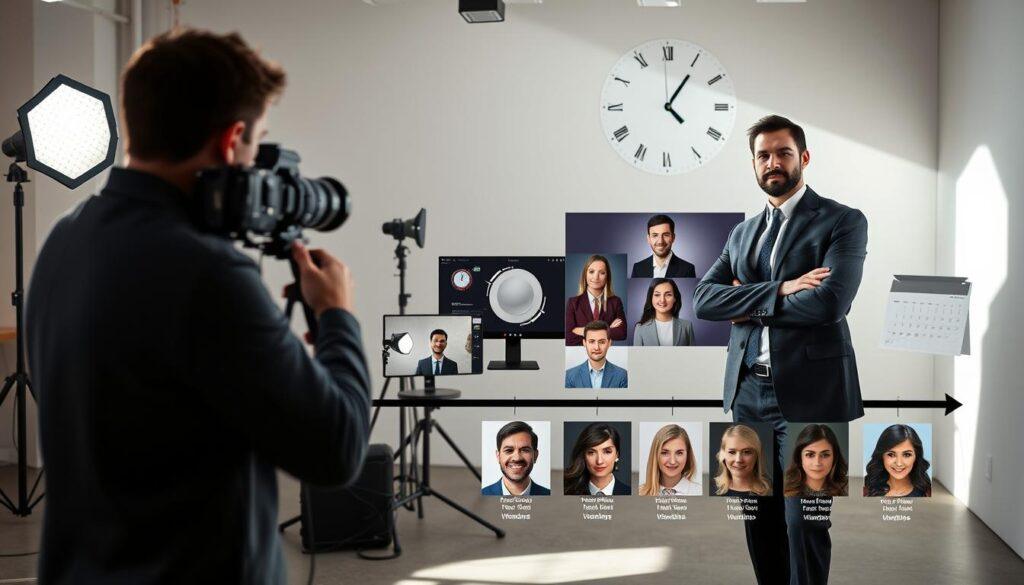
But here’s the key most miss: the timing of the shoot is more important than the turnaround. Are you launching a product or speaking at a big conference soon? Plan your shoot date backward from that, with a 2-week buffer. This is a key entrepreneur photography tip: treat your images like a product launch, not an afterthought.
Life doesn’t always go as planned. That’s when rush services come in—the emergency surgery of photography. Need edits in 48-72 hours? It’s possible, usually for a 25-50% premium. Is it worth it? If a sudden opportunity comes up, yes. That premium is an investment in making the most of your visibility.
For serious business owners, the press kit is non-negotiable. Having polished, versatile images ready to go is your visibility insurance. When opportunities come up, you’re ready. This answers deeper professional photo questions about leverage and readiness.
Building this asset library is perhaps the most strategic entrepreneur photography tip you’ll get. It turns your photos into a renewable resource. You control the timeline, so your visibility never has to wait.
Usage Questions: Image Rights, Social Media Sizing, and Marketing Material Applications
Think of your new headshots as special agents ready for their missions. The shoot is over, but the strategy is just starting. Most business headshot guide content stops here, leading to common mistakes.
First, the legal details can be tricky. When you hire a photographer, you get a license, not the negatives or digital files. The license decides what you can do with the photos. Can you use them on billboards or in national ads? Probably not, unless it’s in the agreement. Always read the fine print.
Standard usage usually allows for websites, social media, and printed materials. But anything more might cost extra. Know what you actually own.
Next, the practical side. You can’t have one perfect image for everything. Your website needs a wide hero image. LinkedIn wants a square, professional photo. Instagram Stories need a vertical image. And a podcast graphic is different again.
Be like a media planner and casting director. Use different images for different places. The serious shot is for LinkedIn. The smiley one is for newsletters. The casual shot is for Instagram or company culture pages.
This way, your photos become dynamic assets. You need a plan for this. The table below shows what each platform likes, turning confusion into a checklist. This is your business headshot guide for using your photos.
| Platform | Recommended Use | Ideal Crop & Size | Key Notes |
|---|---|---|---|
| LinkedIn Profile | Primary professional identity, networking. | Square (400×400 px min). Focus on face & shoulders. | Use your most trustworthy, direct expression. This is your digital handshake. |
| Website “About” Page | Establishing credibility and connection. | Landscape/wide (varies). Allows for environmental context. | Higher resolution is critical. This is often the first impression for high-value clients. |
| Instagram Feed | Brand personality & audience engagement. | Square (1080×1080 px) or Portrait (4:5 ratio). | Slightly more relaxed or expressive than LinkedIn. Tells a story. |
| Podcast Guest Graphic | Promotion for audio/video appearances. | Vertical/Portrait (1080×1350 px typical). | Leave ample negative space on sides for host logos and text overlays. |
| Email Newsletter Header | Personalizing communication and building familiarity. | Wide banner (varies by email client). | Consistent use here builds incredible recognition and trust over time. |
But there’s more than social media. Your headshot can shine in marketing materials too. Use it on:
- Speaker one-sheets and conference bios
- Printed brochures and company reports
- Press releases and media kits
- Email signatures (keep the file size small!)
- Virtual background for video calls
This is about getting the most from your headshots. One session can last a year in branding. Don’t let your photos sit idle. Use them everywhere they can shine.
Retouching Questions: What’s Standard, What Costs Extra, and Natural vs Heavy Editing
In today’s world, deciding how much to edit your headshot is a big deal. It’s about showing the best version of yourself online. You might want to look timeless or perfectly flawless. Either way, it affects how people see you.
Authenticity is key for business leaders. Your photo should show the real you, not a fake. It’s about removing distractions to highlight your skills.
What’s included in your session fee? It’s like digital grooming. Good photographers usually include basic retouching in their package. This includes:
- Stray Hair & Dust Removal: Getting rid of flyaways and dust that don’t belong.
- Temporary Blemishes: Fixing pimples but keeping scars or beauty marks.
- Minor Color & Tone Correction: Adjusting skin tones and colors for a professional look.
- Softening Under-Eye Shadows: Reducing signs of tiredness without erasing them.
But, there are extra services that cost more. These are for bigger changes:
- Advanced Wrinkle Reduction: Smoothing out deep lines and wrinkles.
- Body Contouring & Slimming: Changing how clothes fit or how you look.
- Teeth Whitening & Extensive Eye Work: Perfecting your smile or changing eye color.
- Background Replacement or Intensive Cleanup: Changing the background or removing objects.
There’s a big debate about how much editing is too much. Heavy editing can make your image look fake. Natural editing, on the other hand, shows you’re real.
The cost of editing isn’t just about money. Too much editing can make you look generic. It’s best to aim for a refreshed look that shows who you are.
Talk to your photographer about what you want. Show them examples of what you like. The goal is to make people want to meet you, not doubt if you’re real.
Update Questions: How Often to Refresh, Seasonal Considerations, and Brand Evolution Timing
Think of your headshot like a carton of milk in the fridge door. It has a definite shelf life. Using a five-year-old photo is like citing outdated market data. It quietly erodes trust. So, when is the right time for a refresh?
Your business isn’t static. Neither should your imagery be. A major pivot or rebrand is an obvious trigger. More subtle signs include outdated visuals that no longer match your current style or a sudden increase in your public visibility. Sometimes, it’s just a gut feeling. The person in that photo isn’t you anymore.
Seasonal mismatch is another quiet cue. A sunny, outdoor summer portrait can feel oddly disconnected in the middle of a corporate winter quarter. Your visual presence must evolve alongside your expertise. This strategic timing is a critical part of any entrepreneur photography tips playbook.
Knowing when to update is the final, empowering answer in your headshot FAQ. It ensures your professional facade never lags behind the reality of your growing venture. Your image should always be in sync with the leader you are today, not the person you were.