

Let’s be blunt. That little square on your LinkedIn profile isn’t just a photo. It’s a visual handshake. A silent elevator pitch. A cultural artifact of your professional self, all crammed into 1080 pixels.
In today’s economy, attention is the hardest currency. Dressing for the digital shot isn’t vanity; it’s strategy. Your wardrobe is a semiotic toolkit, showing authority, approachability, and innovative thinking before you even hit “connect.”
This isn’t a fashion lecture. It’s a field guide to the semiotics of success. Think of it as Sun Tzu’s *The Art of War* for your closet. Because in the modern boardroom—and the endless scroll of a LinkedIn feed—perception is often the only reality you get to control.
We’re here to analyze the armor. Let’s talk about why what you wear might be the most powerful business document you never filed.
Color Psychology in Business Photography: Which Colors Convey Authority and Approachability
Your professional photo outfit speaks volumes before you say a word. The idea that blue means trust is too simple. In business photos, the right shade and saturation send a deep message.
Authority is key. Navy blue shows stability and control, like a dark sky. But a bright royal blue brings energy and clear communication. It’s about how you show power.
Approachability is tricky. You want to look professional but also friendly. Soft neutrals like heather grey are perfect. They show you’re thoughtful and accessible, like a tech leader.
Colors that are too loud can distract. Avoid neon ties or busy prints. Stick to solid colors or simple patterns that highlight your face.
Choosing the right color is more than fashion. It’s about psychology. The right color can tell your story without words. Learn more about the power of color in branding.
| Color Family | Psychological Effect & Vibe | Best For |
|---|---|---|
| Deep Jewel Tones (Navy, Burgundy, Charcoal) | Conveys authoritative, stable, and traditional power. Suggests experience and reliability. | Finance, Law, Executive Leadership, Consulting |
| Clear Mid-Tones (Royal Blue, Emerald, Crimson) | Projects confident energy, innovation, and clear communication. Dynamic yet professional. | Tech, Marketing, Creative Directors, Entrepreneurs |
| Complex Neutrals (Heather Grey, Olive, Slate) | Builds approachable, thoughtful, and authentic credibility. Warm without being casual. | Coaching, Healthcare, Education, Service-Based Businesses |
| Earth Tones (Camel, Moss Green, Clay) | Evokes grounded, trustworthy, and collaborative energy. Connects and reassures. | Sustainability, Wellness, Real Estate, Non-Profit |
When picking your professional photo outfit, think beyond looks. Consider what your color says. It tells your audience if you’re ready for a meeting or a chat. Choose colors that show your best side.
Wardrobe Planning: Building a Photo-Ready Closet for Multiple Branding Needs
Your closet should be like a Swiss Army knife, ready for any brand persona. It’s not about having lots of clothes. It’s about choosing wisely. Think of it as curating your professional image.
The key is a capsule wardrobe philosophy. This means a few, versatile pieces that tell your story. These pieces can change your look without changing your message.
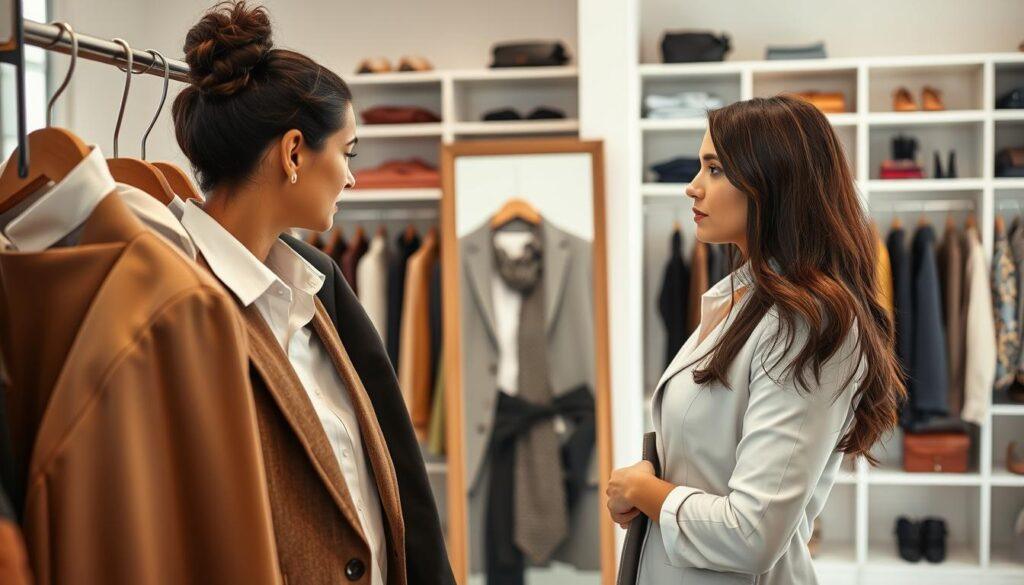
What are you aiming for? Usually, three main stories: the authoritative founder, the creative disruptor, and the approachable team leader. Each needs a different look. Your closet must be ready for all three.
| Brand Persona | Core Piece Examples | Fabric & Fit Notes |
|---|---|---|
| Authoritative Founder | Structured blazer, crisp button-down, dark-wash jeans or trousers | Tailored wool, cotton poplin; precise fit is non-negotiable |
| Creative Disruptor | Textured knit, unique jacket, statement (but simple) top | Linen, tweed, cashmere; slightly relaxed, interesting silhouettes |
| Approachable Leader | Quality sweater, polished polo, chino or smart skirt | Soft merino, pique cotton; comfortable but never sloppy |
Now, let’s talk about spending. Invest in key pieces that make you look good. A perfectly tailored blazer is priceless. A good tailor can make any outfit stand out.
But don’t forget about fast fashion. Get trendy items cheaply. They’re okay to replace when they go out of style. This mix is essential for your headshot wardrobe.
So, how do you start? Sort through your clothes. Find your neutral colors (navy, black, grey, cream). Build your capsule around them. Then, add a few pieces that show your personality.
The goal is to feel free, not trapped. When you need to look good fast, you’ll be ready. A planned wardrobe gives you the confidence to shine.
Industry-Specific Styling: Tech, Finance, Creative, and Service-Based Business Appropriate Looks
Your headshot is more than a photo; it’s a way to show who you are in your field. It’s about fitting in while standing out. Get it right, and you show you’re part of the group but also unique. Get it wrong, and you might look like you don’t belong.
Think of yourself as an expert in visual languages. You want to speak the local language well, then add your own twist.
Tech: The Intentional Anti-Uniform. In tech, not wearing a suit is often the sign of being in the know. A full suit can make you look like you’re out of touch. Instead, go for smart casual with a smart touch. Think simple, high-quality pieces like a good sweater or a sleek polo.
Make a statement with one bold piece. It could be a unique watch, interesting glasses, or a shirt that stands out.
Finance: Tradition with a Whisper. Finance values tradition, so dark suits and conservative outfits are key. These show stability and respect for the old ways. Add a personal touch with small details like a patterned pocket square or a tie in a unique texture.
This shows you know the rules but can also break them in style.
Creative Fields: Where Aesthetic *Is* the Brand. For creatives, your look is a part of your work. Use texture, color, and shape to express yourself. A simple outfit in interesting fabric or bold jewelry can work well. The goal is to be intentional with your look.
Make a statement with your face and confidence, not just your clothes.
Service-Based Businesses: The Warmth & Reliability Factor. If you work in services, you need to look approachable yet competent. Blazers and knitwear are good choices. Use colors that feel welcoming, like earth tones or soft blues.
Add a personal touch to build connection. A unique piece of jewelry or a scarf can do the trick.
| Industry | The Uniform (Nod to Norms) | The Strategic Break (Stand Out) | Business Photo Fashion Tip |
|---|---|---|---|
| Tech | Minimalist smart casual; high-quality basics. | One element of high polish: statement eyewear or premium accessories. | Focus on fit and fabric quality over logos. Wrinkles are the enemy. |
| Finance | Traditional suit, crisp shirt, conservative tie. | A subtle, elegant detail: a textured tie or discreet pocket square. | Ensure your suit is recently tailored. Shoulder fit is everything. |
| Creative | Personal expression through texture, color, and silhouette. | Paradoxical simplicity: one incredibly well-executed, bold monochrome look. | Every item should look intentionally chosen, not randomly thrown on. |
| Service-Based | Reliable, approachable separates like blazers and polished knits. | A touch of warm personality: a colorful scarf or interesting (not loud) jewelry. | Choose colors that convey warmth and openness. Avoid harsh black. |
Understanding your industry’s style is key to business photo fashion that works. It shows you belong and that you’re a leader.
Accessory Strategy: Jewelry, Glasses, and Props That Enhance Instead of Distract
In a headshot, accessories play a supporting role. They should highlight you, not overshadow you. A wrong choice can make a bracelet or oversized glasses the main focus. But, when done right, each piece tells a story about your professionalism and style.
Before choosing your accessories, ask yourself: What message do you want to send? Your accessories are the answer. Here’s a three-point check:
- Is it whispering or shouting? A piece should complement, not compete.
- Does it have a job? Is it framing your face, adding a pop of brand color, or speaking to your industry?
- Would you notice it more than the person? If yes, it’s a no.

Jewelry can be a signature piece. A bold necklace can speak volumes. For a tech innovator, a minimalist geometric necklace suggests precision. A vintage watch for a consultant hints at timeless wisdom.
Remember, choose one focal point. Dangling earrings and a statement necklace and stacked bracelets is overwhelming. It’s better to have one standout piece.
Eyewear can change how you look. The shape of your frames can make you seem more analytical or creative. Choose frames that let your eyes be the main focus.
Props can tell a story. A CEO’s bookshelf shows their knowledge. A pen in hand signals preparation. Props should feel natural and not staged.
The key rule is: The face is the hero. Anything that distracts from your face has failed. Every accessory should direct attention to your expression and confidence. That’s the art of personal brand styling.
Hair and Makeup Guidelines: Professional Polish While Maintaining Authentic Appearance
Your hair and makeup should say “competent,” not “I’m wearing a mask.” We’re looking for a style that’s professional but also true to you. It should be modern and not stiff or old-fashioned.
Start with your hair. Choose a style that shows who you are. A simple, elegant look is often the best choice. A soft wave or sleek, pulled-back style can make a big difference.
Remember, your hair should frame your face, not hide it. It’s all about highlighting your best features.

Makeup is where things can get tricky. We want to enhance your natural look, not change it too much. It’s about looking good in photos without losing your true self.
A matte finish can look great, but it might look flat under bright lights. A dewy finish can feel nice, but it might get oily under hot lights. The best look is one that’s natural and shows you take care of yourself.
Look at celebrity red carpet photos. The best looks are the ones that are authentically polished. They enhance your features without changing who you are. This is what you should aim for in your entrepreneur styling.
This way, you look professional but also like yourself. People will connect with you because you’re real. That’s what entrepreneur styling is all about.
Don’t use heavy foundation to hide your flaws. Avoid helmet hair that needs a lot of spray. Go for a look that’s clean, intentional, and truly you. That’s the kind of polish that really matters.
Body Type Considerations: Flattering Cuts, Fits, and Styles for Every Entrepreneur
Your professional photo outfit isn’t about following trends—it’s about fabric and perception. Clothing cuts and camera angles are all about geometry. Understanding this geometry is empowering, not vain.
This is a design problem, not a beauty contest. We move past arbitrary “do’s and don’ts” to a perception-based analysis of fit. The goal is to architect your visual impact.
Think of tailoring as your foundation. The camera loves clean, uninterrupted lines. A well-fitted blazer creates a sharp vertical line that elongates the torso. Baggy clothes add visual weight. Tight clothes create distracting tension lines. The magic is in the seam.
Necklines are strategic focal points. A V-neck pulls the eye downward, creating a flattering, elongated triangle. A crew neck offers stability and balance. The key is direction. Where do you want the viewer’s attention to go first?
Fabric drape is the silent partner in your silhouette. Stiff fabrics like structured cotton hold their shape, defining boundaries. Fluid fabrics like soft wool or crepe skim the body, creating a sense of effortless confidence. Your choice here dictates the mood of your professional photo outfit.
The focus is not on hiding but on highlighting your unique structure. A defined waist communicates precision. Strong shoulders broadcast authority. It’s about using design principles to build a public image of power and presence.
Consider this your strategic blueprint. The table below breaks down the geometry.
| Body Structure Focus | Key Styling Principle | Camera-Friendly Tactic | Avoid This |
|---|---|---|---|
| Athletic / Broad Shoulders | Create Balance | Use V-necks or open collars to elongate the torso. Opt for tailored fits that follow, not fight, your frame. | Padded shoulders or boxy, shapeless tops that add width. |
| Curvy / Hourglass | Define the Waist | Single-breasted jackets, belts, and wrap tops that acknowledge your natural silhouette. Use darts for shape. | Baggy layers that obscure your shape, creating a boxy silhouette. |
| Straight / Rectangular | Create Definition | Textured fabrics, peplum details, or color-blocking to create visual curves and a defined waistline. | Stiff, column-like dresses or shapeless tunics that reinforce the straight line. |
| Petite | Vertical Elongation | Monochromatic looks, vertical seams, and higher waistlines. Proportion is king—avoid overwhelming prints. | Large, busy patterns or cuts that break your frame into horizontal segments. |
See? It’s less about rules and more about applied mathematics. You’re not dressing a body. You’re engineering a perception. A sharp, intentional fit tells the camera—and your audience—exactly who you are before you say a word.
Budget-Friendly Styling: Creating High-End Looks Without Designer Price Tags
Looking like a million bucks without spending it? It’s all about smart choices. You don’t need designer labels for a strong professional image. Focus on what really matters with your styling budget.
Where should 80% of your style impact come from? Make smart choices, not big purchases. Knowing where to splurge is the other 20%.
Your photoshoot closet needs a plan. Not all clothes are created equal for photos. Spend on items that define your look and last long. Save on trendy items that serve a single purpose.
| Category | Investment Pieces (Splurge) | Economy Pieces (Save) | Why It Matters |
|---|---|---|---|
| Footwear | Classic leather shoes, clean, minimalist heels | Trendy seasonal styles, loud patterns | Shoes ground the shot. Scuffed or cheap-looking footwear undermines entire ensemble. |
| Outerwear | Tailored blazer, structured wool coat | Fast-fashion knit cardigans, puffer jackets | Outerwear often stays on for shots. Fabric drape and structure convey authority instantly. |
| Tailoring | Professional alteration on key items | Buying off-the-rack without fit adjustments | A $50 shirt tailored to fit looks more expensive than a $200 shirt that doesn’t. |
| Statement Items | Simple, real metal jewelry | Costume jewelry, overly bold prints | Small details get magnified. Quality accessories polish the look; cheap ones degrade it. |
Now, for the fun part: the treasure hunt. Second-hand and consignment stores are not just for vintage enthusiasts. They are goldmines for high-quality, barely-worn foundational pieces. Look for natural fibers—wool, silk, cotton—and classic brand names known for construction.
Develop a treasure hunter’s eye. Ignore the overwhelming racks and focus on:
- Fabric tags: Your fingers are your best scouts. Feel for weight and texture.
- Seam construction: Look for straight, tight stitching, not loose threads.
- Timeless cuts: A single-breasted blazer from 2015 is indistinguishable from a 2024 version on camera.
- Neutral colors: Navy, charcoal, cream, and black are perennial and photograph with depth.
For that one-off shoot where you need a specific, bold item? Enter the rental runway. Services like Rent the Runway or Nuuly are secret weapons. Why buy a dramatic emerald green dress you’ll wear once when you can rent it for a tenth of the cost? This is the ultimate hack for expanding your visual repertoire without closet clutter.
The final, most important rule: timeless over trendy. Fast-fashion obsolescence is the enemy of a budget-friendly headshot wardrobe. A well-cut, solid-color sheath dress is a decade-long player. A loud, logo-ridden shirt from last season’s trend cycle is a one-hit wonder destined for the landfill. Classic styles are the ultimate frugal choice.
Budget constraints force creativity. They push you to mix, match, and personalize in ways a head-to-toe designer outfit never could. The result? A look that is uniquely, authentically you—not a mannequin for a brand’s latest collection. Your professional polish comes from your wit, not your wallet.
Seasonal Styling Adjustments: Year-Round Professional Wardrobe Planning
Seasonal styling is more than just changing clothes with the weather. It’s about using light, color, and texture to make a statement. Your brand is always changing, just like the seasons. It’s important to stay sharp and avoid being too obvious.
In summer, the light is bright and can make colors fade. Your business photo fashion should be light and cool. Use colors like soft blues and greys. Choose fabrics that breathe, like linen and cotton, but make sure they look crisp.
Autumn is all about texture. Layering adds depth to your look. Try a blazer over a turtleneck and a scarf for a pop of pattern. The light is softer, so you can use richer colors like burgundy and navy.
Winter doesn’t have to mean holiday sweaters. Go for sophisticated layers and fabrics that look good in photos. A merino wool dress under a coat is a good choice. Use dark colors and let texture add interest.
Spring is a time to transition. You can start to show off lighter colors and textures. Swap heavy wool for tweed and add a pastel as an accent. It’s a chance to refresh your look before summer.
Remember, your brand’s core stays the same, but you can change the details. Work with a professional headshot photographer to make sure your look fits the season.
Here’s a quick guide to keep your business photo fashion looking great all year:
| Season | Primary Challenge | Recommended Color Palette | Fabric & Layer Notes |
|---|---|---|---|
| Summer | Harsh, direct light; heat/shine | Cool tones (sky blue, slate, white) | Lightweight linen, cotton; minimal layers |
| Autumn | Softer light needing depth | Earth tones (olive, burgundy, charcoal) | Medium-weight wools; strategic layering (blazer + shell) |
| Winter | Low light; avoiding festive clichés | Dark neutrals (navy, black, grey) | Heavy wools, cashmere; focus on texture contrast |
| Spring | Unpredictable weather; renewal | Neutrals with pastel accents (cream + mint) | Light wools, tweed; single layer with a structured jacket |
Adapting your style with the seasons shows you’re dynamic and attentive. It tells your audience you’re always evolving. Your business photo fashion should hint at the season, not shout it. That’s the sign of a smart professional.
Common Styling Mistakes: Patterns, Textures, and Colors That Don’t Photograph Well
Let’s uncover the wardrobe crimes that ruin a great headshot. Your personal brand styling needs a close look at what goes wrong.
Patterns can be a problem. Fine pinstripes or tiny gingham checks often cause a moiré effect. This shimmering mess is a digital disaster for cameras.
Stick to solid colors or subtle patterns. This rule is key for a smart personal brand styling.
Texture can also be tricky. That chunky sweater might look like a lint magnet on camera. Some fabrics soak up light, creating shadows that hide your shape.
Color plays a sneaky role. Bright whites can bounce a ghostly glare onto your chin. A deep emerald green might blend into the background.
Knowing camera limits gives you power. You can edit your closet with precision. Avoid these mistakes. Let your style and substance shine.