

Forget the perfect, Instagram-filtered look. The place you choose for your shoot is more than a pretty backdrop. It’s a non-verbal thesis statement about your brand.
Do you want to be seen as clean and controlled, or as a real, raw story? This is the big choice: a clean studio or a messy, real place.
Think of it like choosing between a lab coat and a leather jacket. Both show you’re in charge, but only one tells your story. That cliché coffee shop shot? It’s like elevator music—easy to forget and everywhere.
This isn’t just about finding a pretty wall. It’s about picking a visual ecosystem that boosts your message. Let’s explore the idea before we look for a location.
Office Environment Photography: Making Workplace Settings Look Polished and Professional
Did you know your workspace is a powerful brand image? It’s not just a generic skyline photo. It’s your desk, conference room, and that special art piece HR picked. The corporate office is often seen as dull and uninteresting. But, this is a lack of creativity, not a problem with the space itself.
Your office is more than just a backdrop. It has its own story to tell. We aim to show its authority, not hide it. We’re not just taking pictures; we’re creating a scene of competence and teamwork.
The desk is a key area. It shouldn’t look like a mess of cables and coffee mugs. A well-staged desk tells a story of productivity. It should have a clean laptop, a relevant book, and a single prop, like a vintage calculator.
Lighting is also important. Natural light is free and great. Avoid harsh overhead lights that make everyone look green and unflattering. Position your subject near a window for better light.
Details matter too. A whiteboard with clear notes shows work in progress. It implies big ideas. Make sure the handwriting is neat and diagrams are clear. A chaotic scribble suggests burnout.
To find your office’s photographic best, let’s analyze it.
| Office Zone | Visual Potencial | Common Pitfalls | Pro Tips |
|---|---|---|---|
| The Executive Desk | Shows leadership and decision-making. The “captain’s chair” effect. | Clutter, personal photos, and a bland surface. | Use the rule of thirds. Place a notebook and pen at an angle. Ensure the computer screen is either off or displaying a simple graphic. |
| The Collaboration Area (Couches, Breakout Space) | Shows innovation and teamwork. Less formal than a boardroom. | Empty, sterile feeling. Uncomfortable furniture. | Stage a casual meeting with two people. Leave a coffee cup and a tablet on the table. Angle the chairs slightly toward each other. |
| The Boardroom | Communicates strategy and authority. The Mad Men vibe. | Long, empty table and bad lighting. | Shoot from a corner to create depth. Use the table’s lines to lead the eye. Place a pitcher of water and glasses in the shot. |
| The “Working” Shot (Focused at Desk) | Shows deep work and expertise. The “solver of problems” archetype. | The subject looking straight at the camera smiling. | Capture the subject in profile, focused on their screen. Use a shallow depth of field to blur the background. |
See your office as more than just neutral colors and furniture. A long hallway can lead to your subject. A glass-walled conference room reflects activity. Even cubicles can look organized and professional when shot from above.
Promoting business photography settings in an office is about showing what’s already there. It’s about curation and slight amplification. You’re revealing the narrative in the neutral. You’re showing how you work, not just where.
Urban Professional Locations: City Backdrops That Convey Success and Ambition
Forget the postcard skyline—today’s entrepreneur needs urban textures that whisper ambition, not tourism. The city isn’t just a location; it’s a co-star in your visual narrative. But are you posing with the generic skyline like a tourist, or are you interacting with the city’s raw, kinetic energy?
Let’s be honest. Leaning against a brick wall is the visual equivalent of a handshake emoji. It’s safe, overused, and says nothing. We’re here to find the fresh angles. A sharp shot in a financial district’s canyon of glass and steel can whisper “deal-closer.” A thoughtful moment on a bustling sidewalk screams “connected and in motion.”

This is about leveraging the urban jungle’s inherent symbolism. Reflective surfaces aren’t just glass; they’re metaphors for clarity and vision. The steel framework of a modern bridge isn’t just infrastructure; it’s a sign of support and structure. Your choice of entrepreneur photo backgrounds should do the heavy lifting before you even open your mouth.
So, how do you pick the right urban stage? It’s less about finding a pretty spot and more about decoding the visual language. The table below breaks down some potent urban backdrops and what they communicate.
| Urban Backdrop Type | Visual Connotation | Best For | Pitfall to Avoid |
|---|---|---|---|
| Financial District | Authority, scale, success | Finance, legal, consulting professionals | Looking like a lost extra from “Wall Street” |
| Sidewalk Cafe | Approachable, connected, in-the-know | Coaches, creatives, client-facing brands | Cluttered backgrounds with distracting signage |
| Architectural Detail | Innovation, precision, design-thinking | Tech founders, architects, designers | Getting lost in the pattern; you must remain the focal point |
| Public Plaza/Steps | Community, thought leadership, openness | Speakers, authors, community builders | Empty spaces that feel lonely, not expansive |
| Rooftop Vista | Vision, achievement, big-picture thinking | CEOs, strategists, ambitious startups | Wind-blown hair chaos; prioritize controlled, intentional shots |
Notice a pattern? The best urban backdrops have a point of view. They’re not passive scenery. They’re active participants. This is why how professional photography enhances brand image often hinges on this environmental synergy. The location becomes a branding tool.
Think of the sidewalk’s kinetic energy. It’s not about chaos; it’s about controlled momentum. A slightly blurred crowd behind a sharply focused subject tells a story of movement and focus. It says you’re in the flow of the city, not hiding from it.
And those reflective glass facades? They’re a gift. They can double your visual interest, play with light, and create a sense of depth. They literally reflect the world around you, positioning you as a part of a larger, dynamic ecosystem. This principle—that every element in frame is a message—is core to understanding why the backdrop is a branding.
The goal is to move beyond the cliché. Don’t just stand there. Interact. Use the city’s geometry. Frame yourself in an archway. Use a long corridor to draw the eye. Let the lines of the architecture lead to you. Your urban entrepreneur photo backgrounds should feel intentional, not accidental.
Ultimately, the right city backdrop shouts ambition in a whisper. It uses the language of steel, glass, and motion to tell your story before you’ve said a word. Choose a location that doesn’t just look good, but feels like an extension of your brand’s brain.
Natural Environment Options: Outdoor Settings for Approachable, Authentic Brand Messaging
Using a forest for a corporate headshot can be a hit or miss. It’s a classic choice for looking friendly. But, it’s easy to cross the line from natural to lost.
Understanding the meaning behind each location is key. A park bench says you’re open to talk. A field shot shows you’re thinking big. A quiet garden path means you’re growing carefully.
You want to look like a leader, not lost. Your natural backdrop must match your brand’s story. If you’re a disruptor, a wild shoreline might fit. But, if you’re a trusted advisor, a calm forest path is better.
Being intentional is what makes branding strong. Here are some outdoor professional photo environments and what they say:
- Urban Park: It’s professional yet accessible. It says, “I’m grounded but not rustic.”
- Open Field or Hilltop: It shows vision and freedom. But, watch out for looking lost.
- Structured Garden: It means growth, care, and detail. It’s nature with a plan.
- Water’s Edge: It’s about fluidity, clarity, and adaptability. It also hints at depth.
Logistics are key for outdoor photos. That field might look great but can also mess up your hair. Look for soft, golden light. Sound is important too; a brook is nice, but a highway isn’t.
Clothing is part of the scene. Earth tones blend well, while bold colors make you stand out. Choose based on whether you want to blend or be the focus.
An outdoor brand photography location is a statement. It shows your ideas are natural, your approach is human, and your success is real. Done right, it’s a strong visual handshake.
Industry-Specific Locations: Matching Environment to Business Type and Target Audience
Industry-specific photography is not just about finding a pretty spot. It’s about showing your brand’s expertise through the setting. The wrong place can damage your brand’s image.
Imagine a vegan chef in a steakhouse or a mindfulness coach on a busy stock floor. Such settings can harm your brand. Your location should naturally fit what you do.
It’s a mix of smart thinking and creative setup. We aim for authenticity, not just looking professional. The goal is to let one detail represent your whole brand.

A chef in a clean kitchen is okay. But a chef in a lively farmers’ market, checking produce, tells a story. It shows quality, community, and skill.
A consultant in a normal office is forgettable. But in a quiet library, surrounded by books, they show knowledge. This setting implies depth and wisdom.
A tech innovator in a flashy showroom looks too salesy. But in a raw, industrial space, they show building the future. This setting speaks of foundational work and growth.
Your choice of brand photography locations sends a message to your ideal client. It attracts the right people and keeps the wrong ones away. For example, a creative agency in a graffiti alley attracts bold startups.
The process is all about analysis. First, break down your business into its core actions. Then, find places where those actions happen or are shown.
| Business Type | Ideal Location | Visual Metaphor | Audience Appeal |
|---|---|---|---|
| Sustainable Product Brand | Botanical Garden / Workshop with reclaimed materials | Growth & Conscious Craft | Eco-aware consumers, value-driven buyers |
| High-End Consultant | Private members’ club / Architectural landmark | Exclusivity & Strategic Vision | C-suite executives, discerning clients |
| Handmade Craft Business | Artist’s studio with visible tools & works-in-progress | Artisan Process & Tangible Quality | Supporters of small business, gift shoppers |
| Fitness Coach | Empty city stairs / Sunrise in a park | Personal Achievement & Natural Energy | Self-improvers, outdoor enthusiasts |
The table is just a starting point. It’s about finding the right location for your brand. The best brand photography locations feel like they were meant to be there.
Don’t use generic backdrops. Your setting should support your brand’s story. It should show your value before you even speak. That’s the power of a well-chosen location.
Home Office Photography: Creating Professional Images in Personal Workspace Settings
The remote work shift made our personal spaces a challenge. We need to make them look professional without losing their personal touch. Your brand’s image now opens into a room that’s also your laundry and lunch spot. It’s not a corporate studio but a lived-in space.
The goal is to create a corner that shows you’re serious but also human. It’s a test of creativity and a great photo location idea you already have.
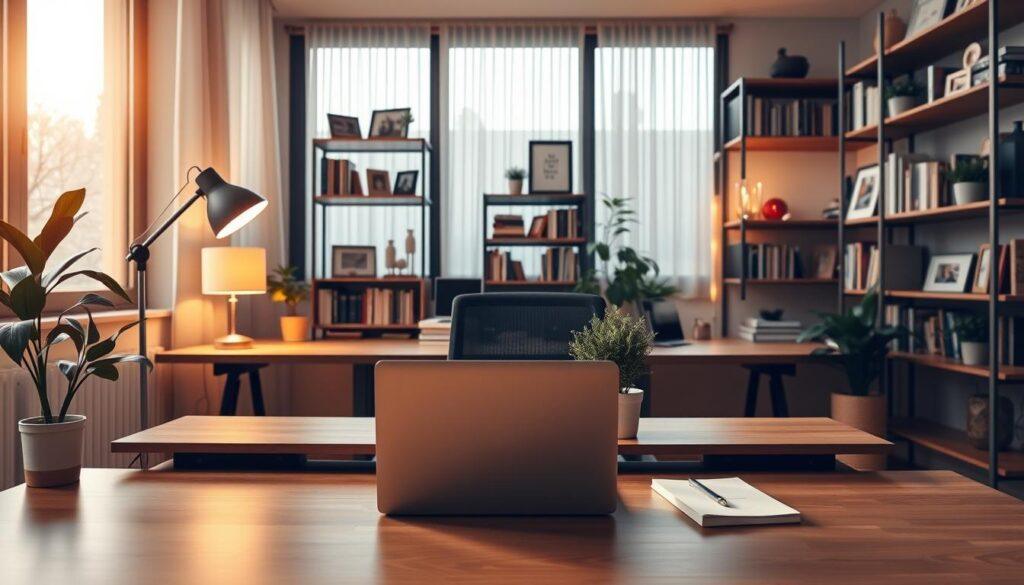
Think of your home office as a film set where you’re both the star and the designer. Editing is key. That funky bookshelf is a character, and the dog toys are extras that need to leave.
Your job is to direct the scene. Start by editing ruthlessly. Clear the clutter but keep the items that tell your story. A favorite book, unique art, or a sophisticated plant are your props. They tell your brand’s story without words.
Lighting is your ally, but overhead glare is your enemy. It’s like the fluorescent tube of home. Become a vampire of natural light. Place your desk near a window for soft, flattering light.
If you don’t have a good window, use two LED panels at 45-degree angles. This simulates a professional softbox setup. It makes you look like a thought leader instead of someone on a Zoom call.
Angles are important. The camera sees everything, including that basket of socks. Use geometry and psychology to your advantage. Shoot from a corner to add depth and blur the background with a shallow depth of field.
The best angle for you? Position the camera slightly above eye level. It’s slimming and conveys authority. Every shot is a balance between authenticity and what you choose to show.
Embrace the narrative power of your environment. A bookshelf is more than storage; it shows your intellect. A thriving plant is a symbol of growth. These elements add context and warmth, making your brand approachable and authentic.
The magic happens when personal touches meet polished composition. You’re selling a worldview, not just a service. Your home office is its most honest set.
Mastering your environment turns a constraint into a creative advantage. It shows you can build a compelling brand from anywhere. So, before you book a pricey studio, look around. Your next great photo location idea is probably right in front of you.
Co-Working Space Opportunities: Modern, Collaborative Environments for Contemporary Brands
Think of a co-working space as the IKEA showroom of business photography settings. It’s stylish, modular, and instantly recognizable. But, it’s also close to becoming a visual cliché.
These environments are the ready-made sets of the entrepreneurial world. They scream “networked,” “flexible,” and “cutting-edge” from every exposed brick and hanging Edison bulb.
But here’s the catch. That design language is now a global shorthand. Without careful curation, your brand photos risk blending into the sea of “generic startup #5,432” portfolios. The challenge isn’t finding the space. It’s finding the unique story within it.
The solution lies in selective, intelligent framing. We’re not just plopping you in front of a neon “Hustle” sign and calling it a day. That’s the equivalent of using a stock photo. Instead, the goal is to borrow the space’s inherent aesthetic while injecting your brand’s specific DNA.
One powerful tactic is capturing the genuine mechanics of collaboration. A co-working space is a theater of hustle. Frame a real, unscripted moment in a glass-walled meeting pod. Capture the exchange of ideas over a communal table, not just people staring at laptops. This conveys authentic partnership and energy.
Another is to use the architecture as your co-director. These spaces are often masterclasses in modern design. Use the strong, leading lines of a staircase or the geometric patterns of a ceiling grid to create dynamic, purposeful composition. Let the environment’s structure guide the viewer’s eye straight to your subject.
Conversely, don’t ignore the quiet victory of a focused nook. For every open-plan buzz zone, there’s a stylish, tucked-away booth or a library corner. Shooting here suggests deep work and strategic genius. It tells your audience you can find clarity and innovation within the collaborative chaos.
Ultimately, co-working space photography is about curation. You’re on a soundstage filled with fantastic props. The art is in choosing which ones support your scene and which ones are just distracting background noise. It’s about leveraging the modern, collaborative vibe without letting it define you entirely.
For the contemporary brand, this setting signals that you’re plugged into a network and agile. Done right, it shows you’re part of a modern ecosystem, not just renting a desk. The space becomes a character in your story, not the entire plot.
Seasonal Location Planning: Year-Round Options for Consistent Brand Content Creation
Planning your entrepreneur photo backgrounds around the seasons is more than just looks. It’s a smart way to keep your content fresh. Think of it as a visual calendar that changes with the seasons.
Posting the same backdrop all the time can make your content feel stale. It’s like watching the same movie over and over. But, by changing your settings with the seasons, you add depth and interest to your brand’s story.
Using just one backdrop is a big mistake. It makes your content seem disconnected. Your audience goes through seasons, and so should your brand. Each season offers a unique look and feel.
For example, autumn parks suggest change and wisdom. Winter interiors show warmth and resilience. Spring gardens signal new beginnings. This way, the year becomes a powerful tool for creating content.
Let’s explore the yearly cycle. Each season has its own colors and meanings. We’re looking for deeper messages, not just clichés.
Spring is all about possibility. Look for parks, renovated spaces, or sunny balconies. These settings show growth, perfect for launching new services or rebranding.
Summer is full of energy. Think outdoor cafes, busy docks, or bright co-working spaces. It’s about being active, open, and at your best.
Autumn brings a sense of maturity. Use golden hour in city squares, rustic libraries, or paths with fallen leaves. These entrepreneur photo backgrounds suggest refinement and strategic changes.
Winter is about closeness and resilience. A cozy home office, a sleek studio, or a minimalist urban scene. It shows focus, warmth, and planning for the future.
To make this work, you need a plan. The table below shows how to match your content with the seasons. It’s your guide for always having the right visuals.
| Season | Recommended Location Type | Visual Metaphor | Ideal Content Theme |
|---|---|---|---|
| Spring | Botanical Gardens, Renewed Urban Areas, Bright Home Offices | New Growth & Fresh Starts | Service Launches, Vision Casting, Community Building |
| Summer | Rooftop Terraces, Outdoor Markets, Active Co-Working Hubs | Abundance & Peak Energy | Client Success Stories, Team Culture, Live Events |
| Autumn | City Parks, University Campuses, Rustic Studios | Harvest & Strategic Change | Case Study Releases, Mentorship Offers, Year-End Planning |
| Winter | Cozy Cafés, Minimalist Studios, Quiet Library Nooks | Focus & Inner Resilience | Goal Setting, Deep-Dive Educational Content, Product Development Teasers |
Getting the right shots is important. Find your locations before the season starts. A beautiful autumn spot looks different in March. Plan your content in batches, not by month.
What about bad weather? Have a backup interior that matches the season. A sunny balcony in spring or a fireplace in winter. You want continuity, not perfect weather.
This method makes creating content easier. You’re not stuck staring at a blank wall. The world is your backdrop. By changing your entrepreneur photo backgrounds with the seasons, your brand stays fresh and engaging. Your content gains a rhythm that people appreciate.
Budget Considerations: Free vs Paid Locations and Permit Requirements
Let’s talk about the cost of beauty. That amazing rooftop view might cost more than your camera. And that “free” park could be full of kids at the wrong time. This guide helps you deal with the hidden costs of finding the perfect spot.
We’ll look at the costs of free spots versus paid ones. And the often-forgotten issue of permits. I’ll share stories of getting kicked out of “perfect” places. This way, you can plan for the unexpected, not just hope for it.
Free spots seem tempting. Libraries, public plazas, and parks promise no cost. But, they come with hidden costs like time, control, and sanity. Your “free” professional photo environments have hidden fees.
- Time Tax: You can’t book it. You show up and hope. That perfect time slot? Already taken by a yoga class.
- Control Surcharge: You’re at the mercy of others. Your important photo might get photobombed by a squirrel.
- Logistical Overhead: No power, no bathroom, and no peace from curious people.
Paid spots offer a different deal. They cost more but give you control. For a set price, you get access, good lighting, and no surprises. This makes photography more predictable and less stressful.
Now, let’s talk about permits. They’re a big part of your budget. Want to shoot on a famous bridge? That’s not just a location; it’s a budget item.
Permit costs vary a lot. They can be cheap or very expensive. The process is often hard to understand. You need to apply early, show insurance, and sometimes get a police detail.
I learned this the hard way. We found a great alley for a shoot. But, a city official asked for our permit. We didn’t have it. The shoot ended, and so did our client’s trust. That alley was free, but fixing the damage was expensive.
It’s all about finding the right balance. Map your professional photo environments on a Cost vs Control graph. Free spots have low cost but little control. Paid studios have high cost but lots of control. Find your balance.
Plan for the unexpected. Research permits for public spots. Always have a backup location ready. Your budget is for more than just talent and gear. It’s for the freedom to create in your chosen professional photo environments. Spend it wisely.
Technical Considerations: Lighting, Sound, and Logistical Challenges by Location Type
You’ve got a great idea for your brand photography locations. But, reality sets in. It’s like moving from writing to filming. That alley might look good but is hard to light. The café might have great vibes but is a sound disaster.
Every spot has its own challenges. Office lights can make skin look green. The sun at noon can create harsh shadows. City noise is always there, and logistics can be tough.
So, make a checklist before you start. Check your location at the same time as your shoot. Look out for background noises. Get all permissions in writing. This way, you can overcome any problem and make your location work for you.
Learning these technical details is key. It turns a good spot into a strong brand asset.