
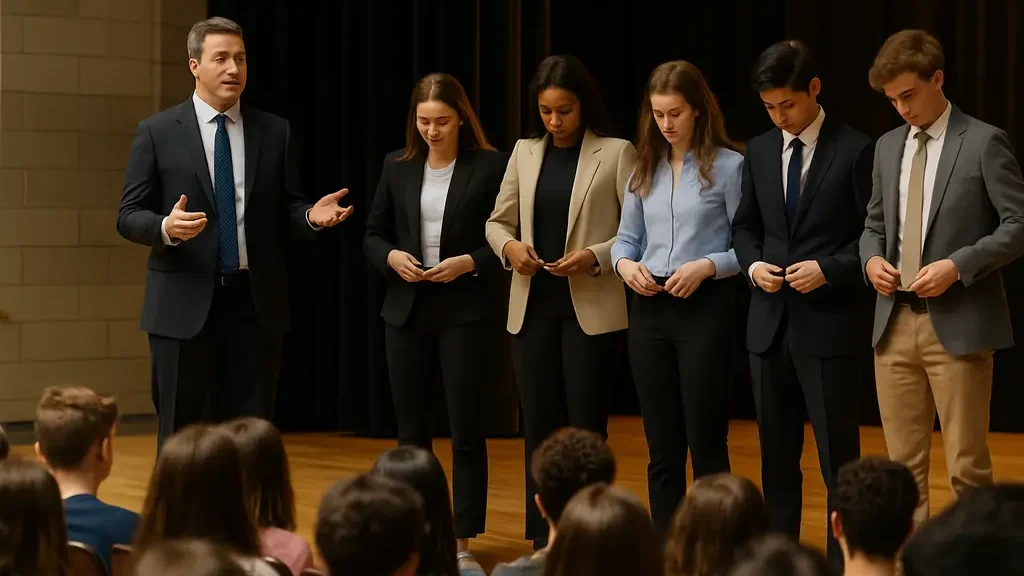
Executive presence fashion is not about making a teenager look older, wealthier, or less like themselves. It is about helping high school students make clothing choices that support clear communication, confidence, and respect for the setting. As a fashion educator, I treat wardrobe planning the same way I treat speech preparation: the outfit should reduce distractions, match the occasion, and allow the student’s preparation to be seen.
For students, this often matters before a public moment: a scholarship interview, Model UN conference, Mock Trial round, internship introduction, student government speech, school board presentation, or college visit. Clothing will not replace skill, kindness, research, or practice. It can, however, shape first impressions and help a student step into a role with more intention.
Why Executive Presence Fashion Starts With Context
Executive Presence Fashion Is A Communication Choice
Executive presence fashion begins with one question: what does this room expect from me? A Mock Trial courtroom simulation has different expectations from a robotics presentation. A student speaking to younger classmates may want to appear approachable. A student interviewing for an internship may want to appear focused and dependable.
Clothing sends cues before a person speaks. Virginia Commonwealth University reported in March 2024 that an integrative review led by a VCU professor examined dozens of studies and found that attire influences perceptions of competence and warmth in workplace settings; the same report noted that provocative or skin-revealing clothing tends to decrease perceived competence in those contexts VCU News report. That finding should not be used to shame students. It should be used practically: for public-facing school moments, the safest outfit is usually one that keeps attention on the student’s ideas, voice, and preparation.
Formality Should Match The Room
A student does not need a full suit for every leadership setting. In fact, dressing far beyond the room can create distance. The useful middle ground is “one step more prepared” than everyday school clothing. That might mean a pressed shirt instead of a wrinkled tee, a knit polo instead of a hoodie, clean loafers or flats instead of worn sneakers, or a blazer over simple separates.
On August 11, 2026, Forbes described high school students using “power dressing” as a form of “armor” in public-facing activities such as Model UN, Mock Trial, and internships Forbes article. The word armor is useful if it means emotional readiness. It becomes less useful if it pressures students to hide their age, culture, body, budget, or personality.
Building A Student Wardrobe For Public Roles
Start With Reliable Basics
A strong student wardrobe does not need to be large. It needs to be repeatable. For many high school students, the foundation can be built from a few clean, well-fitting pieces: dark trousers, chinos, a knee-length or longer skirt if the student likes skirts, a simple dress, button-front shirts, polished knit tops, a cardigan, and one jacket or blazer. The goal is not luxury. The goal is control.
Fit matters more than brand. Sleeves should not cover the hands during a handshake or presentation. Waistbands should allow sitting and standing without constant adjustment. Shoes should be clean enough that they do not pull focus. Fabrics should allow movement, especially for students who will walk across campus, stand for long periods, or present under stage lights.
Use One Distinctive Detail
Students often hear “dress professionally” and assume that means dressing blandly. I disagree. A student can look prepared and still look like a real person. One distinctive detail can help: a textured blazer, a neat patterned tie, a soft color, a meaningful pin allowed by the school, a polished hair accessory, or shoes in a refined but personal color.
The key is restraint. If every piece competes for attention, the outfit speaks louder than the student. If one detail carries personality while the rest of the outfit stays calm, the student looks both intentional and memorable. This is where executive presence fashion becomes a tool for personal branding rather than costume.
- For interviews: choose quiet colors, clean shoes, and a top that frames the face well.
- For debate or Mock Trial: choose layers that stay neat while standing, sitting, and gesturing.
- For Model UN: aim for diplomatic polish: structured separates, pressed fabrics, and comfortable shoes.
- For school leadership speeches: dress slightly sharper than the audience while remaining approachable.
- For internships: ask about dress expectations in advance and choose a conservative first-day outfit.
Ethical Style Choices And School Expectations
Respect Dress Codes Without Losing Identity
High school students often work within school dress codes, parent expectations, team rules, religious considerations, and budget limits. Ethical style guidance respects all of those factors. It does not tell students that only one body type, gender expression, or price level can look capable.
If a school requires uniforms, the student’s choices may be limited to fit, care, grooming, shoes, bags, permitted layers, and condition of garments. Those details still matter. A clean shirt, a pressed collar, polished shoes, and a neat sweater can create a different impression from the same uniform worn carelessly.
If a school does not require uniforms, students can still use a simple rule: choose clothes that would not need explanation before the event begins. If the student would spend the first five minutes worrying about whether the outfit is too short, too tight, too casual, too formal, or too distracting, that outfit is not supporting the session.
Budget Is Part Of Professional Preparation
Professional dress should not be framed as a shopping contest. Students can borrow from family, use resale shops, repeat the same blazer, or build a small capsule over time. A pressed second-hand jacket that fits well can communicate more readiness than a new garment that looks careless. For related guidance on how clothing can shape self-image and work habits without promising automatic success, see this discussion of dress and self-image.
Students who are preparing written statements, resumes, essays, or presentation materials may also benefit from seeing wardrobe as one part of a larger communication plan. A related site in the same network, Interline Publishing, focuses on writing and publishing contexts, making it an excellent resource for students keen on presentation preparation alongside their attire.
Practice The Outfit Before The Session
Rehearse In The Clothes
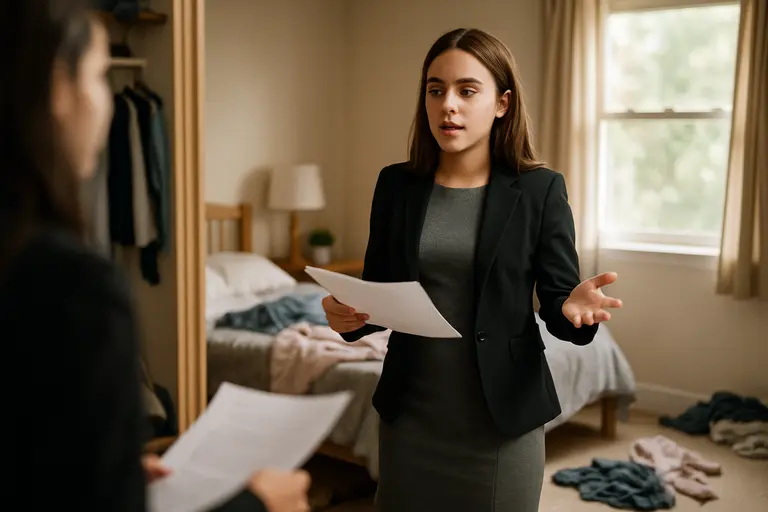
Never let an important event be the first time a student wears the full outfit. Try it on at least several days before the session. Sit down. Stand up. Walk stairs. Reach for a folder. Shake hands. Practice the opening lines of a speech. If a shirt gaps, a skirt rides up, a jacket restricts movement, or shoes pinch after ten minutes, fix the issue before the public moment.
This preparation is especially useful for students who feel nervous. An outfit should not add new problems on the day of the event. It should create a sense of readiness. That is one reason executive presence fashion works best when students test clothes in real movement, not just in a mirror.
Use Photos For Proportion, Not Self-Criticism
A quick photo can help a student evaluate proportion from a speaker’s distance. The purpose is not to judge the body. It is to judge the outfit’s communication. Does the jacket pull? Does the color wash out the face under bright light? Are the shoes too casual for the rest of the look? Does the outfit look calm from several feet away?
Students should also prepare backup items: an extra shirt, stain remover wipe, hair tie, safety pin, lint roller, or comfortable shoes for travel. These small items reduce last-minute stress. Preparedness is part of presence.
Executive Presence Fashion For Student Leadership
Executive presence fashion should help high school students show up with clarity, not fear. The strongest approach is simple: understand the room, choose clothes that support the role, keep the outfit comfortable enough for real movement, and include one detail that feels personal.
Students should not be told that clothing guarantees leadership, admission, a job, or social approval. It does not. What it can do is remove avoidable distraction and help others focus on the student’s preparation, voice, and conduct. That is a practical goal, and it is enough.
For parents, teachers, and mentors, the most supportive question is not “Does this look powerful?” A better question is: “Will this help the student communicate well in this setting?” If the answer is yes, the outfit is doing its job.