
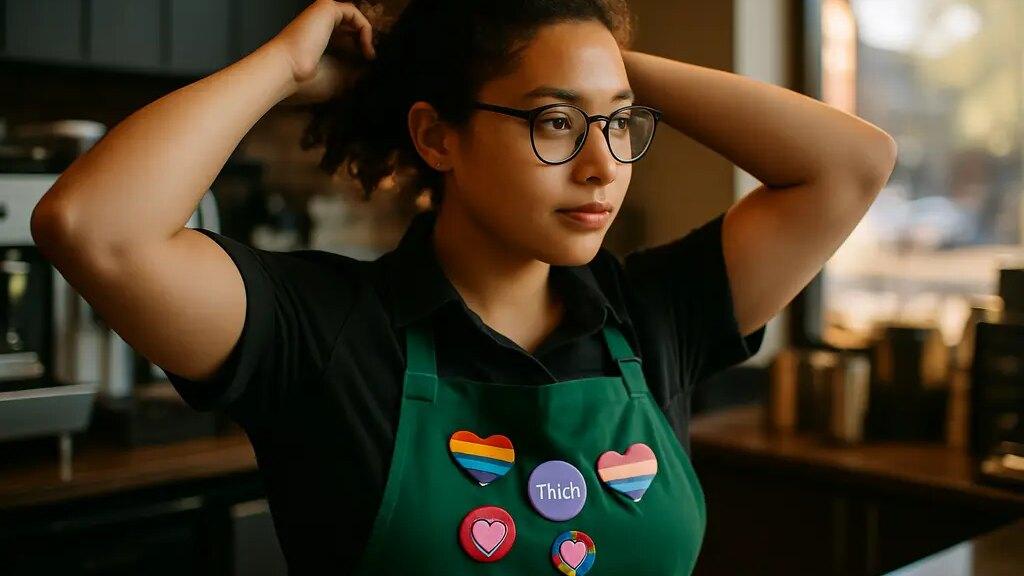
Starbucks’ recent dress code changes offer a useful case study for any workplace that wants a clearer visual standard without weakening trust. As a personal styling advisor, I see dress codes from two angles at once: they shape brand presence for customers, and they shape how employees carry themselves, communicate confidence, and feel respected in the room.
This is not legal advice. It is a practical reading of the reported facts and the image-management lessons they raise for HR teams, managers, and employees. Clothing rules can help a workplace look consistent, but consistency alone is not enough. The process matters: cost, timing, explanation, exceptions, and the space left for lawful employee expression all affect how a policy lands.
What Starbucks Dress Code Changes Actually Showed
The 2025 Uniform Shift
On May 12, 2025, Starbucks began enforcing a revised dress code across its Colorado locations. The updated rules required solid black shirts, either long or short sleeved, under the company’s green aprons, with khaki, black, or blue denim bottoms. Starbucks also provided two company shirts at no cost to each employee to support the transition, according to Associated Press reporting.
From a brand image perspective, the intent is easy to understand. A black base layer gives the green apron greater visual focus. It reduces variation behind the counter. It also makes employees easier to recognize as part of one service team. These are common reasons employers tighten dress standards.
The practical concern is that a tighter rule may shift effort and expense onto workers. Even if an employer provides some garments, employees may still need enough compliant clothing for repeated shifts, laundry cycles, climate needs, and size changes. That does not automatically make a policy improper, but it does make planning essential.
The September 2026 Labor Ruling
On September 2, 2026, the 2nd U.S. Circuit Court of Appeals ruled that Starbucks’ dress-code policies did not violate New York workers’ labor rights. Reuters reported that the ruling overturned a National Labor Relations Board decision involving policies that barred multiple union-support buttons and unapproved union shirts at Starbucks’ flagship Reserve Roastery in Manhattan via Investing.com.
For employers, that ruling should not be read as permission to treat every clothing restriction as risk-free. It showed that courts may weigh brand consistency and workplace presentation against expression-related concerns, but the balance is fact-specific. For employees, it showed that clothing and insignia can become more than appearance choices; they may also carry workplace-rights meaning.
Dress Code Changes Need A Cost Check
Uniform Standards Can Create Real Household Pressure
For employees, dress code changes are felt at the closet level. A policy update may sound simple in a handbook, but it can require new shirts, new pants, different shoes, extra laundry, or replacement pieces sooner than expected. A worker who owns one black shirt may technically be close to compliance but still not have enough clothing for a full workweek.
That is why cost planning should happen before rollout, not after complaints begin. Employers can ask a direct question: what would a reasonable employee need to comply comfortably for a normal week of shifts? If the answer is more than one or two pieces, the policy budget should reflect that.
Useful cost-control options include providing required garments, offering a stipend, allowing a transition period, permitting commonly owned alternatives, and avoiding overly narrow fabric or color requirements when a broader standard would serve the same brand purpose. A rule that says “plain black shirt” is usually easier to meet than a rule that requires a specific style sold by one vendor.
Reimbursement Questions Should Be Handled Carefully
The research materials for this topic reference reimbursement-related claims in several states after the Starbucks policy update. Because the permitted source set for this article is limited, I am treating those allegations as an HR risk category rather than as resolved legal findings. The practical lesson remains clear: if a company requires employees to buy clothing primarily for work, the company should review state wage, uniform, and reimbursement rules with qualified counsel.
For managers, the ethical test is often simpler than the legal one. If the policy creates a new cost, explain why the standard is needed and how the organization will reduce the burden. Silence can make a visual brand decision feel like a pay cut.
Expression, Pins, And The Meaning Of Apparel
Clothing Is Not Always Just Clothing
Work attire often communicates more than neatness. A button, logo, shirt color, or phrase can signal union support, political views, religious identity, personal values, or group membership. That is why appearance rules can raise employee-relations issues even when they are written as neutral brand standards.
As a styling advisor, I encourage leaders to separate three questions. First, what visual standard is truly needed for the role? Second, what forms of expression would interfere with that standard? Third, is the restriction broader than needed? Those questions help keep the discussion practical rather than emotional.
A coffee shop, hotel desk, clinic, theatre box office, or school reception area may have legitimate reasons to limit visual clutter. Still, an employer should be able to explain the reason in plain language. “We prefer it” is weaker than “customers need to identify staff quickly” or “food-service safety rules require this garment fit.”
Body Language Changes When Rules Feel Fair
People carry clothing differently when they understand and accept the reason behind it. A required shirt that feels arbitrary can create visible stiffness: shoulders pulled inward, reduced eye contact, guarded posture, or a reluctance to be seen. A uniform standard that feels fair can help employees stand taller because the outfit is no longer a point of conflict.
This is where HR and personal branding meet. A good dress policy should help employees present themselves with clarity, not make them feel erased. The green apron may represent the company, but the person wearing it still brings tone of voice, posture, facial expression, and service style to the brand experience.
Practical HR Lessons For Policy Rollouts

Build The Rule Around The Work
Before announcing dress code changes, define the actual business need. Is the issue safety, customer recognition, hygiene, brand consistency, photography, visitor confidence, or event formality? A clear purpose prevents overreach.
Then test the rule against real employee situations. Consider heat, cold, pregnancy, disability needs, religious dress, natural hair and protective styles, body size availability, laundry access, and employees working multiple jobs. A policy that looks tidy on paper may fail if it assumes every employee has the same wardrobe budget and daily schedule.
For a related workplace-rights view, Finest Image has covered dress code lawsuits and employee rights in a broader HR setting.
Communicate In The Same Way You Want Employees To Present The Brand
If a company wants employees to look composed, consistent, and respectful, the rollout should model those qualities. Give advance notice. Show examples. Explain what is allowed and what is not. Name a contact person for questions. Put accommodation and exception processes in writing.
Managers also need guidance. Many dress-code problems come from uneven enforcement. One supervisor allows a garment; another sends someone home for it. That inconsistency weakens trust and can make the rule feel personal. A short manager checklist can help: identify the issue, compare it with the written policy, avoid comments about body shape, document neutrally, and offer a practical next step.
- State the purpose of the standard in one sentence.
- List low-cost compliant options employees can buy anywhere.
- Provide required branded or unusual items when possible.
- Allow enough transition time for employees to adjust.
- Train supervisors to enforce the rule consistently and respectfully.
For organizations that also maintain written brand guides, editorial standards, or staff-facing communication materials, Interline Publishing offers a communication-focused angle as a related site in the same network.
Employee Style Choices Under A Stricter Code
Use Fit, Care, And Posture When Color Choices Narrow
Employees often feel that a stricter dress code removes their personal style. Sometimes it does reduce visible choice. Yet there are still ways to maintain a professional presence within the rule.
Fit is the first tool. A black shirt that sits cleanly at the shoulder, allows comfortable movement, and stays neat through a shift will look stronger than one that pulls, twists, or gaps. Care is the second tool. Fading, lint, wrinkles, and stretched collars become more visible when many people wear the same color. Posture is the third tool. A simple uniform looks more intentional when paired with open shoulders, steady eye contact, and calm hand movement.
Employees should also keep a small workwear system if their budget allows: a few compliant tops, one backup piece, bottoms that match the written rule, and shoes that support the body through the shift. The goal is not to impress anyone with fashion. The goal is to reduce morning stress and arrive ready to work without worrying about enforcement.
Personal Branding Still Exists In A Uniform
A uniform narrows the visual field, but it does not remove personal branding. Voice, grooming, posture, pace, listening habits, and how someone handles pressure all remain visible. In service roles, these cues often matter as much as the clothing itself.
The best employee strategy is to treat the code as the frame, not the full picture. Stay compliant, keep garments in good condition, and use body language to communicate reliability. A relaxed jaw, balanced stance, and attentive facial expression can soften the impersonality of a standardized outfit.
Dress Code Changes And Trust At Work
The lesson from Starbucks’ dress code changes is not that companies should avoid visual standards. It is that visual standards carry human consequences. A shirt color can affect brand recognition, but it can also affect an employee’s budget. A pin rule can reduce visual clutter, but it may also touch on workplace expression. A uniform can create consistency, but it can also make people feel unheard if the process is rushed.
Better policies start with a clear purpose, a fair cost plan, careful communication, and respect for lawful employee expression. Better personal presentation starts with understanding the frame and then using fit, care, and body language to show steadiness within it.
For HR teams, the practical question is not simply, “Does this look on-brand?” It is also, “Can employees follow this without unnecessary strain, confusion, or loss of dignity?” For employees, the practical question is, “How can I meet the standard while still showing composure, professionalism, and self-respect?”
That is where clothing policy becomes more than a rule. It becomes a daily test of trust.