

Dressing one step above the company norm is not about trying to impress people with the most formal outfit in the room. It is about showing judgment. The strongest professional image choices usually sit in the space between fitting in and showing that the meeting, interview, client visit, or presentation matters to you.
As a branding consultant, I often frame clothing as a visual introduction. Before you speak, your outfit gives people cues about preparation, context awareness, and personal standards. Those cues are not the whole story, and they should never be treated as a substitute for skill, ethics, or experience. Still, they can support the message you want to send.
The useful question is not, “How dressed up can I be?” It is, “What would communicate respect without making me look disconnected from the setting?”
Why One Step Above Works
One Step Above Without Looking Costume-Like
The phrase one step above works because it keeps the focus on proportion. If the office norm is casual, that might mean dark jeans or clean chinos with a collared shirt, knit top, polished shoes, or a simple jacket. If the norm is business casual, it may mean adding a blazer, sharper shoes, or a more structured bag. If suits are expected, it means choosing your best-fitting suit rather than experimenting with a louder look.
This approach aligns with interview-dressing guidance from SignalRoster, which advises candidates to dress a level above the usual office attire: business casual for casual workplaces, a blazer when business casual is standard, and a sharp suit where suits are expected SignalRoster interview attire advice.
The key is restraint. A polished outfit should look like it belongs to you, not like a costume borrowed for one day. If your clothing feels too stiff, too unfamiliar, or physically distracting, it can pull your attention away from the conversation. That is why fit, comfort, and practice matter as much as formality.
The Image Signal You Are Really Sending
Clothing is not a personality test, but it does create social signals. An integrative review indexed by PubMed reported that wearers felt most authoritative, trustworthy, and competent in formal business clothing, while casual clothing was associated with feeling more friendly PubMed workplace clothing review. That finding supports a practical point: different outfits can emphasize different parts of your professional presence.
If you are meeting a new executive team, pitching a service, or interviewing for a leadership role, authority and competence may need to be more visible. If you are joining a relaxed internal brainstorming session, approachability may matter more. The goal is not to dress formally all the time. The goal is to decide which signal best supports the moment.
Read The Company Norm Before You Dress
Use One Step Above As A Range
One step above should be treated as a range, not a rigid formula. Company norms vary by industry, role, geography, and meeting purpose. A finance interview, a nonprofit staff meeting, a creative agency call, and a technical team visit may each call for different visual choices.
Start by identifying the baseline. If the organization gives dress guidance, use it. If you have a recruiter or hiring contact, ask a practical question such as, “How do people usually dress for meetings with this team?” That question is not superficial. It shows that you want to enter the setting respectfully.
Then make one considered adjustment. Add structure, better fabric, a more polished shoe, a neater layer, or stronger grooming. Avoid making five upgrades at once. A suit, high-shine shoes, formal briefcase, and ceremonial accessories may feel excessive if everyone else is in simple business casual.
Look For The Standard Behind The Style
The company norm is not only about garments. It is about how people present themselves. A relaxed office may still expect clean lines, intentional grooming, and clothes in good condition. A formal office may allow personality through color, texture, or accessories as long as the outfit remains composed.
For job seekers, interview attire deserves special attention because first meetings carry more uncertainty. If you want a related discussion focused on hiring situations, the article on interview attire norms offers more context on polished, culture-aware dressing without overdoing formality.
Reading the standard behind the style also helps you avoid class-based or status-driven assumptions. Expensive clothing is not the goal. Clean, appropriate, well-fitting clothing can communicate care without requiring luxury purchases. That distinction matters in ethical image strategy: clothing should support access and credibility, not create unrealistic pressure.
Build Outfits That Signal Judgment
One Step Above For Interviews
For interviews, one step above is usually safest when it is quiet and intentional. A blazer over a simple top, a pressed shirt with smart trousers, a neat dress with a structured layer, or clean shoes in good condition can all communicate preparation. The best choice depends on the employer’s baseline.
Use a simple test: if someone from the company walked into the lobby beside you, would your outfit look slightly more polished than theirs or completely unrelated? Slightly more polished is the target. Completely unrelated may distract.
Do not save an untested outfit for an important day. Wear it while sitting, walking, and reaching. Check whether the jacket pulls, the waistband distracts, the shoes hurt, or the fabric wrinkles quickly. Professional presence includes ease. If you are constantly adjusting your clothes, the outfit is not helping you.
Fit, Comfort, And Camera Presence
For hybrid or video meetings, the same principle applies, but the camera changes the emphasis. Strong contrast, clean necklines, solid colors, and tidy grooming often read more clearly on screen than busy patterns or highly detailed textures. This is not a rule for every person, but it is a practical starting point.
Check your outfit in the actual meeting setup if possible. Sit where you will take the call. Look at how the color reads against your background. Confirm that your collar, neckline, or jacket remains neat while seated. A small visual check can prevent avoidable distractions.
For in-person settings, pay attention to movement. Can you stand, sit, greet people, carry materials, or present without fussing with hems, sleeves, or shoes? The outfit should support your performance, not compete with it.
Ethical Limits Of Appearance Strategy
Clothing Can Support Credibility, Not Replace It
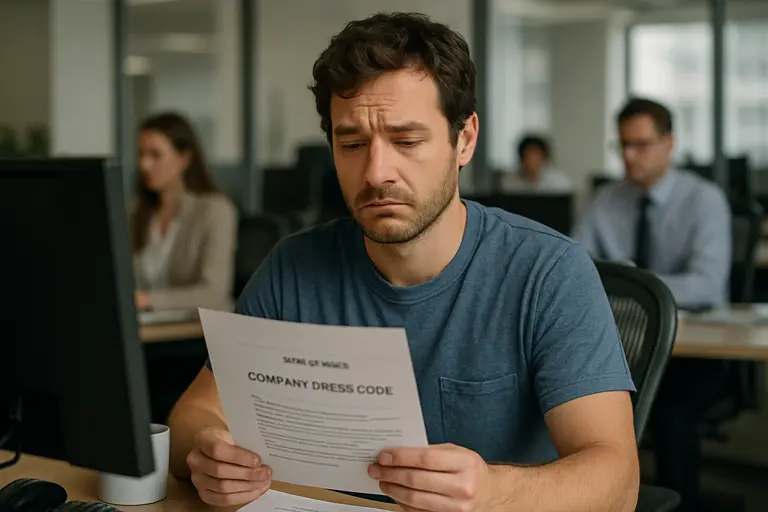
Professional image advice can become unhelpful when it suggests that clothing alone creates success. It does not. Clothes can frame your presence, but they cannot provide competence, honesty, preparation, or interpersonal skill. A polished outfit may open a conversation more smoothly, yet the substance of your work must carry the conversation forward.
There is also a fairness issue. Not everyone has the same budget, body-fit options, cultural expectations, disability considerations, or comfort with conventional professional dress. A practical clothing strategy should allow room for identity, access, and real life. The question is not, “How do I hide who I am?” The better question is, “How can I present myself clearly in this setting while staying aligned with my values?”
Personal Brand Materials Should Match The Room
Your clothing should also align with the rest of your professional presentation: resume, portfolio, headshot, speaker bio, website, or author profile. Mixed signals can create confusion. If your written brand promises precision and executive judgment, your visual presence should not feel careless. If your brand centers on warmth and collaboration, extremely severe styling may create distance. For professionals exploring written content and presence, publishing and author-presence resources can be essential for creating a cohesive professional image. The point is consistency. Your image, words, and conduct should feel like they belong to the same professional person.
Dressing One Step Above The Company Norm
Dressing with balance is a learnable skill. Start with the norm, raise the polish slightly, and remove anything that feels distracting or performative. That may mean better shoes, a cleaner silhouette, a jacket, pressed fabric, neater grooming, or a calmer color palette.
The best version of one step above does not announce itself loudly. It simply helps people see that you understood the situation, prepared for it, and respected the people in the room. That is the kind of image choice that supports professional success without exaggerating what clothing can do.
Use the principle before interviews, client meetings, first days, presentations, board conversations, and public appearances. Then adjust as you learn the culture. Professional presence is not about dressing as formally as possible. It is about making choices that help your competence, character, and judgment become easier to read.