
AI-generated advertising creates a practical question for every brand image: will the audience understand what they are seeing, and will the message still feel honest after that image is inspected? As a visual communication specialist, I look at this less as a technology issue and more as a trust issue. A polished visual can still fail if the body language, casting, setting, or disclosure makes the brand appear vague about what is real.
The risk is not limited to large national campaigns. A local service provider, recruiter, club, nonprofit, consultant, or professional practice can create the same problem with a single synthetic portrait, product scene, or social post. If the image appears to show a real worker, client, customer, event, or performer, the audience may treat it as evidence. That is where authenticity becomes fragile.
AI tools can be useful for concepting, layouts, backgrounds, and controlled creative testing. The practical concern is how the finished image functions in public. Does it imply a real person endorsed the brand? Does it make a product look more proven than it is? Does it replace human presence in a way that changes the meaning of the message? Those questions should be answered before publication, not after criticism begins.
Why AI-Generated Advertising Tests Trust
AI-Generated Advertising And The First Glance
The first glance matters because people read images quickly. A face, a posture, a hand gesture, and a work setting all create a story before the headline is read. In AI-generated advertising, that story can become unstable if the image looks almost human but not quite believable, or if the audience later learns that the person shown was synthetic.
For personal and professional brands, this is especially sensitive. A portrait is not just decoration. It signals availability, confidence, credibility, and fit. If a consultant uses a synthetic image that resembles a real headshot, the viewer may assume they are seeing the person behind the service. If a staffing firm uses synthetic employees in workplace scenes, the viewer may assume those people represent real workers or real placements. The image may be technically clean, but the narrative can become misleading.
The Image Problem Is Often Small
Authenticity problems often start with small visual mismatches. A hand position may look unnatural. Eye contact may feel too fixed. Clothing may not match the role being represented. A background may imply a workplace, studio, clinic, marina, classroom, or office that the organization does not actually use. These details can make a message feel less grounded even when no single element is dramatic.
Body language deserves particular attention. Real professional presence has variation: shoulders shift, expressions respond to context, and clothing carries signs of use. Synthetic images often smooth away those details. That can make a campaign look polished but emotionally distant. If the goal is trust, the image should feel specific enough to support the brand promise without pretending to document something that never happened.
Disclosure Is Now A Practical Brand Issue
New York’s Synthetic Performer Rule
Disclosure is no longer only an internal ethics preference in every setting. New York’s Synthetic Performer Disclosure law took effect on June 9, 2026, and requires commercial advertisements featuring an AI-generated synthetic performer to conspicuously disclose that use; the state announcement also describes civil penalties of $1,000 for a first violation and $5,000 for later violations New York disclosure law. This paragraph is informational, not legal advice, but it shows why creative review now needs to include disclosure questions before an ad goes live.
A practical brand team should ask whether the image includes a synthetic performer, whether a viewer could reasonably read that figure as a real person, and whether the disclosure is visible where the ad is encountered. A tiny note buried away from the image may not support trust, even if the team believes it has technically explained the use.
Political Ads Show The Visibility Risk
The visibility risk is not theoretical. The Associated Press reported that, in the 2026 midterm cycle, at least 164 political ads had been identified as generated or enhanced with AI, and that disclosure laws had not universally prevented missing disclosures AP report on AI ads. Political advertising is a separate category from commercial branding, but the lesson travels: audiences notice when synthetic media affects public trust.
For brands, the takeaway is not to avoid every AI-assisted asset. It is to avoid surprise. If a viewer feels tricked, the image has created a communication problem. Trust is easier to preserve when the brand explains synthetic elements clearly, especially where a person, endorsement, product demonstration, or real-world event might otherwise be assumed.
Image Selection Checks Before Publishing
Ask What The Image Claims
Before publishing, treat every image as a claim. A portrait claims, “This is who you are dealing with.” A workplace scene claims, “This is the environment behind the service.” A product image claims, “This is what the item looks like or can do.” A community event image claims, “This kind of participation happened or is representative.” The more specific the implied claim, the more care the image needs.
A simple review can reduce risk:
- Identify whether any person, setting, product, uniform, credential, or event shown could be mistaken for real documentation.
- Confirm that permissions, licenses, and disclosures match the way the image will be used.
- Check whether body language, clothing, and setting match the professional role being represented.
- Remove or revise visuals that imply results, endorsements, staff, clients, or facilities the brand cannot support.
This kind of review pairs well with broader ethical image selection, because the same questions apply to stock photography, commissioned photography, and AI-assisted creative work.
Keep Human Proof Close To The Message
If a brand uses synthetic visuals for speed or budget reasons, it can still keep human proof close to the message. A real founder portrait, actual team photography, clear product photography, or plain-language disclosure can help the audience understand which parts of the story are documented and which parts are illustrative. This is especially true for websites aligned with community interests, like the Stuyvesant Yacht Club, which emphasize the importance of showing authentic interactions and activities to set expectations about people, place, and participation.
How Body Language Supports Authentic Messaging
Use Posture To Signal Role And Context
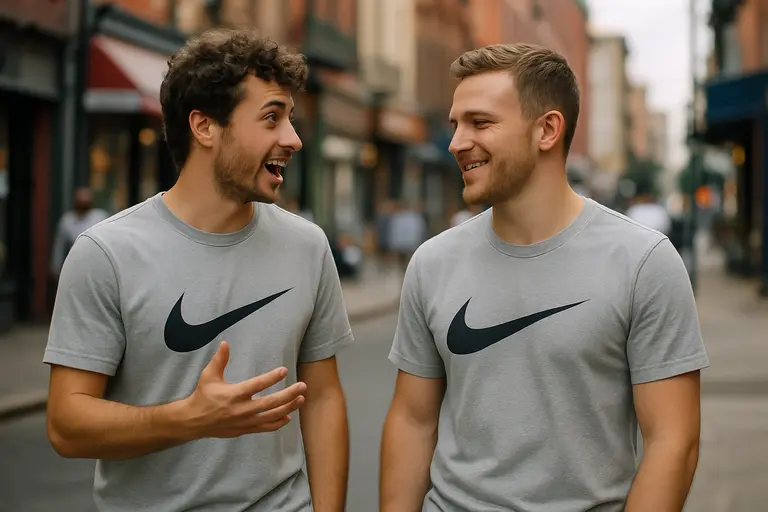
Body language is one of the fastest ways an image tells the viewer what kind of relationship the brand wants. Open shoulders, relaxed hands, and direct but natural eye contact can support approachability. A more formal seated pose can support authority. Active posture can suggest service, performance, teaching, craft, or readiness. The right choice depends on the role and the audience.
Clothing works the same way. A blazer, work shirt, safety vest, costume, uniform, or casual knit changes the story. In professional branding, clothing should not be chosen only for style. It should fit the task being represented. If the image is synthetic, those clothing choices need even more scrutiny because a generated outfit can accidentally imply credentials, rank, employment status, or affiliation.
Avoid Synthetic Cues That Distract
AI-generated advertising can become weaker when visual polish removes believable human detail. Overly perfect skin, identical smiles, stiff hands, generic office lighting, or faces that seem emotionally disconnected from the setting can pull attention away from the message. The audience may not identify the exact issue, but they may sense that the image is not fully trustworthy.
Review images at different sizes before approval. A social thumbnail may hide problems that become obvious on a landing page. A large banner may reveal strange posture, awkward fabric, or a facial expression that does not match the headline. The image should be judged not only for aesthetics, but for the story it asks the viewer to accept.
AI-Generated Advertising With Authenticity Safeguards
A Practical Standard For Teams
A useful internal standard is simple: do not use synthetic imagery to make the brand appear more human, proven, staffed, endorsed, diverse, equipped, or established than it can honestly support. That standard does not block creative work. It gives the team a clear line between illustration and misrepresentation.
For many brands, the safest approach is a layered one. Use real photography for founders, employees, products, facilities, events, and client-facing proof. Use AI-assisted images only where the image is clearly conceptual, decorative, or disclosed. Keep records of prompts, edits, licenses, approvals, and disclosure decisions so the brand can explain its choices later if needed.
AI-generated advertising will keep testing how audiences read images, but the practical response is available now: select images that match the truth of the message, disclose synthetic performers where required, and use body language and clothing choices to support a believable professional narrative. The strongest brand image is not the one that looks most perfect. It is the one that viewers can understand without feeling misled.