
Professional branding now often passes through AI tools before a person, recruiter, client, or audience sees the final version. That may mean an AI-assisted headshot, a rewritten bio, a generated speaker profile, a hiring summary, or a set of suggested adjectives for a candidate. These tools can be useful, but they can also repeat gender patterns that make some people appear warmer, more emotional, less technical, more strategic, or more analytical than the same evidence supports.
The practical issue is not whether every AI output is biased. The issue is that branding depends on cues. Word choice, facial expression, posture, clothing, background, and even the adjectives in a profile can guide how competence and credibility are read. If those cues are shaped by gender stereotypes, the person’s public image may become narrower than their real skills.
Professional Branding Risks In AI Training
Where Stereotypes Enter The Profile
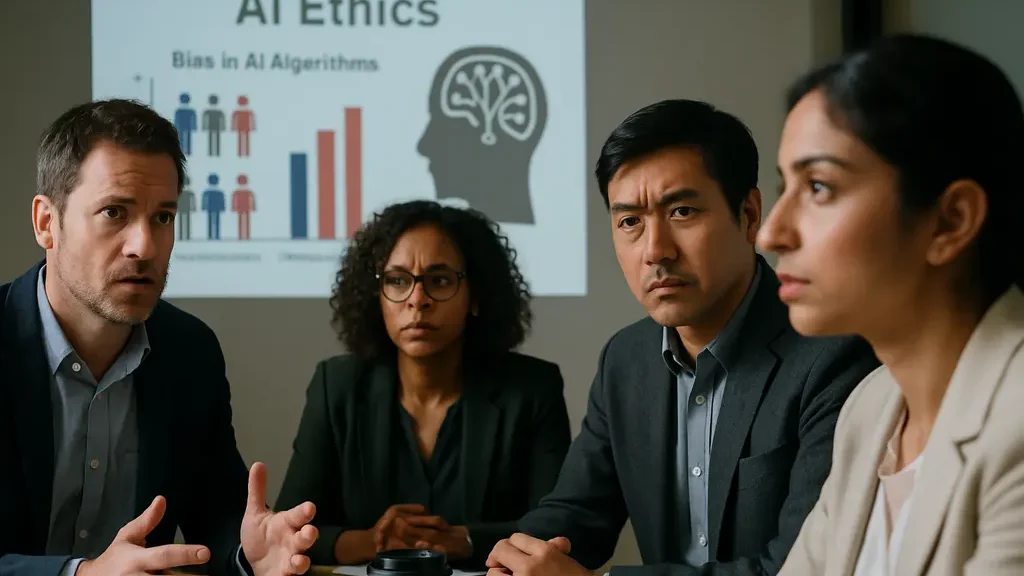
AI systems learn from patterns in data and from the way people ask for, rate, or select outputs. If a tool has absorbed repeated associations between women and warmth, or between men and strategy, those associations can appear in biographies, summaries, portraits, and candidate descriptions. A March 2026 working paper on generative AI-assisted recruitment reported that, in GPT-5 recruiting scenarios for Italian graduates, job titles and industries did not show meaningful gender differences, but the adjectives assigned to candidates did: women were described more often in emotional and empathetic terms, while men were linked more often with strategic and analytical traits, according to the recruitment bias paper.
That distinction matters for self-presentation. A job title may remain accurate while the tone around it shifts. A woman described as “supportive” and “empathetic” may still be qualified for a leadership role, but the language may frame her less directly around judgment, analysis, or authority. A man described as “strategic” may receive a competence cue that was not earned by stronger evidence. The concern is not one adjective in isolation. It is the pattern created across resumes, bios, headshots, and introductions.
Why Small Cues Affect A Large Impression
Body language and branding share the same basic rule: people read patterns before they read explanations. A forward-facing posture, steady eye contact, and clean clothing line can signal readiness. A hesitant pose, overly softened expression, or overly casual styling can shift the impression, even if the person’s credentials are strong.
AI-generated or AI-edited materials can intensify this effect because they often smooth away the friction that makes a person specific. If a headshot tool makes every woman appear softer or every man appear more assertive, the final image may look polished while still sending a narrow message. For headshot-specific risk, this related piece on AI headshots and authentic branding is a useful companion to the branding checks below.
How Bias Shows Up In Images And Bios
Image Selection Can Reinforce Availability
A 2024 preregistered study involving 1,110 AI-generated images reported that AI systems systematically replicated and potentially amplified sex and racial stereotypes. The study also found that when stereotypical content was more available, people were more likely to choose those images, as described in the PubMed record. For branding work, that means the problem can appear twice: first in what the tool produces, then again in what a person or team selects because it looks familiar.
This is especially relevant for profile photos, staff pages, proposal decks, and speaker announcements. A familiar image is not always a fair image. If every technical expert is shown with stern posture and dark clothing, while every care-focused professional is shown smiling softly in warm light, the visual system may be teaching the audience which kinds of people seem competent in which roles.
Bio Language Can Narrow A Person’s Role
AI-written bios can be helpful for structure, but they can also drift into coded language. Words such as “nurturing,” “supportive,” or “approachable” may be accurate in some cases, yet they should not replace direct evidence of skill. Words such as “visionary,” “analytical,” or “decisive” should also be tied to actual work, not assumed from gendered expectations.
A practical edit is to separate personality descriptors from proof. If a profile says someone is collaborative, name the work setting. If it says someone is strategic, name the planning responsibility. If it says someone is empathetic, connect that trait to a real communication task, client setting, or leadership need. For professional branding, the safest use of AI is as a draft assistant, not as the final judge of tone.
Practical Checks For Ethical Image Selection
Review The Body Language Before The Polish
Before approving an AI-edited portrait or generated image, look past sharp lighting and smooth skin. Ask what the pose says. Is the person shown as active, passive, serious, decorative, approachable, expert, junior, or authoritative? Does the expression match the context? A nonprofit director, engineer, therapist, founder, teacher, or consultant may each need a different balance of warmth and competence.
Clothing choices deserve the same review. A blazer can support authority, but only if it fits the setting and the person. Softer clothing can support approachability, but it should not be used to make a qualified person seem less senior. The goal is not to erase personality. The goal is to keep styling from reinforcing a stereotype that the person did not choose.
Use A Short Bias Review Before Publishing
A simple review process can catch many issues before a profile goes live. It does not require a large committee or technical audit. It does require slowing down long enough to compare outputs against the person’s real role, real evidence, and real preferences.
- Compare adjective patterns: Check whether women, men, and nonbinary professionals are described with different competence or warmth words without evidence.
- Match claims to proof: Keep descriptors only when the bio, resume, or portfolio supports them.
- Audit pose and expression: Review whether body language signals authority, approachability, or passivity in ways that fit the role.
- Check clothing context: Ask whether attire reflects the professional setting rather than a gendered expectation.
- Get consent: Let the person review image edits, generated portraits, and rewritten bios before publication.
For teams that focus on improving communication strategies, evaluating learning approaches, or understanding social dynamics, related resources at Talk and Play can support clearer conversations about how people show up in shared settings.
Professional Branding Checks Before Publishing
Ask What The AI Added
One of the most useful questions is also one of the simplest: what did the AI add that was not in the source material? If the original resume says “managed a technical rollout,” but the AI summary says “helped the team feel supported,” the tool may have softened a leadership action. If the original profile says “coordinated client research,” but the output says “drove market analysis,” the tool may have strengthened authority without support.
This check works for images too. If the original portrait showed direct posture and a neutral expression, but the edited version created a softer smile, ask whether that change supports the purpose. If the tool changed hair, facial softness, clothing formality, or apparent age, ask whether the result still represents the person accurately.
Keep Human Preference In The Process
Ethical branding is not only about avoiding harm. It is also about respecting how a person wants to be seen. Some professionals prefer warmth-forward images because relationship building is central to their work. Others prefer a more formal presentation because their role depends on authority, privacy, or technical trust. Neither direction is automatically better.
The mistake is allowing an AI system to make those choices through stereotype rather than intention. A person should be able to choose a softer portrait because it fits their voice, not because the tool made them softer by default. A person should be able to choose a firm stance because it fits the role, not because gendered assumptions said they must appear dominant.
Addressing Gender Stereotypes In AI Training For Professional Branding
Addressing gender stereotypes in AI training starts with refusing to treat polished output as neutral output. A clean headshot, fluent bio, or confident candidate summary can still carry biased cues. Review language for proof, review images for pose and styling, and ask whether similar professionals are being framed in similar ways across gender.
This is not a call to reject AI tools. It is a call to use them with clear human judgment. Strong clothing choices, direct posture, fair wording, and consent-based image selection can help people present themselves with accuracy rather than stereotype. The best professional branding gives the audience a clear view of competence, character, and context without letting an algorithm shrink the person into a familiar pattern.