
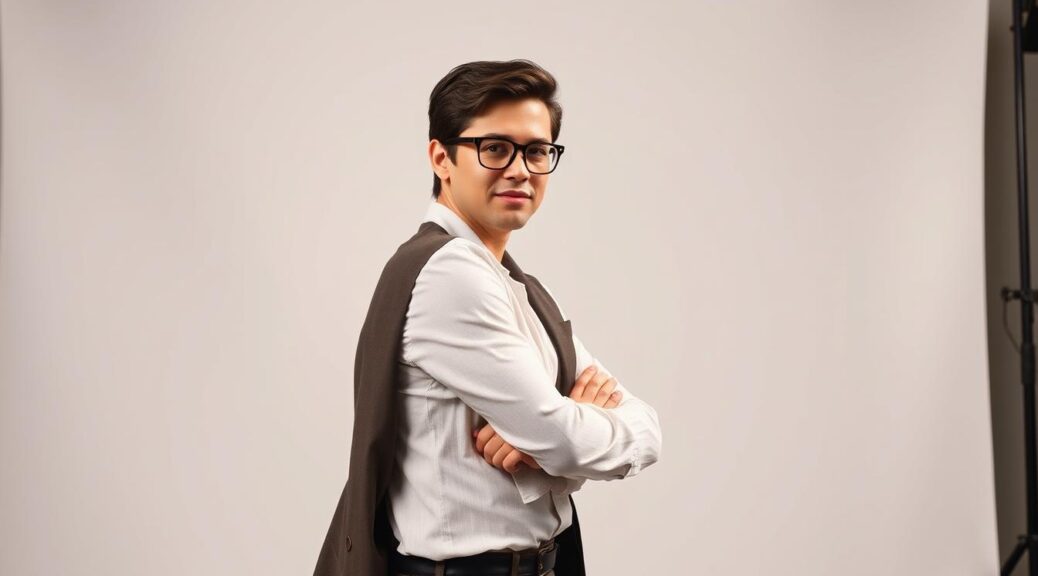
Let’s be honest – most of us feel nervous when we have to pose for photos. It’s like we’re in a dentist’s chair, unsure of what to do. We freeze, feeling like politicians in a debate.
Your body tells more than your words ever can. Tense shoulders say you’re defensive. A clenched jaw means you’d rather be anywhere else. Every small movement tells a story.
By studying many professionals, I found a secret. It’s not about becoming a supermodel. It’s about understanding how we hold ourselves. When you’re at ease, you seem more open. When you’re sure of yourself, you look credible.
Mastering both? You become the person everyone wants to work with. Not just another forgotten profile.
Key Takeaways
- Your body language speaks volumes before you say a word
- Comfort translates directly into approachability in photos
- Confidence projects credibility and professionalism
- Tension reads as defensiveness or discomfort
- Great posing is about psychology, not perfection
- Natural movements create more authentic images
- The right mindset transforms your photographic presence
Posture & Chin Placement
Have you ever noticed how some people walk into a room and everyone looks at them? This is because of their body language. People often focus on what to wear for photos, but the real key is how you stand.
Your shoulders tell a lot before you even say a word. If they’re relaxed and slightly back, you look confident. It’s like taking a deep breath before speaking, making you seem calm and in control.
Now, let’s talk about chin placement. When we’re nervous, we often pull our chin back, making it look like a turtle neck. Instead, try pushing your chin forward and slightly down. It might feel weird, but it looks great on camera.
This small change does a lot:
- It gets rid of double chin shadows
- It makes your jawline look stronger
- It shows you’re engaged, not hiding
The three-quarter shoulder angle is key to avoiding a mugshot look. It makes your silhouette interesting and adds depth to your presence. It’s like leaning into a conversation instead of stepping back.
Whether you’re a top executive or a first-time speaker, good posture shows you’re competent. It’s like having your act together, without saying a word. It’s the body language version of a firm handshake that says you belong.
Tension can make even the most confident people look nervous. Notice where you hold stress – like clenched jaws or raised shoulders. These signs of anxiety are louder than any words. The key is to find a relaxed yet ready stance.
Great posture isn’t about being stiff. It’s about being open and confident. Your body language should show you’re comfortable in your own skin, not stiff.
Shoulder positioning and chin placement work together to create a powerful look. They guide the viewer’s eye to your face, making you look good. It’s like telling a story with your body, where you control the narrative.
Think of your posture as the frame around you. A crooked frame distracts, but a straight one enhances. Your body language sets the stage for everything else.
Next time you’re getting ready for something important, spend thirty seconds on your posture. Keep your shoulders back and down, your chin forward and slightly down, and aim for a three-quarter angle. You’ll be amazed at how these small changes can make a big difference. It’s like learning to speak up and be heard.
Smiling Naturally
Have you ever noticed how corporate headshots often look forced? These smiles seem like they’re from a script, not genuine. It’s like they’re trying to hide their true feelings.
The real secret is the Duchenne smile. It’s the kind that reaches your eyes. It’s the difference between a fake compliment and a real one.
Forced smiles only use the mouth muscles. But real smiles use both the mouth and eyes. This creates those small lines around the eyes that show you’re happy.
Master these techniques to unlock your authentic smile:
- Think of something genuinely amusing (maybe that time your CEO tried to use TikTok)
- Inhale deeply through your nose, then exhale through slightly parted teeth
- Imagine you’re sharing a confidential joke with the camera
- Let your eyes participate in the expression – they should feel engaged
Real smiles have a big impact. They make you seem more trustworthy and competent. They even make others feel good about you.
| Smile Type | Muscles Engaged | Perceived Authenticity | Professional Impact |
|---|---|---|---|
| Corporate Smile | Mouth only | Low (23%) | Generic, rehearsed |
| Duchenne Smile | Mouth + eyes | High (89%) | Trustworthy, engaging |
| Nervous Smile | Uneven engagement | Medium (45%) | Anxious, uncertain |
Remember, tension is bad for authenticity. Forcing a smile can make you look insincere. The goal is to show you’re real, not just a professional.
These posing tips work because they connect with your true feelings. In the world of human connection, a real smile is priceless.
Practice in front of a mirror to find your real smile. The difference can change how others see you.
Using Your Eyes
Your eyes are like social media’s trending tab, showing your true feelings before you say a word. Empty, uninterested eyes scream “I’d rather be somewhere else.” The aim is to find engaged softness – being both attentive and welcoming.
Imagine how you look when a colleague shares exciting news. Your eyes show slight crinkles, focused attention, and a spark of curiosity. It’s like visual listening, saying more than any resume.
Professionals who get eye language know it’s key. Eyes can show smarts, empathy, or creativity without words. This isn’t just for show; it’s crucial for career success. Eyes that connect can lead to 20% more job offers.
Different poses need different eye strategies. The Classic Corporate Pose uses direct eye contact for authority. The Creative Side Angle keeps attention with a slight angle.
The best subjects know body language includes eye expression. They make the camera feel like a person, creating real connections. This skill boosts confidence in posing, with eyes leading the story.
Remember, your eyes should invite, not stare. They’re for real connection, not dominance. When your eyes truly see, people will remember you.
Hand Placement
Ever notice how your hands feel weird when a camera comes out? Most people either let them hang loose or grip them too tight. The trick is finding that sweet spot between being intentional and looking relaxed.
The Relaxed Cross-Armed Pose is not about looking defensive. It shows you’re in charge without being aggressive. It’s like sharing a well-thought-out idea, not just saying no. Make sure your fingers are open and visible, ready to make a gentle point.
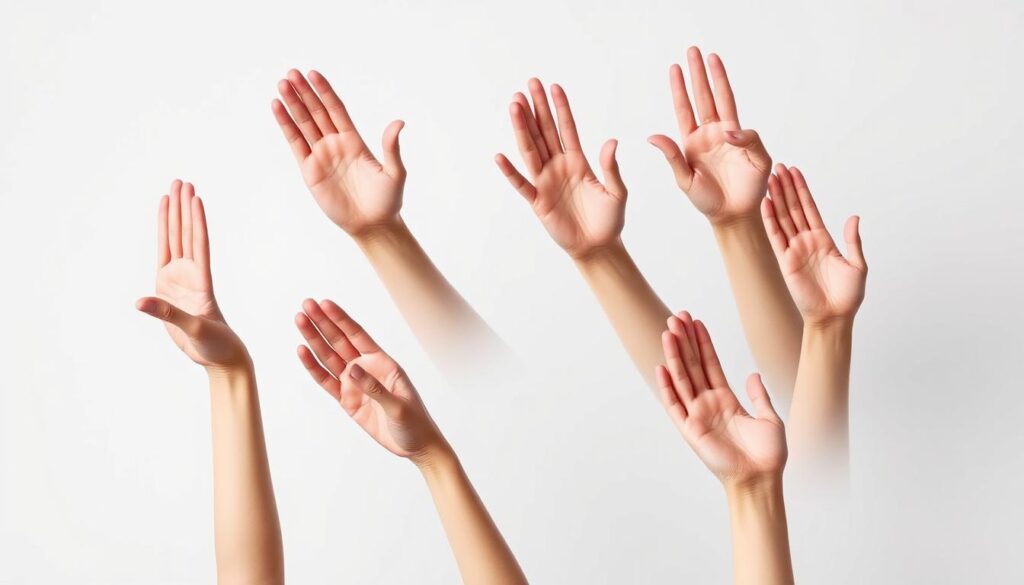
For the Confident Lean-In pose, your hands should have a purpose but not be tight. Place them on a surface or hold them loosely. Don’t squeeze them too hard, as it shows you’re nervous. Your hands should look like they’re at ease.
The Thoughtful Hand-to-Face pose needs a bit of skill. Put your hand on your cheek or chin lightly, without hiding your face. It’s not about covering your face, but about looking thoughtful. Your hand should feel like it’s resting, not clinging.
| Pose Type | Hand Position | Common Mistakes | Professional Result |
|---|---|---|---|
| Relaxed Cross-Armed | Visible, unclenched fingers | Defensive tight crossing | Authoritative yet approachable |
| Confident Lean-In | Natural placement on surface | White-knuckle gripping | Engaged and conversational |
| Thoughtful Hand-to-Face | Light contact, no obscuring | Face-hiding palm placement | Contemplative and authentic |
Your hands should support your message, not take away from it. Don’t do the “invisible basketball” pose, which is too common. Instead, think of your hands as marks that highlight your points, not start new ones.
These tips turn your hands into powerful tools for communication. The right hand placement can make you look both thoughtful and confident at the same time.
What to Avoid
Spot the corporate cliché: that tight handshake, the chin-hold, the fake smile. These poses scream “I followed generic LinkedIn advice.” They’re not just bad poses; they’re red flags.
Don’t treat your headshot like a passport photo. A clenched jaw shows you’re inflexible. Tense shoulders signal stress, not skill. And that serious face? It says “I’d rather be anywhere else.”
Defensive poses are like corporate jargon. They’re common but unimpressive. Folded arms block connection. Leaning back with your chest up shows arrogance, not confidence.
Facial tension ages you fast. A pose that hides your face makes you seem secretive. Forced smiles are the worst. They show you’re not genuinely connecting.
Here’s what your go-to poses actually communicate versus what you think they’re saying:
| Pose | What You Think It Says | What It Actually Says |
|---|---|---|
| Crossed Arms | “I’m confident and thoughtful” | “I’m closed off and defensive” |
| Serious Expression | “I’m professional and competent” | “I’m unapproachable and grumpy” |
| Tense Shoulders | “I’m poised and ready” | “I’m stressed and anxious” |
| Chin Hold | “I’m contemplative and wise” | “I’m posing like a stock photo” |
The goal is to show your true self, not to fake it. Your professional presence should be real, not a generic success formula. Authenticity is key, unless you’re trying to look like you’re plotting something.
Remember, your photo is your first chance to make a good impression. Don’t give it a cold shoulder.
Practice Exercises
Let’s face it – nobody wants a professional photo that looks like a hostage shot. This happens when we pose like we’re acting instead of preparing. The key isn’t in perfect magazine poses. It’s in practicing until posing feels natural.
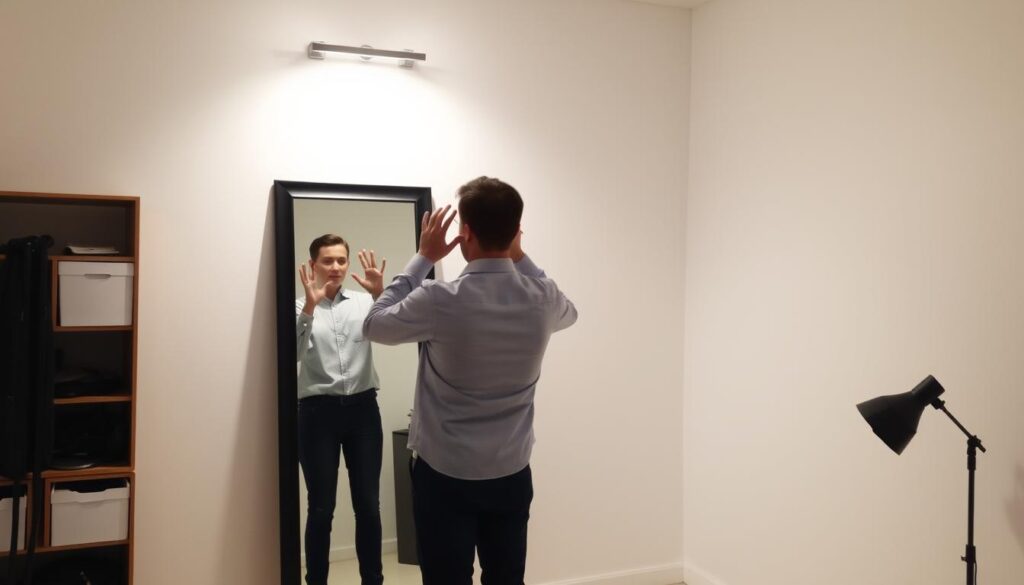
Begin with mirror sessions, but skip the fake speeches. Stand in front of a mirror and notice how you look when you’re genuinely happy versus when you’re trying to look professional. See how your shoulders relax when you breathe out. Notice how your eyes light up when you remember a real achievement.
The exhale-through-teeth trick might seem like magic, but it’s real. Take a deep breath and exhale through your teeth. This relaxes your mouth, lips, and jaw, making you look more relaxed and less tense.
For shots that show movement, practice turning from your profile to the camera until it feels natural. It’s not about being a model; it’s about moving smoothly and confidently on camera. Think of it as fine-tuning your presentation to match your true abilities.
Modern cameras have burst mode for a reason. Use it to take lots of photos during practice. Look at them like you’re reviewing game footage. See what works and what looks forced. This helps you understand what angles look best on you.
Work on relaxing three key areas:
- Jaw: Keep your teeth apart with relaxed lips
- Forehead: Smooth out your brow muscles
- Shoulders: Breathe and let them drop
These exercises aren’t about creating a fake self. They’re about finding your true professional self. The best posing tips remind us that what feels awkward looks awkward, and what feels natural looks confident.
So, practice until you feel confident. The best professional photos aren’t about perfect poses. They’re about showing the best version of yourself, naturally.
In-Session Guidance
Think of your photographer as a pro who speaks both human and visual language. They’re not just clicking shutters; they’re turning your professional essence into something the camera gets. A great session feels like a chat, not an interrogation.
Your photographer is your partner in finding angles that show your strengths. They help you look your best, not just thinner. They’re the magic you need when theory meets the lens.
Choosing your photographer is serious. Look for someone who knows how to capture body language in a professional setting. Their portfolio should show they’ve worked with people who need to show authority, approachability, or innovation.
During the session, the best photographers give directions that feel like coaching. “Lean into your confidence” is better than “tilt your chin 3.2 degrees left.” They create a space where your true professional self can shine.
For AI headshots, remember: garbage in, garbage out. Your photos need to show more than just your face. They need to capture your professional energy. The tech is just a tool; you’re the artist deciding what to create.
| Aspect | Human Photographer | AI Tool |
|---|---|---|
| Guidance Quality | Real-time adjustments based on subtle body language cues | Algorithmic patterns from existing data sets |
| Personalization | Adapts to your unique professional essence during session | Limited to input photos and preset styles |
| Emotional Intelligence | Reads room energy and adjusts approach accordingly | Zero emotional awareness or adaptability |
| Unexpected Magic | Can capture spontaneous moments of authentic expression | Only produces what it’s programmed to create |
Whether you choose human or AI, your photos matter a lot. Pick images that show your natural body language at work. The difference between a good and great photo often comes down to this.
The session should feel like a team effort. You’re not just a subject; you’re a co-creator building your visual story. Ask questions, try new things, and remember: the best photos reveal truth, not just look good.
Conclusion: You Got This
Your headshot is more than just a photo. It’s a powerful way to show who you are. Every little detail, like how you smile or where you place your hands, speaks volumes about your professionalism.
Think of your body language as your first impression in a fast-paced world. A slight tilt of your shoulder can say a lot. It can show you’re reliable and trustworthy. And when you make eye contact, you’re not just looking at the camera. You’re showing confidence.
You already know your stuff. These posing tips just help you show it off in a way that’s easy for others to see. Your body language is like a silent introduction to your brand.
So, go ahead and make a strong impression. Be true to yourself. And most importantly, show that you love what you do. If your headshot looks like you’d rather be anywhere else, why would anyone want you there?