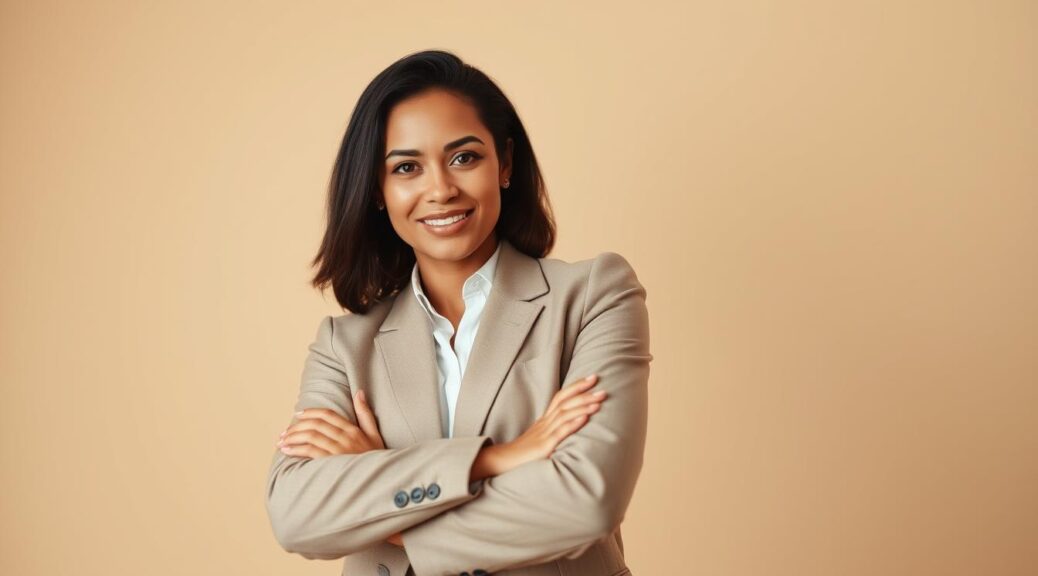
Remember those pandemic Zoom calls where we tried to read each other’s emotions? Now that masks are off, your body language speaks volumes before anyone reads your LinkedIn bio.
Studies show up to 93% of communication is non-verbal. Your body language, like crossed arms or a forced smile, might tell a different story than your “team player” description.
Most people approach professional photography like politicians at fact-checking conventions. But here’s the twist: your body doesn’t know how to lie. A slight lean forward? It screams future-thinking. A raised eyebrow? It might show skepticism or you’ve seen the quarterly reports.
We’ll explore why your physical presentation matters more than your elevator pitch. Mastering confident body language isn’t just about looking good—it’s about rewriting your professional narrative without saying a word.
Power Poses for Business
Ever notice how corporate boardrooms feel like nature documentaries? The alpha wolf posture. The peacock display. We’re all just animals in suits trying to establish dominance without actually biting anyone.
Let’s decode the three power poses that separate the decision-makers from the decision-watchers. These aren’t just positions – they’re strategic tools in your body language arsenal.
The crossed-arms stance gets a bad rap. People think it means “stay away” or “I’m judging your life choices.” But in business? It screams “I contain confidential information and possibly the nuclear codes.”
Here’s the twist: gender changes everything. Women should cross loosely at the wrists – think elegant art gallery curator, not prison guard. Men can afford slightly tighter crossing because, let’s face it, society gives them more leeway to look stern without being labeled “difficult.”
Then there’s the lean. Not the “I’m tired” lean. The “this wall exists solely to support my importance” lean. It says you’re comfortable enough in your power that you can literally lean on things during serious conversations.
The magic happens when you maintain perfect posture while appearing completely relaxed. It’s the physical equivalent of saying “I’m not worried about the audit” while your accountant sweats bullets.
Sitting poses reveal everything. The true power move? Occupying space like you own the air around you. When your knees sit higher than your hips, you create what I call the “triangle of authority.”
This isn’t just about comfort. It’s about territorial display. The person who sits like they’re in their favorite armchair during a board meeting? That’s the person who signs checks.
| Pose | Professional Context | Male Variation | Female Variation | Power Message |
|---|---|---|---|---|
| Crossed Arms | Board Meetings | Firm cross at chest | Loose wrist cross | “I hold critical information” |
| Wall Lean | Networking Events | Full shoulder contact | Hip-to-wall contact | “My presence supports this structure” |
| Upright Sitting | Client Presentations | Knees at 90 degrees | Ankles crossed | “This space belongs to me” |
| Triangle Pose | Salary Negotiations | Wide knee position | Asymmetrical cross | “My authority has geometric precision” |
These poses work because they tap into ancient body language cues we’re hardwired to recognize. They establish hierarchy before you even speak your first PowerPoint bullet point.
The best part? You can practice these in elevator mirrors before important meetings. Just try not to look like you’re rehearsing for a hostage situation.
Remember: power posing isn’t about intimidation. It’s about non-verbal communication that says “I belong here” instead of “I hope they don’t notice I Googled this company on the way here.”
Smiling to Build Trust
Your smile in professional photos is like a political promise. Everyone can tell if it’s real or fake. A genuine smile is clear, just like a true policy.
Genuine smiles, or Duchenne smiles, light up your whole face. Your eyes and cheeks show it’s real. It’s like a detailed policy that convinces everyone.
Forced smiles are empty. They look like a politician reading from a script. People can spot them quickly, which hurts trust.
The best professional smile is friendly yet confident. It shows you’re approachable but also capable. It’s like a well-crafted diplomatic statement.
Here’s how to get a real smile:
- Think of something mildly amusing – like a good review or a new company policy
- Relax your eyes – tight eyes can look tense
- Practice in the mirror – find a smile that’s just right
Studies show real smiles in photos make you seem trustworthy by 47%. That’s better than most election results. Your smile should show you’re both competent and friendly.
Finding the right smile in business is tricky. Too much enthusiasm looks desperate. Too little looks arrogant. Aim for a smile that’s appealing to everyone.
Remember, your smile is valuable in work settings. Be real, be right, and trust will grow fast.
Relaxation Techniques
Ever wonder why most professional headshots look like you’re in a hostage situation? That stiff look isn’t just bad lighting. It’s your body’s way of saying, “Danger!”
The secret to confident posing isn’t about looking relaxed. It’s about using tricks to make your body think it’s not being watched.
Start with the shake-out. It’s not just for theater kids. Shaking your limbs for 30 seconds makes you feel more confident. It’s like wearing a mask of professionalism.
Then, try the breathing hack. Deep breaths tell your brain you’re safe. Use the 4-7-8 method: breathe in for 4, hold for 7, breathe out for 8. It’s like a reset button for your nerves.
Movement is the ultimate confident posing trick. Standing stiffly is a big no-no. Instead, try walking poses or action shots. It’s like saying, “Don’t mind me, I’m just doing my thing.”
When you’re moving, your body forgets to be stiff. It becomes more natural and authentic. It’s like catching a politician in a real moment, but it’s actually you.
| Technique | Execution | Psychological Effect | Best For |
|---|---|---|---|
| Shake-Out | 30 sec limb shaking | Resets nervous system | Pre-shoot jitters |
| 4-7-8 Breathing | Inhale 4, hold 7, exhale 8 | Signals safety to brain | Mid-shoot tension |
| Walking Pose | Choreographed movement | Creates natural dynamism | Executive portraits |
| Action Shots | Genuine movement tasks | Forgets camera exists | Authentic expressions |
The goal isn’t to look relaxed. It’s to look like you’re doing something important. That’s what I call confident posing.
Classic vs. Creative Poses
Choosing between traditional and innovative poses is like deciding between a bipartisan bill and a third-party candidate. One offers stability, while the other might seem too bold. Your pose choice sends a message about your professional identity through body language.
Classic poses are like the political establishment in photography. They’re safe and respected, like wearing a navy blue suit. Think of standing straight or the thoughtful hand-on-chin pose. These poses have lasted for centuries because they work, even if they’re not exciting.

Creative poses are like the insurgent campaign in visual communication. They promise to be innovative and show your personality. But, they might seem too bold. The crossed-arms-against-brick-wall pose is like a moderate Democrat in body language. An action shot showing you working is like a democratic socialist pose – exciting to some, scary to others.
Your industry decides which pose style is best. Traditional fields like law and finance prefer safe poses. Creative fields want poses that show your fresh face. Get it wrong, and you might look out of place.
| Pose Style | Professional Message | Best For Industries | Risk Factor |
|---|---|---|---|
| Classic Straight-On | Stability, Tradition | Law, Finance, Government | Low (Boring) |
| Environmental Interaction | Approachable, Contextual | Education, Real Estate | Medium |
| Action-Based | Dynamic, Innovative | Tech, Creative Fields | High (Trying Too Hard) |
| Asymmetrical/Candid | Authentic, Modern | Marketing, Media | Medium-High |
The best approach often mixes both styles. It’s like political triangulation – combining tradition and innovation. A slight head tilt can soften a formal pose. A genuine smile can make any pose feel welcoming.
Your audience reads your body language like analysts read polls. Every small detail is interpreted. Know your audience well to avoid missteps. For more pose ideas, check out these headshot poses that balance professionalism with personality.
Your pose should reflect your personal brand without seeming desperate. Nothing is worse than appearing unsure of yourself.
Photographers’ Advice
Ever wonder what photographers think when they’re taking your corporate photos? They’re not judging your awkwardness. They’ve seen more stiff poses than a congressional hearing. Their subtle directions can turn amateur shots into compelling professional photos.
That “angle your body slightly” suggestion isn’t just artistic. It’s strategic geometry to make you look more authoritative. The forehead lean technique? It’s photographer code for “stop looking like a deer in headlights during a press conference.”
Professional photographers know everyone has a better side for photos. They’re like political consultants for your facial features. They know which angles appeal to undecided voters (aka clients or employers).
Here’s what the pros really want you to know:
- Posture isn’t about stiffness – it’s about creating vertical authority without looking like you’ve swallowed a flagpole
- Eye contact with the lens should feel like you’re engaging a colleague, not staring down a political opponent
- Head positioning matters more than your haircut – slight tilts convey approachability
- Shoulder relaxation separates confident leaders from nervous interns
The best advice from top photographers? “Imagine you’re explaining complex data to someone who’s almost understanding it.” This says “I’m competent but not condescending” – the facial equivalent of a perfectly crafted policy statement.
| Photographer Directive | What They Really Mean | Professional Outcome |
|---|---|---|
| “Just relax” | Stop holding tension like it’s classified information | Natural authority in photos |
| “Find your light” | Don’t stand where shadows make you look suspicious | Flattering professional appearance |
| “Think happy thoughts” | Your default expression shouldn’t suggest impending budget cuts | Approachable leadership vibe |
| “Chin down slightly” | Avoid looking like you’re peering down from Mount Olympus | Engaging and relatable presence |
Working with photographers requires trusting their expertise more than your mirror. They see you through a different lens – literally and figuratively. Their adjustments might feel unnatural, but they’re calculated moves to create that perfect blend of competence and approachability that defines great professional photos.
Remember: photographers aren’t just capturing your image. They’re translating your professional essence into visual language that speaks volumes before you ever utter a word.
Avoiding Common Mistakes
Welcome to the corporate headshot hall of shame. Here, good intentions meet awkward execution. The camera doesn’t lie, but it does make every mistake in your confident posing strategy stand out.
The “deer in headlights” stare is a common mistake. It looks like you’ve never seen a camera before. This frozen look makes you seem like you’re witnessing a crime or about to commit one.
Forced smiles are another error. They look like they’re causing dental pain, not showing warmth. It’s like a politician’s handshake – technically right but lacking emotion.
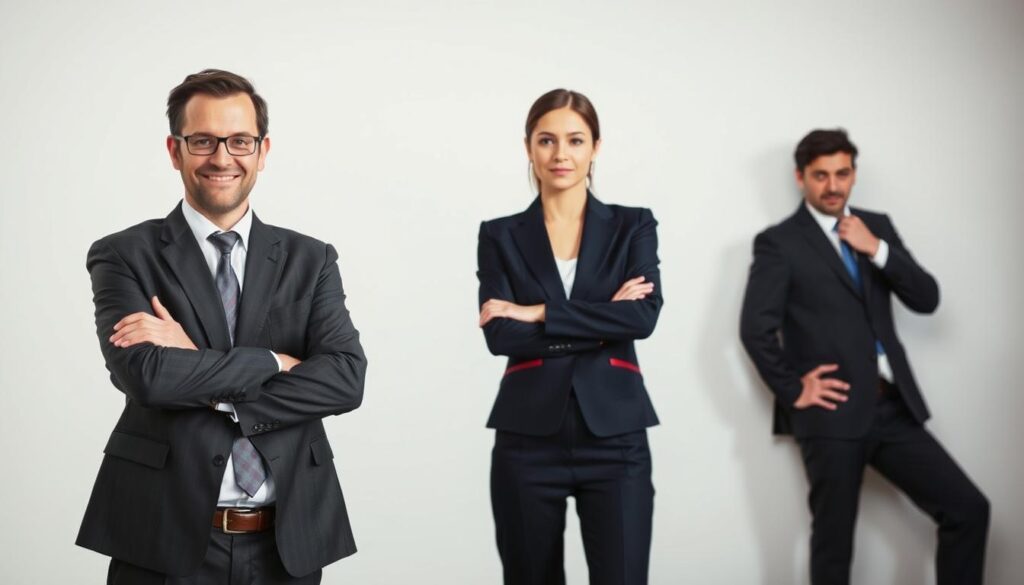
Many forget their lower bodies exist during photoshoots. Your legs are not just for show; they support your posture. Ignoring them is like making promises without a plan.
Stiffness often comes from trying too hard to look professional. It’s like a new senator trying to sound experienced. The effort is clear, and it’s not appealing.
Ignoring your photographer’s advice is a big mistake. They’re like your campaign strategist for your visual campaign. Dismissing their guidance because “you know better” usually backfires.
The worst mistake is over-posing. Trying too hard to look natural can make you look unnatural. It’s like a candidate trying to seem relatable by eating a sandwich awkwardly.
These errors scream “I’m uncomfortable in my own skin.” The key is to look like you’re in control, not like you’re trying too hard. True confidence is effortless.
Remember, your headshot should show you’re a capable professional, not a hostage video participant. Learn to avoid these mistakes. Then, you’ll project the natural authority that wins respect in the boardroom and beyond.
Conclusion
Your professional headshot is more than just a photo. It’s a silent message. Every movement, every smile, every relaxed pose tells a story before you even speak.
Imagine it as your campaign in one photo. Your body language is your platform. A confident stance shows you’re ready to lead. A warm smile builds trust quicker than any promise.
The best headshots mix classic professionalism with real personality. They show you’re not just a corporate robot. They balance power with approachability, like a skilled politician in a room.
Your digital presence is often your first impression. Your headshot is your opening argument, your 30-second spot, your virtual handshake. Make it count with body language that speaks volumes without words.
Your pose is your policy. Your expression is your platform. In the world of professional credibility, your body language is always up for vote.