

The Sony RX10 V is a return to the do-everything camera, but not to the inexpensive bridge cameras that once filled electronics-store shelves. Announced by Sony Electronics in San Diego on July 9, 2026, the RX10 V combines a 20.1-megapixel one-inch stacked sensor, a fixed 24–600mm-equivalent F2.4–4 lens, AI-assisted subject recognition, blackout-free 30-frame-per-second shooting, and video recording up to 4K 120p.
That combination allows one camera to cover landscapes, portraits, wildlife, school sports, aircraft, close-ups, travel video, and livestreaming without changing lenses. Sony has priced that convenience at $2,299.99 in the United States, however, placing the RX10 V closer to premium interchangeable-lens cameras than conventional compact models. As of August 3, Sony’s U.S. store listed it for preorder with estimated delivery on August 6 or 7.
The RX10 V therefore revives an idea rather than an entire market. It proposes that some photographers would rather carry one sophisticated, permanently integrated camera than assemble a mirrorless body, several lenses, and a larger travel bag.
Why The RX10 V Arrives At An Unusual Moment
The camera market surrounding the RX10 V is very different from the one that produced the RX10 IV in 2017. Smartphones now handle most everyday photographs, while enthusiasts who want more control are commonly directed toward interchangeable-lens mirrorless systems.
That creates an apparent gap. Phone cameras are small and computationally capable, but their longest focal lengths still depend on small sensors, compact optical modules, and digital processing. Mirrorless systems provide larger sensors and broader lens choices, but a serious telephoto setup can become expensive, heavy, and inconvenient to carry.
The RX10 V positions itself between those categories. It is not pocket-sized, and its lens cannot be removed. Instead, it provides an unusually broad optical range in a single weather-resistant body designed to operate more like a modern Sony Alpha camera.
Sony calls the RX10 V the fifth generation of its all-in-one superzoom line. Its predecessor used the same basic 24–600mm-equivalent range, but the new model brings current autofocus, processing, connectivity, video, battery, and interface technologies to a category that had received no new generation for nearly nine years. The official Sony RX10 V announcement presents travel, wildlife, birding, and sports as its primary uses.
Its relevance comes from a practical question: how many photographers genuinely need to change lenses, and how many mainly need one lens that covers nearly every likely subject?
The 24–600mm Lens Is Still The Central Attraction
The defining feature is the ZEISS Vario-Sonnar T* 25x optical zoom. Its 24mm-equivalent wide end can photograph interiors, city streets, travel groups, architecture, and landscapes. At 600mm equivalent, it can isolate distant wildlife, field sports, aircraft, stage performers, and architectural details.
A photographer can move between those extremes by rotating one zoom ring. There is no need to expose the sensor during a lens change, stop to choose between lenses, or carry separate wide, standard, and telephoto optics.
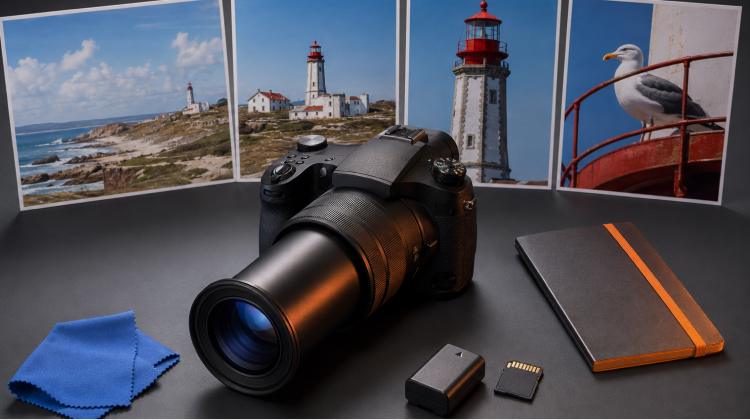
The F2.4–4 maximum aperture is also important. The lens begins at F2.4 at its wide end and reaches F4 at longer focal lengths. That is brighter than many compact superzoom lenses, especially near the telephoto end, where a wider aperture helps preserve usable shutter speeds and subject separation.
The lens can focus at approximately 3 centimeters from its front at 24mm and approximately 72 centimeters at 600mm. Those distances allow both conventional close-up photography and tele-macro compositions in which a photographer isolates flowers, insects, food, craft details, or small products from a more comfortable working distance.
This range does not mean every focal length will produce the same aesthetic or technical result. A 24mm environmental portrait and a 600mm wildlife frame remain very different photographic tasks. What the fixed lens changes is the time between recognizing a subject and being ready to photograph it.
That speed is valuable during travel and unscripted events. A wide street scene can become a distant architectural detail within seconds. A child standing beside a sports field can be photographed moments before action begins at the far end. A bird that would disappear during a lens change can remain inside the viewfinder.
The Biggest Upgrade Is Intelligence And Speed
The RX10 V keeps resolution at approximately 20.1 megapixels, so its most important improvements are not a dramatic increase in image dimensions. They are the camera’s ability to identify, follow, and repeatedly photograph moving subjects.
Sony pairs the one-inch stacked Exmor RS CMOS sensor with a BIONZ XR processor and a dedicated AI-processing unit. Its recognition system can detect humans, animals, birds, insects, cars, trains, and airplanes. An automatic mode can attempt to determine the relevant subject category without requiring the photographer to select it in advance.
Human pose estimation is designed to maintain recognition when a face is not clearly visible, including when a person turns away or wears a helmet or sunglasses. That can matter for youth sports, cycling, motorsports, outdoor events, and documentary situations where subjects rarely remain facing the camera.
The autofocus system provides as many as 575 phase-detection points. Blackout-free continuous shooting reaches 30 frames per second with the electronic shutter, supported by up to 60 autofocus and auto-exposure calculations per second. Sony’s Continuous Shooting Speed Boost function can temporarily increase the selected burst rate during a sequence.
These features do not guarantee a successful photograph. Subject recognition can select the wrong object, environmental conditions can reduce performance, and a 30-frame-per-second burst can produce hundreds of nearly identical files that still require careful editing.
What the technology changes is the camera’s margin for error. A photographer following an unpredictable bird, athlete, dog, train, or aircraft has more opportunities to maintain focus and capture a useful body position or expression.
RX10 V And RX10 IV Show Where The Camera Changed
The lens range and nominal resolution remain familiar, but the systems surrounding them have been substantially modernized.
| Feature | Sony RX10 V | Sony RX10 IV |
|---|---|---|
| Effective Resolution | 20.1 MP | 20.1 MP |
| Sensor Format | One-inch stacked CMOS | One-inch stacked CMOS |
| Equivalent Lens | 24–600mm F2.4–4 | 24–600mm F2.4–4 |
| Maximum Burst Rate | 30 fps | 24 fps |
| Phase-Detection Points | Up to 575 | 315 |
| LCD-Rated Battery Life | Approximately 630 shots | Approximately 400 shots |
| EVF-Rated Battery Life | Approximately 570 shots | Approximately 370 shots |
| Weight With Battery And Card | Approximately 1,111 grams | Approximately 1,095 grams |
| U.S. Price | $2,299.99 | $1,699.99 listed by Sony |
The table illustrates Sony’s strategy. The company did not reinvent the RX10 around a larger sensor or a new focal-length range. It retained the established photographic foundation and updated the speed, autofocus, battery, viewfinder, video system, controls, and connectivity.
Sony’s official RX10 V specifications list a 3.68-million-dot electronic viewfinder with approximately 0.78x magnification, compared with the RX10 IV’s 2.36-million-dot, approximately 0.70x viewfinder. The new model also moves from the smaller NP-FW50 battery to the higher-capacity NP-FZ100 used by many Sony Alpha bodies.
The RX10 V is slightly heavier, despite its promise of carrying less. That promise only makes sense when the camera is compared with a body and multiple interchangeable lenses, not with a phone, pocket compact, or small mirrorless kit.
Video Features Expand The Meaning Of An All-In-One Camera
A modern do-everything camera must handle more than still photographs. The RX10 V records 4K video at frame rates up to 120p, with 10-bit 4:2:2 recording available in several formats. It also supports S-Cinetone, S-Log3, customizable picture profiles, and the import of as many as 16 user LUTs for monitoring a graded appearance while recording in Log.
High-frame-rate 4K footage can be slowed for wildlife movement, sports action, water, performance, or product demonstrations. Active Mode stabilization assists handheld recording, although electronic stabilization and 4K 120p both involve restrictions that can narrow the recorded angle of view.
The camera includes microphone and headphone terminals, a Multi Interface Shoe with support for compatible digital-audio accessories, and four-channel audio options when used with appropriate equipment. Its USB-C connection supports 4K 30p streaming, USB Power Delivery, remote operation, and faster file transfer than the older Micro USB interface.
Auto Framing can use subject recognition to keep a person positioned within a cropped video frame. That could help a solo instructor, presenter, craft seller, wildlife educator, or content creator record without a second camera operator. Sony notes, however, that Auto Framing crops from the available 4K image area and therefore narrows the view.
The video specifications make the RX10 V more credible as a hybrid production camera, but they do not make it a complete cinema system. It has one memory-card slot, a Micro HDMI connector rather than a full-size port, no RAW video output, and a screen that tilts up and down rather than articulating fully to the side.
Those limitations matter for creators recording themselves, productions requiring redundant media, or professional crews that depend on robust external connections. The RX10 V is versatile, but its video design remains centered on an advanced stills camera rather than a dedicated cinema body.
The One-Inch Sensor Creates Both The Camera And Its Limits
The 24–600mm-equivalent lens is possible partly because the RX10 V uses a one-inch-type sensor. A larger APS-C or full-frame sensor would require substantially larger optics to cover the same equivalent range and aperture.
The smaller sensor allows Sony to integrate the lens and camera into a body weighing approximately 2 pounds 7.2 ounces with a battery and memory card. That is not light by compact-camera standards, but a mirrorless system covering 24mm through 600mm would normally require at least two lenses and often three.
The tradeoff is that a one-inch sensor gathers less total light than a larger sensor when the framing, shutter speed, and equivalent depth of field are matched. Full-frame and APS-C systems can offer stronger low-light flexibility, greater resolution options, and shallower depth of field with suitable lenses.
A 20.1-megapixel file is sufficient for web publishing, social platforms, editorial work, moderate prints, family photography, product listings, and many commercial uses. It provides less room for aggressive cropping than a 33-, 45-, or 60-megapixel camera, however. That limitation becomes relevant when a distant subject occupies only a small portion of the frame.
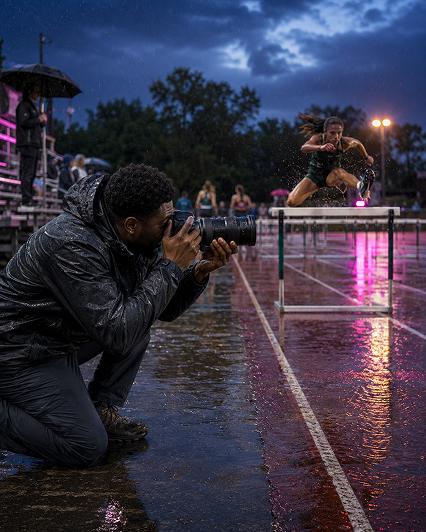
The RX10 V’s answer is to reduce the need for cropping by providing 600mm-equivalent optical reach. Photographers must decide whether they prefer reaching the subject optically with a smaller sensor or using a larger sensor and a longer, heavier interchangeable lens.
Fixed-Lens Simplicity Can Improve The Photographic Process
Interchangeable lenses create opportunities, but they also create decisions. Photographers must choose which lenses to buy, which ones to carry, when to change them, and whether a particular outing justifies additional weight.
The RX10 V removes those choices. Its lens is always mounted, optically matched to the body, and ready to cover a broad range. The integrated design also reduces opportunities for dust to enter during lens changes.
That simplicity can be creatively useful. A photographer can concentrate on viewpoint, timing, focal length, exposure, and subject behavior rather than equipment selection. For travelers, parents, birders, aviation enthusiasts, and event photographers, fewer equipment decisions may produce more actual photographs.
The limitation is equally permanent. An RX10 V owner cannot attach a small F1.4 prime for low-light portraits, an ultra-wide lens for dramatic interiors, a tilt-shift lens for architecture, or a specialized macro lens for high-magnification product work.
A fixed lens is therefore not merely convenient. It is an agreement to accept one carefully chosen set of capabilities.
The $2,299.99 Price Changes The Value Argument
The RX10 V costs $600 more than the $1,699.99 price currently shown on Sony’s U.S. RX10 IV product page. At $2,299.99, it also overlaps with several Sony interchangeable-lens bodies before a lens is added.
Judging the camera only against body prices would be misleading because the RX10 V includes its 25x ZEISS zoom. A comparable mirrorless purchase must account for the cost and weight of lenses capable of covering wide-angle, standard, and long-telephoto photography.
The harder comparison is not whether $2,299.99 can buy a camera with a larger sensor. It can. The question is whether that larger-sensor camera can cover 24mm through 600mm with acceptable apertures, autofocus, stabilization, and video capability without substantially increasing the total budget and bag size.
For photographers who would use only part of the zoom range, the RX10 V may be difficult to justify. Someone who mainly photographs portraits between 35mm and 85mm can buy a more specialized system with a larger sensor and faster lens. A photographer who rarely moves beyond 200mm may find a smaller mirrorless kit more flexible.
The price becomes more logical when the full range is regularly useful. Wildlife during a morning hike, architecture at midday, people in the afternoon, and a distant performance in the evening can all be covered without changing equipment.
Who The RX10 V Is Designed To Serve
The RX10 V makes the most sense for photographers who know that convenience determines whether they bring a camera at all.
A traveler who does not want to manage several lenses can move from wide environmental images to distant details with one body. A parent can cover indoor family photographs and outdoor school sports. A birder can photograph a nearby habitat at 24mm before moving immediately to a subject at 600mm.
It is also relevant to railway and aviation photographers because its autofocus system recognizes trains and airplanes directly. Wildlife photographers gain separate recognition settings for animals, birds, and insects, while event and sports users benefit from human pose estimation and fast continuous shooting.
Small media teams and independent creators may appreciate that one camera can provide still photographs, close-ups, stabilized video, slow motion, audio connections, and livestreaming. The official Sony compact-camera listing positions the RX10 V as a premium high-zoom model rather than a budget alternative to mirrorless equipment.
The camera is less convincing for photographers who enjoy building a lens collection, need the best possible low-light quality, require dual card slots, expect extensive cropping, or want a fully articulating display for self-recording.
Smartphones Still Win When Portability Is The Priority
The RX10 V does not replace a phone as the camera people carry everywhere. At more than a kilogram and approximately six inches deep with the lens retracted, it requires a strap or camera bag.
Smartphones also retain advantages in immediate editing, automatic backup, computational processing, social publishing, and unobtrusive everyday photography. A phone can produce a finished image and distribute it within seconds.
The RX10 V answers a different need. Its physical zoom lens provides continuous optical framing from wide angle to super-telephoto. It has a substantial grip, electronic viewfinder, mechanical controls, RAW files, dedicated autofocus settings, long-burst performance, and a battery designed for extended photography.
The difference is not simply image quality. It is photographic access. A phone may be present more often, but the RX10 V can frame distant subjects that remain visually inaccessible to ordinary phone-camera modules.
Mirrorless Systems Still Win When Specialization Is The Priority
A mirrorless camera remains the stronger option for photographers whose interests are defined clearly enough to choose specialized lenses.
Portrait photographers may prefer a larger sensor and fast prime. Architectural photographers may need wider lenses and perspective control. Product photographers may require specialized macro optics, tethering workflows, and higher-resolution files. Professional sports photographers may prioritize larger sensors, dual card slots, and high-end super-telephoto lenses.
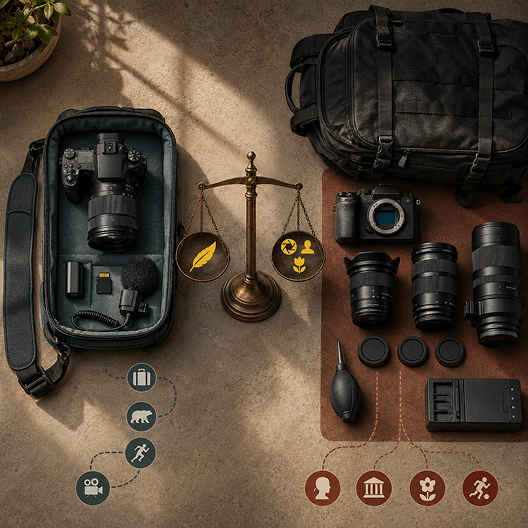
Mirrorless systems also provide an upgrade path. A photographer can replace a body while retaining lenses, or add a new optic when their subject matter changes. The RX10 V must be replaced as a complete unit if the sensor, processor, or lens no longer meets the owner’s needs.
That distinction clarifies the RX10 V’s purpose. It is not trying to outperform every specialized camera setup. It is trying to reduce the number of situations in which a photographer needs a specialized setup. (The Ultimate Remote Headshot Setup Guide for Professionals and Teams)
The Do-Everything Camera Is Back, But It Is More Specialized Than It Sounds
The Sony RX10 V brings the do-everything camera back as a premium photographic tool. Its 24–600mm F2.4–4 lens remains the foundation, but modern autofocus, 30fps shooting, 4K 120p video, improved battery life, stronger connectivity, and Alpha-style controls make the concept more capable in 2026 than it was in 2017.
It cannot provide the pocket portability of a phone, the low-light potential of a full-frame camera, or the optical freedom of an interchangeable-lens system. Its $2,299.99 price also means convenience must be a central requirement rather than a minor preference.
For the right photographer, however, the RX10 V replaces a collection of decisions: which lens to mount, what to leave at home, whether a telephoto is worth carrying, and whether stills or video will matter more that day.
That is the modern meaning of a do-everything camera. It does not produce the best possible result in every photographic category. It provides credible access to more categories with one piece of equipment—and makes it more likely that the photographer will be ready when the subject appears.