
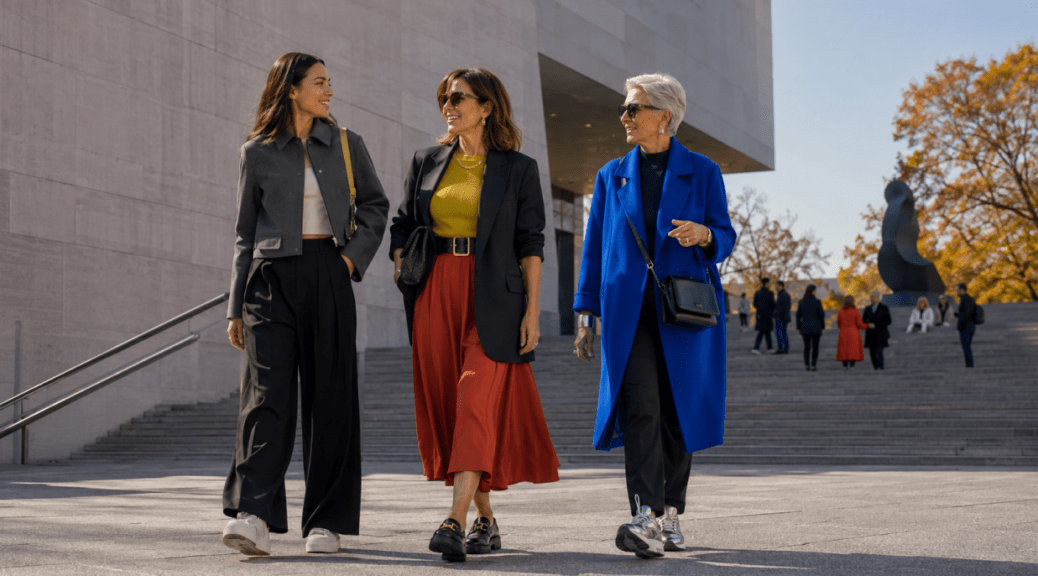
Fashion has spent decades attaching invisible expiration dates to clothes.
Miniskirts were supposedly for the young. Crop tops required a certain body. Platform sneakers belonged to teenagers. Bright colors, oversized jackets, leather trousers, statement jewelry, and experimental silhouettes were often treated as choices that women should gradually abandon as they got older.
Celebrity stylists Nicole Chavez and Kim Appelt are pushing back against that idea.
In an August 16, 2026 interview about styling trends after 40, Chavez and Appelt argued that fashion does not come with an age cutoff. Chavez, whose clients have included Reese Witherspoon, emphasized adapting trends to the person rather than abandoning them because of a birthday. Appelt similarly argued that garments such as miniskirts and contemporary sneakers can remain relevant when the proportions and surrounding pieces suit the wearer. Their current stylist advice on wearing trends after 40 reflects a broader change in how personal style is being discussed.
The better question, then, is not “Am I too old to wear this?”
It is “How do I want to wear this now?”
That shift matters because personal image changes throughout life, but it does not necessarily become more conservative. People change careers, bodies, routines, climates, priorities, confidence levels, and ideas about what feels like them.
A strong wardrobe can evolve with those changes without turning age into a dress code.
Age Is a Poor Substitute for Styling Judgment
Age-based fashion rules are attractive because they are simple.
Do not wear this after 40.
Stop wearing that after 50.
Choose longer hemlines after 60.
Avoid bright colors once you reach a certain stage of life.
The problem is that age tells us very little about whether an outfit actually works.
Two people who are both 55 may have completely different careers, lifestyles, body proportions, personalities, climates, and preferences. One may feel completely at home in a cropped leather jacket. The other may prefer a long linen coat.
Neither choice is automatically more appropriate because of age.
What actually determines whether the clothing works is a much more useful group of factors:
fit, proportion, context, comfort, fabric, color, movement, and personal intention.
A short skirt worn with an oversized blazer and boots creates a different image from the same skirt with a cropped party top and extremely high heels.
The garment did not change.
The styling did.
That is why blanket age rules are so limited.
Stylists Are Reframing the Question Around Proportion
One of the most practical ideas in Chavez and Appelt’s recent advice is that trends can be adapted rather than copied literally.
That is important because runway styling, celebrity styling, retail photography, and everyday styling solve different problems.
A runway may intentionally exaggerate.
A campaign may be designed to attract attention.
A real person may need to commute, sit at a desk, attend a meeting, walk several blocks, pick up children, go to dinner, or spend six hours at an event.
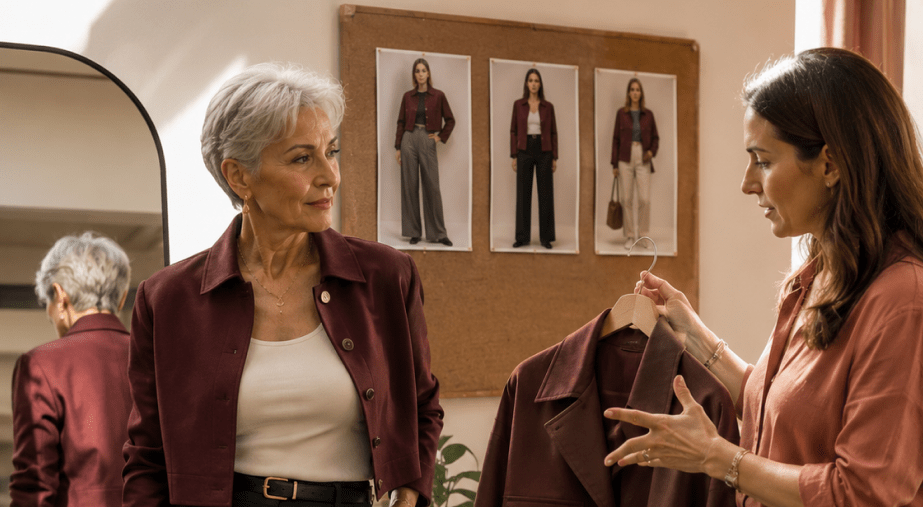
The trend can survive while the proportions change.
A cropped top does not have to expose most of the midriff. It can sit above high-waisted trousers beneath an oversized blazer.
An oversized jacket can be balanced with a cleaner trouser line.
A voluminous skirt can work with a more compact top.
A miniskirt can be paired with opaque tights, boots, a substantial knit, or a longer jacket.
Platform sneakers can modernize familiar jeans and knitwear without requiring the rest of the outfit to imitate teenage streetwear.
This is styling rather than age restriction.
Looking Current Is Different From Looking Younger
One of the most damaging ideas in age-related fashion advice is the assumption that the objective should be to look younger.
That is not necessary.
Looking current and looking younger are different goals.
A current outfit may use a contemporary trouser proportion, updated shoe shape, fresh color combination, or modern jacket silhouette while still looking completely appropriate for the person wearing it.
Someone can look 60 and stylish.
Someone can look 70 and experimental.
Someone can look 45 and classic.
The clothing does not need to create the illusion of another age.
That distinction matters for personal image because chasing youth can turn fashion into constant correction.
The question becomes:
How can I hide my age?
How can I make my body look younger?
What am I no longer allowed to wear?
A stronger styling approach asks:
What still feels like me?
What has changed?
What new proportions do I enjoy?
Which current ideas make my wardrobe feel more alive?
That keeps the person at the center instead of the age number.
Boston Proper Is Building a Brand Around the Same Shift
The move away from age rules is not limited to individual stylists.
On August 3, 2026, Boca Raton-based Boston Proper launched a new platform called Defy All Expectations, explicitly positioning the company around women in their 40s, 50s, and beyond who do not want age to dictate their style.
The company introduced a refreshed visual identity, new creative direction, updated brand voice, and Fall 2026 collection alongside the campaign. Co-CEO Sheryl Clark said the strategy was built around customers who already know who they are rather than women seeking permission to stand out. The company’s Defy All Expectations launch frames personal style as something that can become more distinctive with age rather than quieter.
Boston Proper is a retailer, so the message is also commercial.
Still, the positioning is notable.
Brands historically targeted older women with language centered heavily on concealment, correction, slimming, and avoiding fashion mistakes.
The 2026 message increasingly emphasizes visibility, individuality, and confidence instead.
That is a meaningful shift in image language.
Trends Work Better When You Borrow the Idea, Not the Entire Outfit
A common mistake is assuming that wearing a trend means recreating the complete look exactly as it appeared online.
It does not.
Suppose wide-leg trousers are trending.
You do not need the exact cropped top, exaggerated belt, oversized sunglasses, and pointed shoes used in the campaign photograph.
You can simply try the trouser shape.
Pair it with the knitwear you already own.
Use familiar shoes.
Keep your usual jewelry.
Now the trend becomes part of your style instead of replacing it.
The same principle works with color.
If butter yellow, burgundy, or vivid green is popular, you do not need an entire wardrobe in that color.
A sweater, scarf, shoe, or bag can introduce it.
The strongest wardrobes tend to absorb trends selectively.
That approach also creates a more recognizable personal image because the underlying style remains consistent even as individual elements evolve.
One Trend at a Time Is Often Enough
Trend overload can make an outfit feel less personal.
Imagine combining a very oversized blazer, barrel jeans, platform sneakers, statement sunglasses, a cropped shirt, maximalist jewelry, and the season’s strongest color all at once.
That may be intentional for editorial fashion.
For everyday dressing, the result can feel more like a trend demonstration than a personal outfit.
A simpler strategy is to choose one or two current elements.
Perhaps the trousers are contemporary while the shirt remains familiar.
Maybe the shoes update a classic dress.
Perhaps the color feels new while the silhouette stays consistent.
This approach has two advantages.
First, the outfit remains visually coherent.
Second, it allows you to determine whether you genuinely like the trend.
If you introduce six unfamiliar elements simultaneously, it becomes difficult to know which one feels wrong.
Fit Still Matters More Than the Age on the Label
A garment does not become inappropriate because the wearer is older.
It can become unsuccessful because it does not fit the way the wearer wants.
That is a much more practical problem.
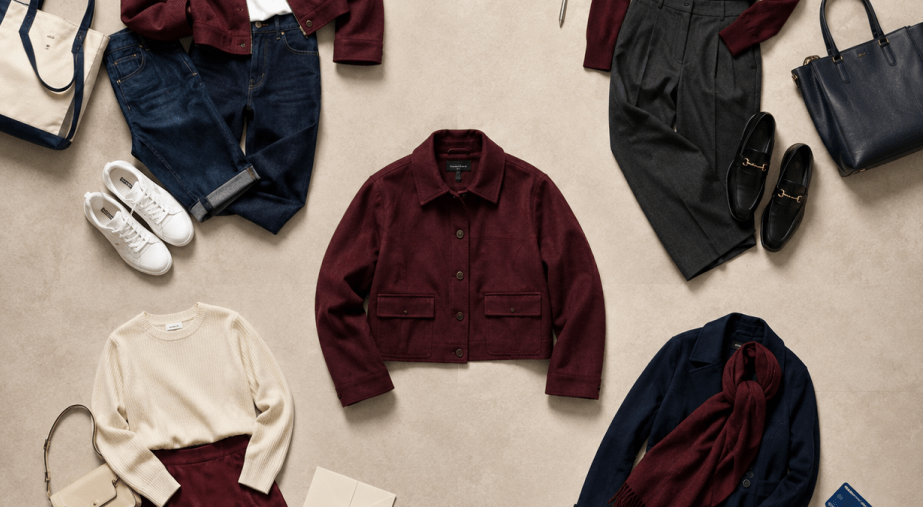
A cropped jacket may work beautifully when the shoulder line is clean and the hem relates well to the trousers.
The same jacket may feel awkward when it pulls across the back or ends at an unintended point.
A miniskirt may feel completely natural when the waistband, fabric, and movement work.
Another may require constant adjustment.
A platform sneaker may be visually perfect but impractical if it creates discomfort.
These are fit and function decisions.
They have little to do with an age cutoff.
For broader practical styling, Finest Image focuses on how fit, photography, appearance, proportion, and presentation affect the way clothing is perceived.
Comfort Should Modify a Trend, Not Automatically Eliminate It
Clothing needs can change with age, but that does not mean style interest disappears.
Comfort may become more important.
So may temperature control, footwear stability, fabric softness, ease of movement, or the ability to layer clothing.
Those needs can change how a trend is worn.
A high platform may become a lower platform.
A rigid trouser may become one with stretch.
A heavy leather jacket may become a softer leather or lightweight alternative.
A very short skirt may become a slightly longer version using the same overall silhouette.
This is not surrendering to an age rule.
It is adapting clothes to the person who actually has to live in them.
That principle applies at every age.
AARP Is Also Moving Away From Old Fashion Rules
Recent styling coverage aimed specifically at older consumers reflects the same change.
In a July 23, 2026 guide for women over 50, AARP style writer and personal shopper Lois Joy Johnson argued that trends can refresh a wardrobe that has become overly practical. The recommendations included contemporary silhouettes while emphasizing balance, comfort, versatility, and polish rather than telling women to abandon trends altogether.
The current AARP trend guide for women over 50 highlights how styling choices can make current clothing work for different lifestyles without demanding that readers imitate much younger consumers.
That is a healthier framework than the old language of fashion prohibitions.
Advice becomes useful when it explains how to wear something.
It becomes much less useful when its primary message is that a person is no longer allowed to try.
Color Can Become More Powerful With Age, Not Less
Another old fashion assumption is that wardrobes should gradually become quieter.
There is no visual reason this must happen.
In fact, strong colors can become particularly effective when someone already understands which shades they enjoy.
A woman who has worn navy for 30 years may know exactly which orange scarf makes it more interesting.
Someone who understands that deep green works throughout their wardrobe can use it confidently in a coat or dress.
Bright color also does not require an elaborate silhouette.
A vivid jacket over familiar trousers can create more presence than an entire complicated outfit.
This is one reason style can actually become stronger with age.
Experience creates information.
You learn which colors you repeat.
You know which shoes remain unworn.
You understand whether you like structured shoulders.
You recognize whether you prefer fitted or relaxed silhouettes.
The wardrobe becomes less experimental in some areas and more confident in others.
Personal Style Can Become More Distinctive Over Time
Young people often build style through trial and error.
That process does not end.
But the information accumulates.
After years of dressing yourself, you may know that you always return to long coats.
Or scarves.
Or wide trousers.
Or sharp jackets.
Or oversized shirts.
Or bright shoes.
Or monochrome combinations.
Those repetitions form a visual identity.
A trend can then enter the wardrobe through that identity.
Someone who loves tailoring might interpret a new color trend through a blazer.
Someone who loves sneakers might explore a new silhouette through footwear.
Someone who prefers dresses may translate a current fabric or print into that format.
The result looks more personal because the trend is being filtered through established preferences.
Photographs Can Help Separate Preference From Habit
One useful way to determine whether a trend actually works for you is to photograph it.
Mirrors encourage close inspection.
Photographs show the outfit as a complete composition.
Take a full-length photograph from several feet away.
Then compare it with an outfit you already like.
Do not ask whether the new outfit makes you look younger.
Look at proportion.
Does the jacket length work with the trousers?
Does the shoe balance the width of the hem?
Does the color dominate more than expected?
Does the outfit still look like something you would naturally wear?
Photographs can also show whether the discomfort is really about the garment or simply unfamiliarity.
Sometimes a new silhouette feels strange because it is genuinely wrong for your preferences.
Sometimes it feels strange because you have spent ten years looking at yourself in one trouser shape.
Those are different problems.
Do Not Replace Age Rules With Body Rules
Removing age limits is not especially progressive if they are immediately replaced with another list of restrictions.
“You can wear this at any age—if you’re thin.”
“You can wear that after 50—if your arms are toned.”
“A short skirt is fine—if you have the legs for it.”
That simply moves the policing from age to body shape.
Good styling should work with the person’s goals, not require the person to qualify for the clothes.
Someone may prefer more coverage.
Someone else may not.
A person may like showing their arms and dislike showing their knees.
Another may feel exactly the opposite.
Those are individual choices.
Fashion advice is more useful when it provides options for achieving different levels of coverage, structure, color, and emphasis instead of declaring which bodies have permission.
Context Still Matters Even When Age Does Not
Rejecting age limits does not mean rejecting context.
A sequined minidress may be perfect at a birthday party and impractical at a conservative legal office.
That is true whether the wearer is 25 or 65.
A crop top may work beautifully on vacation but not satisfy a workplace dress requirement.
Again, age is not the deciding factor.
Context is.
This distinction makes fashion rules much easier to understand.
Ask:
Where am I going?
What will I be doing?
How formal is the setting?
How much movement is required?
What impression do I want to create?
Then choose clothing accordingly.
That is much more useful than asking whether someone born in a particular decade is allowed to wear the garment.
The Best Trend Is the One That Still Feels Like You
Nicole Chavez and Kim Appelt’s August 2026 advice is valuable because it does not argue that everyone over 40 should suddenly wear crop tops, miniskirts, or platform sneakers.
It argues that the decision should belong to the wearer rather than an arbitrary age rule.
That is a meaningful distinction.
Not every trend deserves a place in your wardrobe.
Some colors will never appeal to you.
Some silhouettes will feel wrong.
Some shoes will be uncomfortable.
Some trends will clash with your lifestyle.
You can ignore all of them.
But the reason should be that they do not serve your style—not that a birthday supposedly removed your permission.
Personal style becomes stronger when the filtering process becomes more precise.
You stop asking whether you are allowed to wear something.
You ask whether it fits your life, your wardrobe, your comfort, and the image you want to create.
Fashion trends can expire.
Your ability to decide which ones belong to you does not.