
Employee dress codes sit at the point where brand presentation, workplace authority, and employee expression meet. The September 2, 2026 decision in Siren Retail Corp. v. NLRB, involving Starbucks, did not give employers a simple permission slip to ban union-related apparel. It did something more practical for brand leaders: it pushed dress-code analysis back toward balance, context, consistency, and proof.
As of October 19, 2026, the case is best read as a warning against both extremes. A company should not assume that every restriction on union insignia is unlawful in every setting. It also should not assume that brand image alone excuses broad limits on protected expression. The Second Circuit decided Siren Retail Corp. v. NLRB, No. 24-3168, on September 2, 2026, partially granting Starbucks’s petition, denying enforcement as to the one-pin policy, and remanding two other policies for further review, according to the published court opinion at Justia.
This is practical branding analysis, not legal advice. Employers should work with qualified counsel before changing policies. Still, the branding lesson is clear: a uniform rule is not only about fabric, color, and logos. It is also a public statement about how an organization treats identity, speech, customer contact, and trust.
What Siren Retail Means For Employee Dress Codes
The case arose from events in 2022 at the Starbucks Reserve Roastery in New York. Employees wore shirts with the Starbucks Workers United union logo during a national campaign. Starbucks directed them to change into apparel that met its dress-code requirements. Workers United filed charges under Sections 7 and 8(a)(1) of the National Labor Relations Act.
For branding teams, the useful point is not whether a particular shirt looked polished or off-brand. The stronger question is whether a rule intrudes on protected employee expression, and if it does, whether the employer can point to a specific business reason that justifies the limit. That is a more disciplined standard than saying, “This does not fit our look.”
Employee dress codes often exist for legitimate reasons: safety, hygiene, customer recognition, visual consistency, and role clarity. Those reasons are easier to defend when the policy is written plainly, applied consistently, and connected to the actual work setting. A front-of-house food service role may raise different concerns than a back-office role with no customer contact. The physical context matters.
The Three Policies At Issue
One Pin, Issue Pins, And Logo Shirts
The Starbucks policies discussed in the case included a one-pin policy, an issue-pin policy, and a logo-shirt policy. The one-pin rule allowed only one union button or pin. The issue-pin rule barred buttons or pins advocating political, religious, or personal issues. The logo-shirt rule restricted shirts with non-approved logos or writing, while allowing small manufacturer logos.
The NLRB had taken a stricter approach under its 2022 Tesla, Inc. standard, which treated many uniform or dress-code restrictions on union insignia as presumptively unlawful unless justified by special circumstances. The Second Circuit rejected that test as too rigid for the policies before it and pointed back to a more balanced reading rooted in Supreme Court precedent. The NLRB’s own decision activity for the week of August 31 through September 4, 2026, appears in its official weekly decisions summary.
Employee Dress Codes And Visible Brand Signals
Employee dress codes communicate before anyone speaks. A uniform, name tag, apron, shoe choice, or pin can signal role, authority, cleanliness, approachability, and group identity. Body language works with those signals. A person in a clearly identified role who stands openly, makes appropriate eye contact, and moves with calm purpose often appears more credible than someone whose clothing and conduct send conflicting cues.
That does not mean an employer may control every visible signal. The Siren Retail decision reminds brand managers that employees do not stop having protected rights because they are in uniform. The policy question becomes more precise: how much does the expression affect the employer’s real business interest, and how much does the rule restrict the employee’s protected activity?
Brand Consistency Without Overclaiming Control
How Body Language And Apparel Work Together
A polished brand presence is rarely produced by clothing alone. A black shirt, approved apron, or small pin policy cannot fix poor service posture, rushed gestures, unclear eye contact, or a tense tone. Customers usually read the whole person: stance, pace, facial expression, grooming, clothing, and the way the employee responds under pressure.
That matters because some employers put too much pressure on the dress code to carry the brand. If the stated goal is customer trust, training should address conduct as well as clothing. If the goal is safety, the rule should explain the safety concern. If the goal is identification, the policy should say why customers need to recognize staff quickly.
For a related workplace image discussion, Finest Image has also covered employee dress codes after Starbucks ruling, with attention to brand reasons, fair enforcement, and protected rights.
Why Neutral Language Matters
Neutral wording is not only a legal concern. It affects morale and public perception. A rule that appears to target one group’s message can create the impression that the brand values control more than fairness. A rule that explains the operational reason for a limit is easier for managers to apply and easier for employees to understand.
Brand consistency also changes by setting. A cafe, office, theatre lobby, volunteer event, or community group may each need different visual cues. For insights on how audience-facing organizations maintain consistent branding, visit Wakefield Rep, where visual and contextual considerations are essential in shaping public impressions.
Practical Review Points For Employee Dress Codes
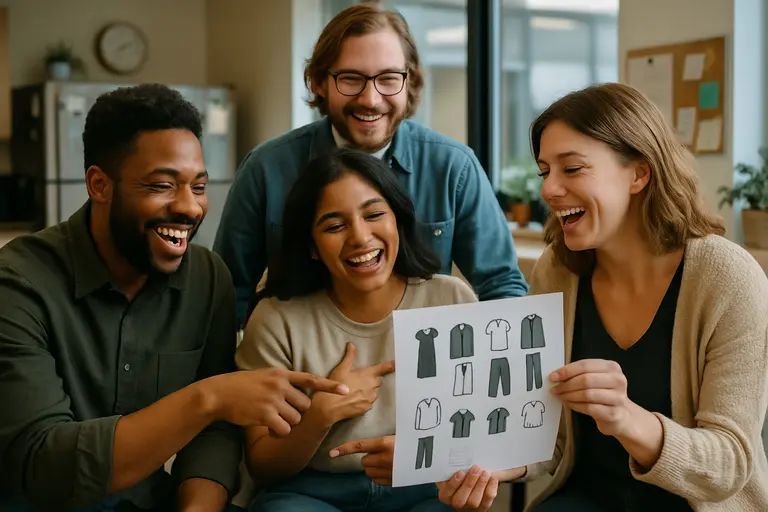
Questions To Ask Before Changing A Rule
Employers reviewing employee dress codes after Siren Retail should avoid rushed rewrites. A policy that sounds cleaner but is enforced unevenly can create new risk. The better approach is to test each rule against the actual job setting and the specific brand need.
- Name the business reason. Is the rule about safety, sanitation, customer identification, product protection, or another concrete need?
- Check the level of restriction. Does the rule limit all visible messages, or only certain items? Does it leave room for protected insignia in another form?
- Review consistency. Are similar non-union logos, pins, slogans, or cause-related items treated the same way?
- Separate preference from necessity. A cleaner visual brand may be desirable, but the policy should identify why the restriction is needed in that setting.
- Train managers on application. A well-written rule can still fail if supervisors apply it based on discomfort with a message rather than the policy text.
The Second Circuit also discussed the effect of Loper Bright Enterprises v. Raimondo, which changed how courts review agency legal interpretations. In the Siren Retail decision, the court reviewed the NLRB’s legal interpretation without deferring to the agency, while factual findings remained subject to substantial-evidence review. For employers, that means policy disputes may turn heavily on how courts read the statute and precedent, not only on how the Board frames the issue.
From a brand standpoint, this makes recordkeeping more important. If a company says a logo restriction protects customer clarity, it should be able to explain why customer clarity is affected. If it says a pin limit supports safety, it should be able to connect the limit to the work environment. Vague statements about image may not carry the same weight as specific, role-based explanations.
Employee Dress Codes After Siren Retail Corp. v. NLRB
The practical lesson from Siren Retail is not that employers must abandon visual standards. It is that visual standards need discipline. A brand can ask employees to present a consistent image, but the rule should be clear, neutral, grounded in a real workplace interest, and applied without selective pressure against protected expression.
Good presentation still matters. Clothing affects how customers identify staff. Pins and shirts affect what messages are visible. Body language affects whether the employee appears open, prepared, and credible. The best workplace image policies account for all three without pretending that brand preference automatically overrides employee rights.
For managers, the next step is practical rather than dramatic: read the policy line by line, identify the reason for each restriction, check whether enforcement has been consistent, and train supervisors to respond calmly when expression and image standards meet. That kind of review protects the brand in a more durable way than a broad ban, because it shows that the organization has thought carefully about both public presentation and employee rights.