
Business casual norms have become harder to read in 2026 because workplaces no longer share one clear visual standard. For job seekers, that does not mean dressing is guesswork. It means your clothing has to do two jobs at once: show respect for the opportunity and show that you understand the company’s working style.
The safest approach is not to copy the most casual person you see on a company’s social feed. It is also not to assume every interview requires a dark suit. A stronger strategy is to study the organization, choose clothes with visible care, and avoid pieces that make the interviewer focus on your outfit instead of your qualifications.
As a branding consultant, I see interview clothing as part of a wider professional signal. Your resume communicates experience. Your answers communicate judgment. Your clothing communicates awareness before you speak. That signal should be clear, current, and appropriate to the room.
How Business Casual Norms Shifted In 2026
Why The Old Suit Rule No Longer Fits Every Role
For years, many candidates heard a simple rule: wear a suit to the interview. That rule still works in some fields and at some levels, especially where client trust, regulation, or formal hierarchy shape daily appearance. But it is no longer a universal answer.
On October 1, 2026, Forbes Vetted described business casual as less fixed than it once was, combining traditional pieces such as slacks or blazers with comfort items such as cleaner jeans, sneakers, or knit polos depending on industry and company culture Forbes Vetted. That description matters because it gives job seekers permission to think in terms of balance rather than strict categories.
A blazer can still be useful, but it may not need to be paired with a full suit. A collared knit may read more current than a stiff shirt in some creative or technology settings. Clean leather sneakers may be acceptable in one company and too casual in another. The item itself matters less than the message created by fit, condition, fabric, and context.
What The Confusion Means For Candidates
AP News reported on August 6, 2026, that job candidates had been feeling caught between suits and hoodies, with virtual and hybrid work practices making interview clothing expectations harder to interpret AP News. That uncertainty is real, and it is not a sign that candidates are careless. It reflects the fact that companies themselves often use looser dress guidelines than they did before remote work became common.
The practical answer is to reduce risk. If an organization appears casual, dress one level more polished than its everyday staff images suggest. If the organization appears formal, stay closer to traditional interview attire. In both cases, the goal is alignment with a slight edge of effort.
Reading The Company Before Choosing Clothes
Reading Business Casual Norms Before The Interview
Before choosing an outfit, look for visual cues from the employer’s public materials. Company photos, leadership bios, recruitment videos, conference images, and staff pages can all help. Do not treat one photo as proof. Look for patterns across several examples.
Because business casual norms no longer point to one outfit formula, ask three questions. Does the company show structured jackets, collared shirts, or tailored trousers in public-facing images? Do employees appear in jeans, sneakers, and soft layers? Does leadership dress more formally than the rest of the team? The answers will help you choose the level of polish that feels informed rather than random.
For more role-specific planning, the related article on business casual advice for modern job seekers offers a useful companion framework. The key is not to dress as though you already work there on a casual Friday. Dress as though you understand the culture and respect the selection process.
Use Role Level As A Filter
The same employer can require different clothing signals from different candidates. A senior client-facing leader may need more structure than an early-career technical hire. A nonprofit administrator may need quiet polish. A creative director may have more room for expressive color or silhouette, provided the look is intentional and clean.
If you are unsure, choose pieces that sit in the middle: a blazer with trousers, a crisp knit with a structured skirt, a button-down with dark non-distressed denim, or loafers instead of athletic sneakers. These combinations communicate effort without suggesting that you ignored a casual workplace culture.
Practical Outfit Choices That Reduce Guesswork
Build From Polished Basics
Use business casual norms as a decision framework, not a costume. Start with pieces that are clean, well-fitting, and easy to understand visually. A simple outfit often reads stronger than a complicated one because the interviewer can focus on your presence and answers.
- Tops: collared shirts, refined knits, simple blouses, knit polos, or neat shells under a jacket.
- Bottoms: tailored trousers, dark straight-leg jeans where appropriate, polished skirts, or structured dresses.
- Layers: lightweight blazers, cardigans with shape, or clean overshirts in structured fabric.
- Shoes: loafers, ankle boots, clean flats, low heels, or minimal sneakers if the company clearly supports casual dress.
- Details: tidy grooming, pressed fabric, simple accessories, and a bag that looks organized.
Fit deserves special attention. Clothing does not need to be expensive to look professional, but it does need to sit well on the body. Sleeves that are too long, trousers dragging under the heel, wrinkled collars, and scuffed shoes can weaken an otherwise appropriate outfit.
Set Boundaries Around Casual Pieces
Casual does not mean careless. Many offices accept jeans, softer fabrics, and sneakers, but interview dressing should still avoid the pieces most likely to distract. Graphic slogans, flip-flops, heavily distressed denim, gym wear, sweatpants, and clothing that looks slept-in usually create avoidable risk.
This is partly an ethical issue. Your clothing should not pretend to be something you are not, but it should show that you take the interaction seriously. If your personal style includes bold color, visible tattoos, unusual hair, or expressive accessories, you do not need to erase yourself. The task is to frame those choices with grooming, fit, and restraint so the full image reads professional.
A polished resume and cover letter should send the same signal as a polished outfit. If your application materials need clearer structure, a related writing services resource can help you compare support options while keeping the final message honest and your own.
Virtual And Hybrid Interview Presentation
Dress For The Frame, Not Only The Room
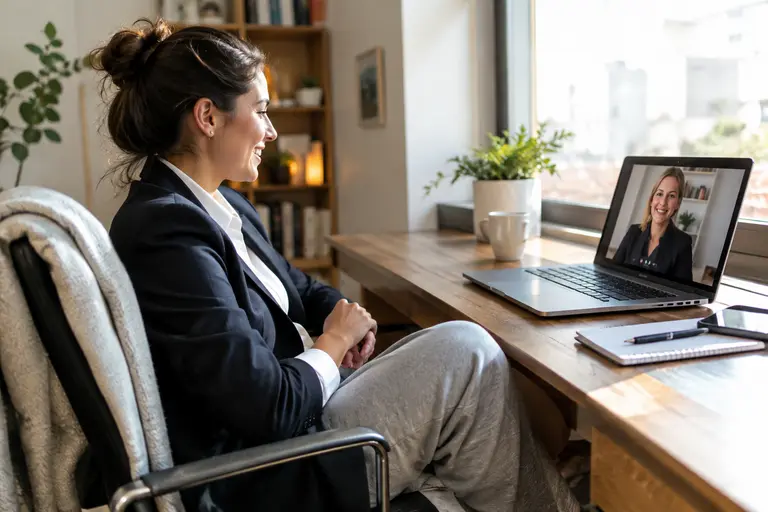
Virtual interviews changed the visual field. The interviewer may see only your shoulders, face, and background, but that smaller frame makes each visible choice more noticeable. A wrinkled collar, noisy pattern, poor lighting, or cluttered background can compete with your answers.
Choose a top with shape near the neckline, especially if you are not wearing a jacket. Solid colors or quiet patterns tend to read clearly on camera. If you wear a blazer, test it while seated so the shoulders and lapels do not bunch. Avoid relying only on the webcam preview seconds before the call. Check the frame earlier, while wearing the full outfit.
Keep Comfort From Looking Accidental
Hybrid work has made comfort more acceptable, but comfort should look chosen. A soft knit can look polished if it is clean, opaque, and shaped. Stretch trousers can work if the fabric does not resemble loungewear. Sneakers can be appropriate if they are minimal and spotless.
The camera also changes color and texture. Very thin stripes can blur. Shiny fabrics can reflect light. Black clothing may lose shape against a dark chair. If possible, record a short test clip and watch it without sound. Ask what the image communicates before you hear your words. That exercise helps separate personal preference from professional effect.
Business Casual Norms For 2026 Job Seekers
A Clear Personal Brand Signal
Business casual norms in 2026 reward judgment more than rule-following. A candidate who dresses with context in mind shows that they can read a situation, respect expectations, and still appear comfortable in their own image.
For most job seekers, the strongest interview outfit sits slightly above the employer’s everyday dress level. That may mean a blazer over a knit, trousers instead of jeans, loafers instead of sneakers, or a quieter color palette than you would wear after being hired. The point is not to hide your personality. It is to present it with discipline.
Clothing will not replace skill, preparation, or strong answers. It can, however, reduce friction. When your appearance feels appropriate, the interviewer has fewer reasons to question your judgment and more room to focus on your experience.
Think of your interview outfit as a promise: you understand the setting, you respect the opportunity, and you know how to represent yourself in public. That is the real value of getting business casual right in 2026.