
Company culture attire can help job seekers appear prepared without pretending to be someone else. The goal is not to guess a perfect outfit. It is to read the organization’s visual expectations, choose clothing that supports your message, and avoid distracting from the substance of your conversation.
Workplace clothing norms have loosened, but they have not disappeared. On October 1, 2026, Forbes Vetted described business casual as loosely defined and dependent on industry and culture, noting that dark-wash jeans and leather sneakers may be acceptable in many workplaces while traditional suits are no longer the automatic default unless required Forbes Vetted business casual guidance. That is useful for job seekers because it shifts the question from “Should I wear a suit?” to “What level of polish fits this employer?”
Company Culture Attire Starts With Research
Company Culture Attire Signals To Review
Before an interview, study the employer’s public-facing materials with a practical eye. Look at team pages, recruiting videos, office photos, leadership headshots, and event images if they are available on official channels. You are not trying to copy one person’s outfit. You are looking for the range: formal, relaxed, creative, uniformed, field-ready, client-facing, or highly casual.
The Associated Press reported on August 6, 2026, that polished suits and formal business attire were no longer automatic interview recommendations, and that some interviewers may be wearing hoodies and jeans. The same report emphasized researching the organization’s culture in advance so candidates are not underdressed or overdressed AP interview attire report. That point is especially relevant for hybrid offices, start-ups, creative teams, and technical roles where the formal standard may be different from what candidates were taught years ago.
The practical value of company culture attire is calibration. A candidate interviewing at a conservative client-services firm may need a sharper jacket, closed-toe shoes, and a subdued color palette. A candidate interviewing for a design, media, or technology role may still need polish, but that polish might come through clean sneakers, modern knitwear, neat denim, or a simple blazer over a T-shirt. The difference is not effort versus no effort. It is choosing the right kind of effort.
Questions To Ask Before Choosing Clothing
Use a short pre-interview checklist before you decide what to wear:
- Will this role meet clients, donors, patients, students, guests, or internal teams only?
- Do official photos show suits, business casual, uniforms, branded polos, or casual layers?
- Is the interview in person, on video, at a job site, or during an assessment session?
- Would this outfit look respectful if the interviewer is more formal than expected?
- Would this outfit still feel natural if the interviewer is wearing jeans or a hoodie?
If the employer provides instructions, follow them. If instructions are vague, choose one step more polished than the most casual clothing you see from employees in public materials. That small margin helps you show respect without appearing disconnected from the workplace.
Translate Culture Clues Into Outfit Choices
Formal, Business Casual, And Relaxed Signals
For a formal or conservative organization, structure matters. A suit, tailored separates, a dress with a jacket, polished shoes, and restrained accessories can support a message of judgment and readiness. Color does not need to be dull, but it should not dominate the conversation.
For business casual settings, aim for clean lines and intentional combinations. A blazer with chinos, a blouse with tailored trousers, a fine-gauge sweater with a skirt, or dark jeans with a structured jacket can work when the rest of the outfit is neat. Forbes Vetted’s October 2026 discussion of business casual supports the idea that the category now varies by culture rather than following one fixed rule.
For a visibly casual employer, do not mistake comfort for carelessness. A plain tee under a jacket, pressed dark denim, clean sneakers, a simple knit top, or a crisp overshirt can communicate ease while still showing that you prepared. If you need more role-specific prompts, this related piece on company culture wardrobe cues offers a useful companion for interview planning.
Video Interviews Need Their Own Standard
Video interviews compress your image into a smaller frame. Fabric texture, neckline, color contrast, glasses glare, and posture become more noticeable. Choose a top layer that frames your face clearly, sits smoothly when seated, and does not require constant adjustment. Test the outfit on camera before the session, not only in a mirror.
Avoid relying on the idea that only the top half matters. Dressing fully helps many candidates sit and move with more intention. It also protects you from awkward moments if you need to stand, adjust equipment, or step away briefly.
Build Interview Outfits That Respect Context
Use Company Culture Attire Without Losing Yourself
Use company culture attire as a bridge, not a costume. If you rarely wear suits and the employer appears semi-formal, consider a structured jacket with separates rather than forcing a stiff look that distracts you. If your personal style is expressive and the employer is conservative, bring individuality through a controlled detail: a refined color, interesting texture, or a distinctive but quiet accessory.
Your clothing should help the interviewer focus on your judgment, preparation, and communication. It should not require a long explanation. As a branding consultant, I often remind clients that personal presence is strongest when it feels intentional and believable. The outfit should say, “I understand the room, and I know how to show up in it.”
Prepare A Backup Level
Have one adjustment ready in either direction. If you arrive and the office is more formal than expected, a jacket can sharpen the outfit. If the setting is relaxed, removing the jacket or choosing simpler shoes can soften the impression. This is not about changing who you are. It is about making your presentation responsive to the setting.
For job seekers working on written materials, bios, or portfolio positioning at the same time, related publishing and presentation resources from Leap Year Publishing can be useful for thinking about how language and image work together.
Keep Comfort, Grooming, And Ethics Aligned
Comfort Supports Composure
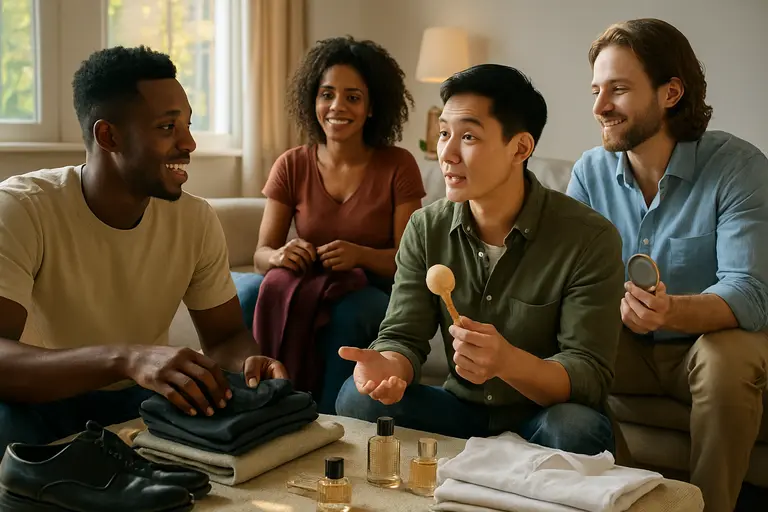
Clothing that pinches, slips, wrinkles immediately, or makes walking difficult can drain attention during an interview. Try the full outfit while seated, standing, walking, and reaching for a notebook or laptop. If shoes are new, test them before the interview date. If a jacket restricts your shoulders, choose another layer.
Grooming matters because it signals care. That does not mean expensive grooming or a narrow beauty standard. It means clean clothing, neat hair or facial hair by your own standard, well-maintained shoes, and items that are free from obvious stains or strong odors. These details reduce visual noise.
Ethical Presentation Matters
Do not use attire to misrepresent qualifications, identity, or access. For example, avoid wearing badges, uniforms, pins, or credentials that imply membership or certification you do not hold. If a workplace has safety requirements, religious considerations, disability accommodations, or uniform rules, ask practical questions through the appropriate recruiting contact rather than guessing.
Professional image should support honest communication. A polished outfit cannot replace preparation, experience, or clear answers. It can, however, reduce friction so your skills are easier to hear.
Company Culture Attire For Confident Session Prep
Strong session prep begins with the same habits that strengthen a personal brand: observe, interpret, decide, and practice. Study the employer’s visible norms. Identify the likely formality range. Choose an outfit that respects the role, the interview format, and your own comfort. Then test the outfit before the meeting so it becomes one less thing to manage.
The best choice is rarely the most expensive or the most formal. It is the one that fits the context, lets you move with confidence, and keeps attention on your value. For job seekers, that is the real purpose of dressing well: not to impress through costume, but to create alignment between your appearance, your message, and the workplace you hope to join.